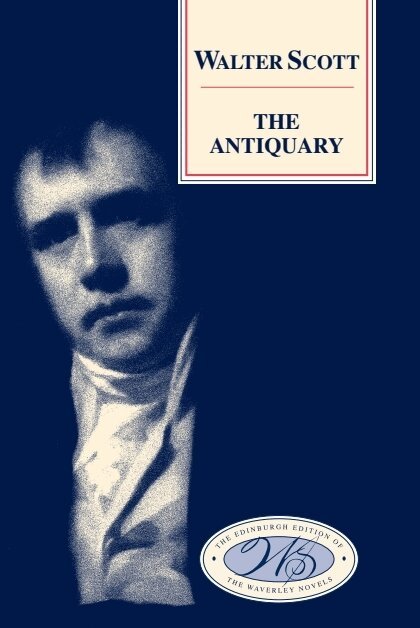
The third of the Waverley Novels is dominated by two old men, Jonathan Oldbuck (the Antiquary of the title) and the beggar Edie Ochiltree. Together they apply their knowledge of the past to sort out the confusion of the present, and in doing so restore the fortunes of ancient houses. This was Scott’s favourite among his novels, and presents a quizzical and amusing view of the profession of history and, by implication, of Scott’s own practice as writer and collector.
Sir Walter Scott, was a Scottish historical novelist, playwright and poet. Many of his works remain classics and include Ivanhoe, Rob Roy, Waverley, The Heart of Midlothian and The Bride of Lammermoor. David Hewitt was formerly Regius Professor of English at the University of Aberdeen. He was Editor-in-Chief of the Edinburgh Edition of the Waverley Novels, for which he edited Rob Roy (EUP, 2008), The Heart of Mid-Lothian (with Alison Lumsden; EUP, 2004), Redgauntlet (with G. A. M. Wood; EUP, 1997) and The Antiquary (EUP, 1995).
Recensioner i media
David Hewitt has brought formidable skills to bear on one of Scott's finest novels and has made it much moreaccessible to scholarly and ordinary readers alike. Re-reading it in thisformat is truly a pleasure. -- Jill Rubenstein The Edinburgh Edition respects Scott the artist by 'restoring' versions of the novels that are not quite what his first readers saw. Indeed, it returns to manuscripts that the printers never handled, as Scott's fiction before 1827 was transcribed before it reached the printshop. Each volume of the Edinburgh edition presents an uncluttered text of one work, followed by an Essay on the Text by the editor of the work, a list of the emendations that have been made to the first edition, explanatory notes and a glossary! The editorial essays are histories of the respective texts. Some of them are almost 100 pages long; when they are put together they constitute a fascinating and lucid account of Scott's methods of composition and his financial manoeuvres. This edition is for anyone who takes Scott seriously. David Hewitt has brought formidable skills to bear on one of Scott's finest novels and has made it much moreaccessible to scholarly and ordinary readers alike. Re-reading it in thisformat is truly a pleasure. The Edinburgh Edition respects Scott the artist by 'restoring' versions of the novels that are not quite what his first readers saw. Indeed, it returns to manuscripts that the printers never handled, as Scott's fiction before 1827 was transcribed before it reached the printshop. Each volume of the Edinburgh edition presents an uncluttered text of one work, followed by an Essay on the Text by the editor of the work, a list of the emendations that have been made to the first edition, explanatory notes and a glossary! The editorial essays are histories of the respective texts. Some of them are almost 100 pages long; when they are put together they constitute a fascinating and lucid account of Scott's methods of composition and his financial manoeuvres. This edition is for anyone who takes Scott seriously.