• Fri frakt över 249 kr
  • •
  • Snabba leveranser
  • •
  • Billiga böcker
Kundservice

Du är på sajten för privatpersoner.

Företag, bibliotek eller offentlig verksamhet?

Du handlar på classic.bokus.com, där alla dina funktioner finns intakta.
Till classic.bokus.com
Bokus logotyp. Gå till startsidan.
  • Erbjudanden
  • Student
  • Topplistor
  • Barn & ungdom
  • Bokus Play
  • E-böcker
  • Ljudböcker
  • Pocketböcker
  • Spel & pussel

Upp till 25% på utvalda nyheter →

Sidfot

Mina sidor

    Hjälp

    • Kundservice
    • Vanliga frågor och svar
    • Frakt och leverans
    • Retur vid ångerrätt
    • Reklamera vara
    • Betalning
    • Köpvillkor
    • Allmänna villkor
    • Information om webbplatsens tillgänglighet

    Om Bokus

    • Om oss
    • Pressrum
    • För studenter
    • För företag
    • För bibliotek och offentlig verksamhet
    • För leverantörer
    • Hållbarhet

    Populärt

    • Aktuella erbjudanden
    • Presentkort
    • Studentlitteratur
    • Nya böcker
    • Topplistor
    • Signerade böcker
    • Engelska böcker

    Inspiration

    • Boktips
    • BookTok
    • Populära bokserier
    • Barnbokskaraktärer
    • Populära författare
    Logotyp för Bokus
    Följ oss på Facebook (extern länk)Följ oss på Instagram (extern länk)Följ oss på YouTube (extern länk)Följ oss på TikTok (extern länk)
    bokus @ CookiesAnpassa cookiesIntegritetspolicyKöpvillkor
    Till Citymail hemsida (extern länk)Till Budbee hemsida (extern länk)Till Postnord hemsida (extern länk)Till Schenker hemsida (extern länk)Till Early Bird hemsida (extern länk)Till Walleys hemsida (extern länk)
    1. Ekonomi och Ledarskap
    2. Nationalekonomi
    3. Internationell ekonomi

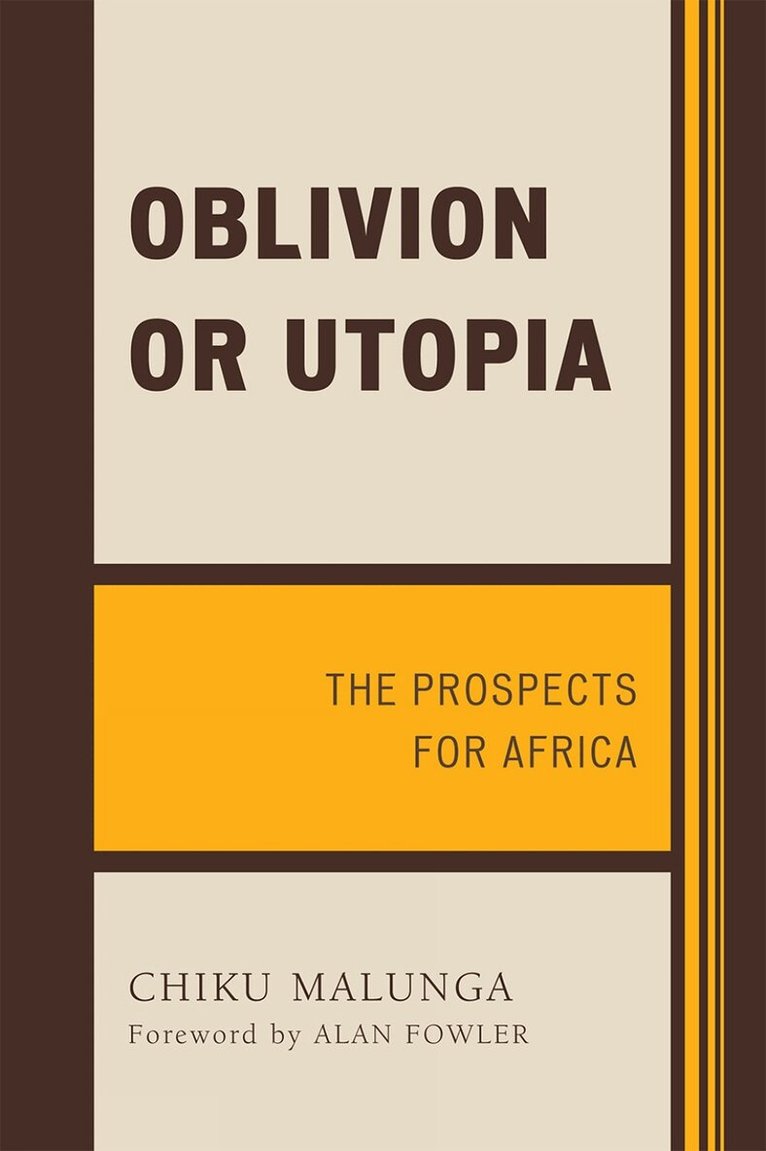
    Oblivion or Utopia

    The Prospects for Africa

    AvChiku Malunga

    Häftad, Engelska, 2009

    565 kr

    Beställningsvara. Skickas inom 10-15 vardagar. Fri frakt över 249 kr.

    Fler format och utgåvor

    E-bok

    589 kr

    Beskrivning

    Oblivion or Utopia: the Prospects for Africa explains that most of the problems on the continent stem from the fact that, although the continent may be politically independent, it is not economically independent. Efforts to reverse the continent's continuing underdevelopment have failed to date, including trillions of dollars in aid, because they have not been consciously aimed at enabling Africa to turn its vast natural resources into wealth, which is the only known way of ensuring economic independence. Based on a comprehensive exploration of impediments to reach the goal of economic independence required for self definition, the book proposes a five step strategy which can enable the continent to turn its natural resources into wealth by:1.Raising awareness and consciousness that Africa is not economically independent yet2.Creating visions of aspiration3.Organizing for wealth creation4.Cultivating a business culture5.Patronizing own businessesA revolutionary implementation of the five steps, the author argues, would make utopia triumph over oblivion on the continent of Africa.

    Produktinformation

    • Utgivningsdatum:2009-12-15
    • Mått:155 x 232 x 10 mm
    • Vikt:231 g
    • Format:Häftad
    • Språk:Engelska
    • Antal sidor:148
    • Förlag:University Press of America
    • ISBN:9780761849865

    Utforska kategorier

    • Internationell ekonomi inom Ekonomi och Ledarskap

    Mer om författaren

    Chiku Malunga is an author and a consultant with many years of experience in organization development and development practice work among African, European and American non-profits, NGOs and civil society organizations. He holds a doctorate degree in development studies from the University of South Africa. He is currently the director of Capacity Development Consultants (CADECO), an organization that promotes African- centered organizational improvement models.Malunga's interest is in contextualizing European and American concepts of organizational/institutional development and development practice for more relevance in the developing regions of the world, and using Africa's indigenous wisdom to enrich the organizational and development theories and practice in the developed regions of the world. Malunga carries out this bridging mission through writing, consultancy and speaking engagements. His other books include: Understanding Organizational Sustainability through African Proverbs, Making Strategic Plans Work: Insights from African Indigenous Wisdom and Understanding Organizational Leadership through Ubuntu.

    Recensioner i media

    Oblivion or Utopia is strong in its portrayal of the effect of knowledge and culture on economic processes. The deficit in knowledge to transform natural resources into wealth is so severe that universities, think tanks and civil society need mobilising across the continent in the use of knowledge as an economic lever. The task he gives these actors is to identify and address economic issues in a language that people understand. The author peppers his works with African proverbs to make sure his point gets home to those he is writing for – the ordinary person in his or her community. The conviction is that “when a critical number of communities on the continent changes, the country changes and eventually the continent changes”. This is a bottom-up view of development reflecting the more rooted side of aid efforts.

    Innehållsförteckning

    • Chapter 1 ForewordChapter 2 AcknowledgementsChapter 3 Chapter 1: IntroductionChapter 4 Chapter 2: The Nature of the StruggleChapter 5 Chapter 3: Africa's EconomyChapter 6 Chapter 4: African Politics and Economic DevelopmentChapter 7 Chapter 5: Civil Society and Economic DevelopmentChapter 8 Chapter 6: African Culture and Economic DevelopmentChapter 9 Chapter 7: What can Africa learn from South Korea's Economic Miracle?Chapter 10 Chapter 8: Positioning Africa in the WorldChapter 11 Chapter 9: What would an Economically Liberated Africa Look Like?Chapter 12 Chapter 10: The Five Step Strategy for Africa's Economic IndependenceChapter 13 BibliographyChapter 14 Appendix: A Summary of the Discussion of the Future of AfricaChapter 15 IndexChapter 16 About the Author