• Fri frakt över 249 kr
  • •
  • Snabba leveranser
  • •
  • Billiga böcker
Kundservice

Du är på sajten för privatpersoner.

Företag, bibliotek eller offentlig verksamhet?

Du handlar på classic.bokus.com, där alla dina funktioner finns intakta.
Till classic.bokus.com
Bokus logotyp. Gå till startsidan.
  • Erbjudanden
  • Student
  • Topplistor
  • Barn & ungdom
  • Bokus Play
  • E-böcker
  • Ljudböcker
  • Pocketböcker
  • Spel och pussel

Pocketfynda! Hundratals böcker för 49 kr/st →

Sidfot

Mina sidor

    Hjälp

    • Kundservice
    • Vanliga frågor och svar
    • Frakt och leverans
    • Retur vid ångerrätt
    • Reklamera vara
    • Betalning
    • Köpvillkor
    • Allmänna villkor
    • Information om webbplatsens tillgänglighet

    Om Bokus

    • Om oss
    • Pressrum
    • För studenter
    • För företag
    • För bibliotek och offentlig verksamhet
    • För leverantörer
    • Hållbarhet

    Populärt

    • Aktuella erbjudanden
    • Presentkort
    • Studentlitteratur
    • Nya böcker
    • Topplistor
    • Signerade böcker
    • Engelska böcker

    Inspiration

    • Boktips
    • BookTok
    • Barnbokskaraktärer
    • Populära författare
    Logotyp för Bokus
    Följ oss på Facebook (extern länk)Följ oss på Instagram (extern länk)Följ oss på YouTube (extern länk)Följ oss på TikTok (extern länk)
    bokus @ CookiesAnpassa cookiesIntegritetspolicyKöpvillkor
    Till Citymail hemsida (extern länk)Till Budbee hemsida (extern länk)Till Postnord hemsida (extern länk)Till Schenker hemsida (extern länk)Till Early Bird hemsida (extern länk)Till Walleys hemsida (extern länk)
    1. Naturvetenskap och teknik
    2. Teknik och industri
    3. Byggnadsteknik

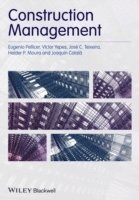
    Construction Management

    AvEugenio Pellicer,Víctor Yepes

    Häftad, Engelska, 2013

    703 kr

    Beställningsvara. Skickas inom 5-8 vardagar. Fri frakt över 249 kr.

    Beskrivning

    The management of construction projects is a wide ranging and challenging discipline in an increasingly international industry, facing continual challenges and demands for improvements in safety, in quality and cost control, and in the avoidance of contractual disputes.Construction Management grew out of a Leonardo da Vinci project to develop a series of Common Learning Outcomes for European Managers in Construction. Financed by the European Union, the project aimed to develop a library of basic materials for developing construction management skills for use in a pan-European context. Focused exclusively on the management of the construction phase of a building project from the contractor’s point of view, Construction Management covers the complete range of topics of which mastery is required by the construction management professional for the effective delivery of new construction projects.With the continued internationalisation of the construction industry, Construction Management will be required reading for undergraduate and postgraduate students across Europe.

    Produktinformation

    • Utgivningsdatum:2013-11-29
    • Mått:171 x 244 x 16 mm
    • Vikt:653 g
    • Format:Häftad
    • Språk:Engelska
    • Antal sidor:336
    • Förlag:John Wiley and Sons Ltd
    • ISBN:9781118539576

    Utforska kategorier

    • Byggnadsteknik inom Naturvetenskap och teknik

    Mer om författaren

    Eugenio Pellicer, Civil Engineer, PhD, Associate Professor (senior Lecturer), Universitat Politecnica de Valencia, Spain Víctor Yepés, Civil Engineer, PhD, Associate Professor (Senior Lecturer), Universitat Politecnica de Valencia, Spain Jose C. Teixeira, Civil Engineer, PhD, Associate Professor (Senior Lecturer), Universidade do Minho, Portugal Helder P. Moura, Civil Engineer, MSc, Regional Director, Estradas de Portugal, SA, Portugal Joaquín Catalá, Civil Engineer, PhD, Professor, Universitat Politecnica de valencia, Spain

    Innehållsförteckning

    • About the Authors xPreface xi1 Organising Construction Processes in Construction Companies 11.1 Educational outcomes 11.2 The facility life-cycle 11.3 Production by projects 41.4 The construction industry 61.5 Construction companies 91.6 Organisational structure of a construction company 131.7 The construction site within the construction company 17References 18Further reading 192 Contract Documents 202.1 Educational outcomes 202.2 Contract documents 202.3 Type of documents 232.4 Bidding documents 262.5 Contractor tender or bid 292.6 Estimating process 292.7 Contract agreement 332.8 Bill of quantities 352.9 General and particular conditions 372.10 Technical specifications 412.11 Contract drawings 432.12 Other documents 46References 48Further reading 493 Procurement Approaches 503.1 Educational outcomes 503.2 Introduction to procurement 503.3 Traditional procurement 533.4 Design-build arrangements 553.5 Management contracting 563.6 Construction management 583.7 Relational contracting 593.8 Public concessions and public-private partnerships 623.9 Organisation modelling 653.10 The project manager team 66References 67Further reading 684 Communications, Information and Documentation 694.1 Educational outcomes 694.2 Importance of communications, documentation and information 694.3 Communications on site 714.4 Daily logs 744.5 Reports 744.6 Construction diary 784.7 Meetings 794.8 Photographs and videos on site 804.9 Information and documentation flow in construction 814.10 Information and communications technologies (ICT) 824.11 Building information modelling (BIM) 874.12 Electronic business and project administration 89References 93Further reading 945 Site Setup and Construction Processes 955.1 Educational outcomes 955.2 Site constraints 955.3 Equipment constraints 985.4 Material storage and handling 995.5 Temporary facilities and auxiliary works 1005.6 Construction jobsite offices 1015.7 Security on construction sites 1035.8 Internal organisation of the construction works 1055.9 General approach to construction processes 1085.10 Temporary works 110References 112Further reading 1136 Machinery and Equipment 1146.1 Educational outcomes 1146.2 The need of machinery and equipment 1146.3 Selection of machinery and equipment 1156.3.1 Conditioning factors 1156.3.2 Methods used to select the machine in relation to economic profitability 1166.4 Calculation of costs 1186.4.1 Fixed and variable hourly costs 1186.4.2 Equipment ownership costs 1196.4.3 Operating costs 1246.5 Maintenance 127References 129Further reading 1307 Productivity and Performance 1317.1 Educational outcomes 1317.2 Productivity and performance 1317.3 Work study 1347.4 Method study 1357.5 Work measurement 1367.6 Equipment performance 1417.7 Assessment of production/productivity 1447.8 Benchmarking and construction productivity improvement 145References 149Further reading 1508 Quality, Innovation and Knowledge Management 1518.1 Educational outcomes 1518.2 Quality, innovation and knowledge 1518.3 Quality control 1538.4 Quality assurance in accordance with ISO 9001 1548.5 Innovation in construction projects 1568.6 Knowledge management in construction 1628.7 Standards and procedures 1648.8 Certificates and technical approvals 165References 167Further reading 1689 Health and Safety Management 1699.1 Educational outcomes 1699.2 Introduction to occupational health and safety 1699.3 The risk–accident cycle 1709.4 Regulatory context 1719.5 Agents involved 1739.6 Business context 1749.7 On-site prevention 1749.8 Health and safety plan 1779.9 Management of the health and safety plan 1789.10 Incidents and accidents during construction 184References 186Further reading 18710 Environmental and Sustainability Management 18810.1 Educational outcomes 18810.2 Environmental impact assessment 18810.3 Basic legislation for environmental impact assessment 19010.4 Environmental management tools 19110.5 Environmental management at the construction site 19210.6 Construction and demolition (C&D) waste management 19310.7 C&D reduction, reuse and recycling 19610.8 Environmental monitoring plan 19810.9 Environmental impacts at the construction site 19910.10 Sustainability in construction 20010.11 Green buildings and certifications 201References 203Further reading 20411 Supply Chain Management 20511.1 Educational outcomes 20511.2 Introduction to supply chain management 20511.3 The construction supply chain 20711.4 Pros and cons of subcontracting in the construction industry 20911.5 Procurement and management of subcontracts 21111.6 Purchase of materials and equipment 21311.7 Coordination of suppliers and subcontractors 21511.8 Lean construction 216References 219Further reading 22012 Resources Management 22112.1 Educational outcomes 22112.2 Construction planning 22112.3 Work breakdown structure 22412.4 Scheduling of activities 22612.5 Duration of activities 22712.6 Resources limitations and leveling 22912.7 Bar chart or gantt diagram 23012.8 Network diagrams 23212.8.1 Historical introduction 23212.8.2 Graphical representation 23312.8.3 Calculating the critical path 23412.8.4 Probability applications 23612.8.5 The precedence diagramming method 23712.8.6 Critical chain 23912.8.7 Commercial software 24012.9 Line of balance 24112.10 Last planner system 24212.11 Time control 24612.12 Cost assessment and control 24712.13 Earned value management 25012.14 Value engineering 25212.15 Risk management 254References 258Further reading 26013 Progress Payment 26113.1 Educational outcomes 26113.2 Introduction to progress payment 26113.3 Lump sum contract 26313.4 Unit price contract 26413.5 Cost plus contract 26713.6 Incentive contract 26813.7 Percentage of construction fee contract 26913.8 Progress payment procedures 269References 272Further reading 27314 Claims and Change Management 27414.1 Educational outcomes 27414.2 Introduction to claims and change management 27414.3 Definition of claim 27514.4 Causes of claims 27714.5 Types of claims 28014.6 Claim management process 28114.7 Claim avoidance practices 28714.8 Management of the change process 288References 291Further reading 29215 Project Closeout 29315.1 Educational outcomes 29315.2 The closeout process 29315.3 Completion and closing of the construction project 29415.4 Inspection and tests 29715.5 Handover 29915.6 Occupation 30015.7 Final documentation 30115.8 Post-project review 303References 307Further reading 307Index 309