• Fri frakt över 249 kr
  • •
  • Snabba leveranser
  • •
  • Billiga böcker
Kundservice

Du är på sajten för privatpersoner.

Företag, bibliotek eller offentlig verksamhet?

Du handlar på classic.bokus.com, där alla dina funktioner finns intakta.
Till classic.bokus.com
Bokus logotyp. Gå till startsidan.
  • Erbjudanden
  • Student
  • Topplistor
  • Barn & ungdom
  • Bokus Play
  • E-böcker
  • Ljudböcker
  • Pocketböcker
  • Spel och pussel

5% studentrabatt – använd koden KURSBOK27 →

Sidfot

Mina sidor

    Hjälp

    • Kundservice
    • Vanliga frågor och svar
    • Frakt och leverans
    • Retur vid ångerrätt
    • Reklamera vara
    • Betalning
    • Köpvillkor
    • Allmänna villkor
    • Information om webbplatsens tillgänglighet

    Om Bokus

    • Om oss
    • Pressrum
    • För studenter
    • För företag
    • För bibliotek och offentlig verksamhet
    • För leverantörer
    • Hållbarhet

    Populärt

    • Aktuella erbjudanden
    • Presentkort
    • Studentlitteratur
    • Nya böcker
    • Topplistor
    • Signerade böcker
    • Engelska böcker

    Inspiration

    • Boktips
    • BookTok
    • Barnbokskaraktärer
    • Populära författare
    Logotyp för Bokus
    Följ oss på Facebook (extern länk)Följ oss på Instagram (extern länk)Följ oss på YouTube (extern länk)Följ oss på TikTok (extern länk)
    bokus @ CookiesAnpassa cookiesIntegritetspolicyKöpvillkor
    Till Citymail hemsida (extern länk)Till Budbee hemsida (extern länk)Till Postnord hemsida (extern länk)Till Schenker hemsida (extern länk)Till Early Bird hemsida (extern länk)Till Walleys hemsida (extern länk)
    1. Data och IT
    2. It-certifieringar

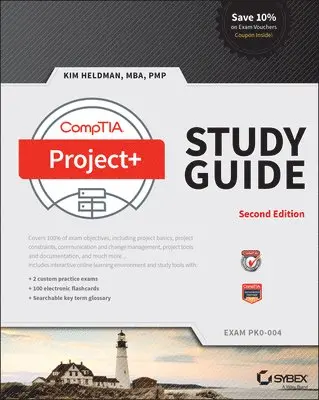
    CompTIA Project+ Study Guide

    Exam PK0-004

    AvKim Heldman

    Häftad, Engelska, 2017

    360 kr

    Tillfälligt slut

    Fler format och utgåvor

    Häftad

    357 kr

    E-bok

    583 kr

    E-bok

    583 kr

    Beskrivning

    The bestselling Project+ preparation guide, updated for the latest exam The CompTIA Project+ Study Guide, Second Edition is your comprehensive resource for taking Exam PK0-004. With 100% coverage of all exam objectives, bolstered by real-world scenarios and the Sybex interactive learning environment, this book gives you everything you need to approach the exam with confidence. Detailed explanations and superior study tools cover and reinforce setup, initiation, planning, execution, delivery, change, control, communication, and closure, and the author Kim Heldman's twenty-five years of project management experience provide deep insight into real-world applications. Study tools include access to two bonus practice exams, allowing you to focus on areas you need further review, and electronic flashcards provide last minute review on key concepts.The Project+ exam is a first step into the complex world of project management, and serves as a springboard to the Project Management Institute's (PMI) PMP certification. This study guide helps you build the knowledge you need to be confident on exam day. Review 100 percent of the Project+ exam objectivesUnderstand the real-world applications of each conceptGain expert insight drawn from real-world experienceAccess online practice exams, electronic flashcards, and moreEvery industry needs people who know how to deliver successful project outcomes. The Project+ exam parallels the PMI's A Guide to Project Management Body of Knowledge (PMBOK© Guide), so this smart study guide gives you a solid foundation for additional project management training and certification. The CompTIA Project+ Study Guide, Second Edition combines industry-leading expertise with Sybex resources to help you successfully begin your project management journey.

    Produktinformation

    • Utgivningsdatum:2017-05-02
    • Mått:188 x 231 x 23 mm
    • Vikt:476 g
    • Format:Häftad
    • Språk:Engelska
    • Antal sidor:336
    • Upplaga:2
    • Förlag:John Wiley & Sons Inc
    • ISBN:9781119280521

    Utforska kategorier

    • It-certifieringar inom Data och IT

    Mer om författaren

    KIM HELDMAN, MBA, PMP, is Senior Manager, IT/Chief Information Officer for the Regional Transportation District in Denver, CO. She oversees an IT portfolio of projects ranging from those small in scope and budget to multimillion-dollar, multiyear projects. With more than 25 years of experience in information technology project management, Kim directs IT resource planning, budgeting, project prioritization, and strategic and tactical planning. Most of the real-world scenarios in this Study Guide are based on her actual experiences on the job. Kim is the author of several books on project management, including Project Management JumpStart, 3rd Edition, and the eight previous editions of the bestselling PMP Project Management Professional Study Guide. Visit her website at www.kimheldman.com for more information.

    Innehållsförteckning

    • Introduction xviii Assessment Test xxxiiChapter 1 Initiating the Project 1Defining the Project 2Identifying the Project 2Programs and Portfolios 3Understanding Operations 4Using the PMBOK Guide® 4Understanding Organizational Structures 5The Functional Organization 5The Matrix Organization 6The Projectized Organization 8Validating the Project 9How Projects Come About 10Business Case Validation and Stakeholder Identification 12Project Selection 13Project Selection Methods 13Understanding the Project Management Knowledge Areas 17Understanding the Role of the Project Manager 17Leadership 18Communication 19Problem-Solving 19Negotiating 20Organization and Time Management 21Summary 21Exam Essentials 22Key Terms 23Review Questions 24Chapter 2 Project Team Roles and Responsibilities 29Stakeholder Roles and Responsibilities 31The Customer 32The Project Sponsor 32The Project Manager 33The Project Coordinator 34The Project Scheduler 34The Project Team Members 34The Project Management Office 35The Stakeholder Matrix 36Receiving a Project Request 37The Project Request Process 37The High-Level Scope Definition 37Documenting the High-Level Scope Definition 39Summary 40Exam Essentials 40Key Terms 41Review Questions 42Chapter 3 Creating the Project Charter 47Project Process Groups 49The Initiating Processes 50The Planning Processes 50The Executing Processes 52The Monitoring and Controlling Processes 53The Closing Processes 53Creating the Project Charter 54Goals and Objectives 55Project Description 55Key Deliverables 55High-Level Requirements 56High-Level Milestones 56High-Level Budget 56High-Level Assumptions 56High-Level Constraints 57High-Level Risks 57Other Contents 58Criteria for Approval 58Formal Approval 58Holding the Kickoff Meeting 58Summary 60Exam Essentials 61Key Terms 62Review Questions 63Chapter 4 Creating the Work Breakdown Structure 67Documenting the Scope Management Plan 68Writing the Scope Statement 69Project Objectives 70Project Description 70Acceptance Criteria and Key Performance Indicators 71Key Deliverables 71Exclusions from Scope 71Time and Cost Estimates 71Assumptions 72Constraints and Influences 72Constraints 72Influences 75Approval of the Scope Statement 77Documenting the Requirements 77Requirement Categories 78The Requirements Document 80Creating the Work Breakdown Structure 80Decomposing the Major Deliverables 81Guidelines for Creating a WBS 82Benefits of the WBS 83WBS Dictionary 84Summary 87Exam Essentials 88Key Terms 88Review Questions 90Chapter 5 Creating the Project Schedule 95Schedule Planning 96Defining Tasks 97Task Sequencing 98Types of Dependencies 98Logical Relationships 98Creating a Network Diagram 99Assigning Resources 100Determining Task Durations 100Defining Duration 101Estimating Techniques 101Creating the Project Schedule 103Milestones 104Displaying the Schedule 105The Critical Path Method 105Duration Compression 107Project-Scheduling Software 108Setting the Baseline and Obtaining Approval 108Quality Gates 108Establishing Governance Gates 109Summary 111Exam Essentials 112Key Terms 112Review Questions 114Chapter 6 Resource Planning and Management 119Determining Resource Needs 121Resource Management Concepts 121Interproject Work 124Personnel Management 124Selecting Team Members 124Organization Charts and Position Descriptions 125Matrix-Based Charts 126Roles and Responsibilities 127Building and Managing a Cohesive Team 127Trust Building 128Monitoring Team Performance 129Conflict Management 132Managing Conflict 133Project Kickoff 136Summary 139Exam Essentials 140Key Terms 141Review Questions 143Chapter 7 Defining the Project Budget and Risk Plans 147Estimating Costs 148Cost-Estimating Techniques 148Estimating Tips 152Creating the Project Budget 153Creating the Project Budget 154Cost Baseline 156Expenditure Tracking and Reporting 156Earned Value Management 157Expenditure Reporting 160Risk Planning 161Risk Identification 162Risk Analysis 163Risk Response 165Risk Monitoring 167Summary 169Exam Essentials 170Key Terms 170Review Questions 172Chapter 8 Communicating the Plan 177Communications Planning 179Exchanging Information 180Listening 182Methods of Communicating 182Forms of Communicating 183Communication Methods 183The Communication Plan 186Communicating with Project Team Members 188Managing Stakeholder Expectations andCommunication Needs 189Engaging Stakeholders 190Factors That Influence Communications 192Communication Triggers 194Summary 198Exam Essentials 199Key Terms 200Review Questions 201Chapter 9 Processing Change Requests and Procurement Documents 205Project Management Plan Review 207Implementing Change Control Systems 208Identify and Document the Change Request 210Change Request Log 210Evaluate the Impact and Justification of Change 211Change Control Board 212Implement the Change 213Validate the Change 213Updating the Project Management Plan 213Communicating the Changes 214Types of Organizational Change 214Procurement Planning 215Statement of Work 216Vendor Solicitation 217Vendor Selection Criteria 218Types of Contracts 219Partner and Vendor-centric Documents 220Agile Project Management 221Sprint Planning 222Daily Standups or Scrum Meetings 223Scrum Retrospective 223Other Methodologies 224Summary 225Exam Essentials 226Key Terms 227Review Questions 229Chapter 10 Project Tools and Documentation 233Project Management Tools 235Charts 236Dashboards and Status Reports 240Knowledge Management Tools 243Using Performance Measures 244Key Performance Indicators 245Key Performance Parameters 246Balanced Score Card 246Project Endings 246Characteristics of Closing 246Types of Project Endings 247Steps in Closing Out a Project 249Obtaining Sign-Off 249Transferring the Product of the Project 249Releasing Team Members 250Closing Out the Contract 250Administrative Closure 251Archiving Project Documents 251Documenting Lessons Learned 251Preparing the Project Close Report 254Summary 255Exam Essentials 256Key Terms 257Review Questions 258Appendix Answers to Review Questions 263Chapter 1: Initiating the Project 264Chapter 2: Project Team Roles and Responsibilities 266Chapter 3: Creating the Project Charter 267Chapter 4: Creating the Work Breakdown Structure 269Chapter 5: Creating the Project Schedule 270Chapter 6: Resource Planning and Management 272Chapter 7: Defining the Project Budget and Risk Plans 273Chapter 8: Communicating the Plan 275Chapter 9: Processing Change Requests and Procurement Documents 276Chapter 10: Project Tools and Documentation 278Index 281