• Fri frakt över 249 kr
  • •
  • Snabba leveranser
  • •
  • Billiga böcker
Kundservice

Du är på sajten för privatpersoner.

Företag, bibliotek eller offentlig verksamhet?

Du handlar på classic.bokus.com, där alla dina funktioner finns intakta.
Till classic.bokus.com
Bokus logotyp. Gå till startsidan.
  • Erbjudanden
  • Nyheter
  • Student
  • Topplistor
  • Barn & ungdom
  • Bokus Play
  • E-böcker
  • Pocketböcker
  • Spel & pussel

Må bättre, för mindre! Upp till 50% rabatt på hälsoböcker

Sidfot

Mina sidor

    Hjälp

    • Kundservice
    • Vanliga frågor och svar
    • Frakt och leverans
    • Retur vid ångerrätt
    • Reklamera vara
    • Betalning
    • Köpvillkor
    • Allmänna villkor
    • Information om webbplatsens tillgänglighet

    Om Bokus

    • Om oss
    • Pressrum
    • För studenter
    • För företag
    • För bibliotek och offentlig verksamhet
    • För leverantörer
    • Hållbarhet

    Populärt

    • Aktuella erbjudanden
    • Presentkort
    • Studentlitteratur
    • Nya böcker
    • Topplistor
    • Signerade böcker
    • Engelska böcker

    Inspiration

    • Boktips
    • BookTok
    • Populära bokserier
    • Barnbokskaraktärer
    • Populära författare
    Logotyp för Bokus
    Följ oss på Facebook (extern länk)Följ oss på Instagram (extern länk)Följ oss på YouTube (extern länk)Följ oss på TikTok (extern länk)
    bokus @ CookiesAnpassa cookiesIntegritetspolicyKöpvillkor
    Till Citymail hemsida (extern länk)Till Budbee hemsida (extern länk)Till Postnord hemsida (extern länk)Till Schenker hemsida (extern länk)Till Early Bird hemsida (extern länk)Till Walleys hemsida (extern länk)
    1. Skönlitteratur
    2. Litteraturvetenskap
    3. Litteraturvetenskap

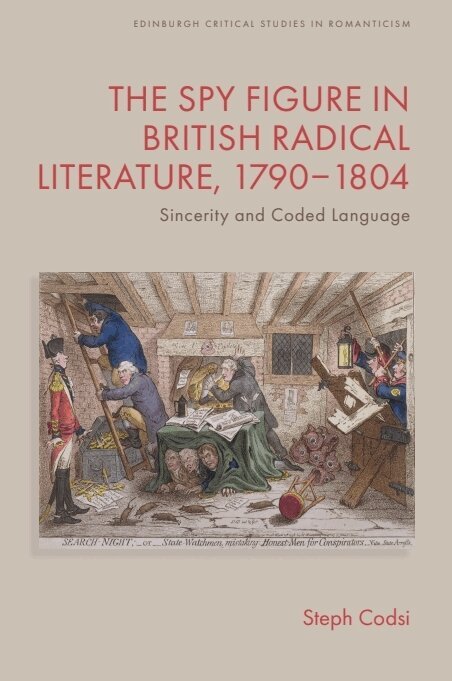
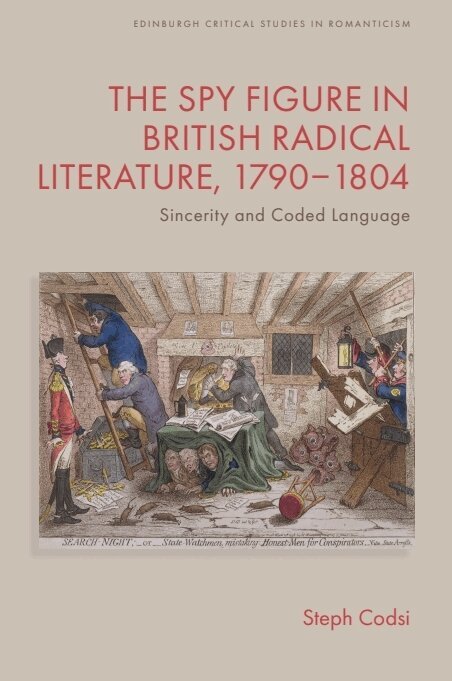
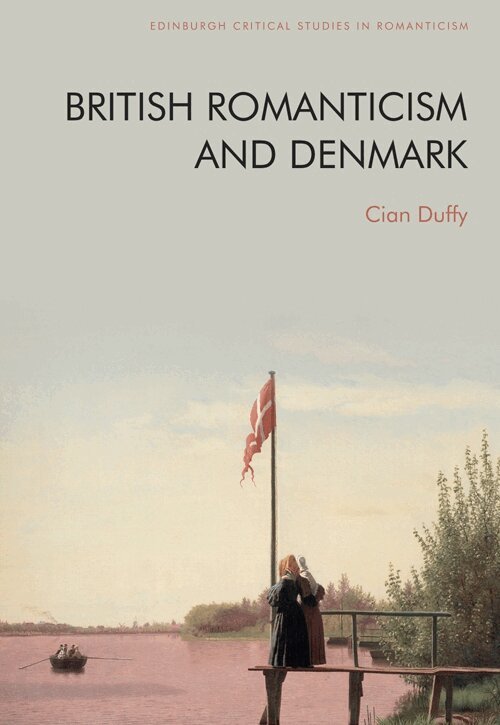
    Spy Figure in British Radical Literature, 1790–1804

    Sincerity and Coded Language

    AvSteph Codsi

    Inbunden, Engelska, 2026

    Del i serien Edinburgh Critical Studies in Romanticism

    1 233 kr

    Kommande

    Fler format och utgåvor

    E-bok

    Kommande

    E-bok

    Kommande

    Beskrivning

    The book argues that literary authors who had initially supported the ideals of the French Revolution, became more coded and elliptical in their writing as a response to surveillance and repression in Britain in the 1790s. It shows that authors appropriated the tools of invisible state surveillance by using coded modes and methods, including pseudonymity, elision, satire, irony, innuendo, allegory and self-censorship, amongst others. These strategies were often used performatively to mock the spy figure and interrogate the encroaching culture of secrecy, silencing and suspicion; but also, as a precautionary measure to protect writers from laws against sedition and treason. Applying surveillance theory, the book provides accessible and illuminating readings of literary works by William Godwin, John Thelwall, Mary Robinson, Robert Bage, and William Blake.

    Produktinformation

    • Utgivningsdatum:2026-09-30
    • Mått:156 x 234 x undefined mm
    • Format:Inbunden
    • Språk:Engelska
    • Serie:Edinburgh Critical Studies in Romanticism
    • Antal sidor:216
    • Förlag:Edinburgh University Press
    • ISBN:9781399529259

    Utforska kategorier

    • Litteraturvetenskap inom Skönlitteratur
    • Litteraturvetenskap inom Skönlitteratur

    Mer om författaren

    Stephanie Codsi is a Lecturer in English at the University of Bristol. Her research focuses on the poetry of William Blake, and on radical literature of the 1790s. She is interested in the intersections between Romanticism and the Gothic, on the Revolution Controversy, and how the culture of surveillance and suspicion affected radical literature in the decade of the 1790s.

    Innehållsförteckning

    • List of FiguresAcknowledgementsIntroduction1. ‘Truth is a libel’: The Revolution Controversy: Sincerity and Coded Language2. ‘Every key-hole is an informer’: John Thelwall’s Lecture on Spies and Informers (1794), and his Comic Ballads3. Spies, Sincerity and Narrative Power in William Godwin’s Caleb Williams (1794)4. ‘Hush, walls have ears’: French Spies and Performed Sincerity in Robert Bage’s Hermsprong (1796)5. Mary Robinson’s Radical Satire: Mimicry, Pseudonyms and The Sylphid’s ‘invisible spy’ (1799–1800)6. William Blake: The Spy on the Medway, ‘Satan’s watch-fiends’ and ‘the voice of honest indignation’ (1790–1804)ConclusionBibliographyIndex