• Fri frakt över 249 kr
  • •
  • Snabba leveranser
  • •
  • Billiga böcker
Kundservice

Du är på sajten för privatpersoner.

Företag, bibliotek eller offentlig verksamhet?

Du handlar på classic.bokus.com, där alla dina funktioner finns intakta.
Till classic.bokus.com
Bokus logotyp. Gå till startsidan.
  • Erbjudanden
  • Nyheter
  • Student
  • Topplistor
  • Barn & ungdom
  • Bokus Play
  • E-böcker
  • Pocketböcker
  • Spel & pussel

Upp till 20% på populära nyheter →

Sidfot

Mina sidor

    Hjälp

    • Kundservice
    • Vanliga frågor och svar
    • Frakt och leverans
    • Retur vid ångerrätt
    • Reklamera vara
    • Betalning
    • Köpvillkor
    • Allmänna villkor
    • Information om webbplatsens tillgänglighet

    Om Bokus

    • Om oss
    • Pressrum
    • För studenter
    • För företag
    • För bibliotek och offentlig verksamhet
    • För leverantörer
    • Hållbarhet

    Populärt

    • Aktuella erbjudanden
    • Presentkort
    • Studentlitteratur
    • Nya böcker
    • Topplistor
    • Signerade böcker
    • Engelska böcker

    Inspiration

    • Boktips
    • BookTok
    • Populära bokserier
    • Barnbokskaraktärer
    • Populära författare

    Mina sidor

      Hjälp

      • Kundservice
      • Vanliga frågor och svar
      • Frakt och leverans
      • Retur vid ångerrätt
      • Reklamera vara
      • Betalning
      • Köpvillkor
      • Allmänna villkor
      • Information om webbplatsens tillgänglighet

      Om Bokus

      • Om oss
      • Pressrum
      • För studenter
      • För företag
      • För bibliotek och offentlig verksamhet
      • För leverantörer
      • Hållbarhet

      Populärt

      • Aktuella erbjudanden
      • Presentkort
      • Studentlitteratur
      • Nya böcker
      • Topplistor
      • Signerade böcker
      • Engelska böcker

      Inspiration

      • Boktips
      • BookTok
      • Populära bokserier
      • Barnbokskaraktärer
      • Populära författare
      Logotyp för Bokus
      Följ oss på Facebook (extern länk)Följ oss på Instagram (extern länk)Följ oss på YouTube (extern länk)Följ oss på TikTok (extern länk)
      bokus @ CookiesIntegritetspolicyKöpvillkor
      Till Citymail hemsida (extern länk)Till Budbee hemsida (extern länk)Till Postnord hemsida (extern länk)Till Schenker hemsida (extern länk)Till Early Bird hemsida (extern länk)Till Walleys hemsida (extern länk)
      1. Naturvetenskap och teknik
      2. Teknik och industri
      3. Byggnadsteknik

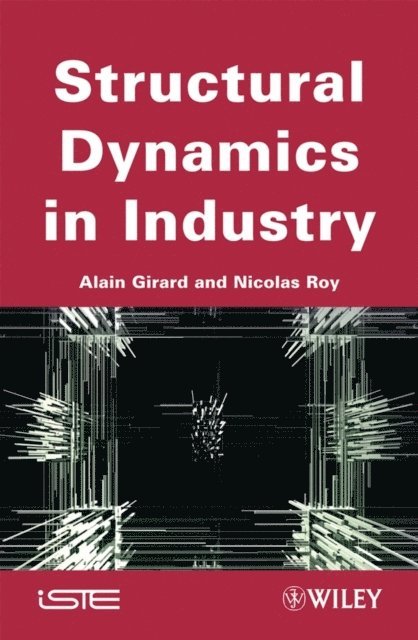
      Structural Dynamics in Industry

      AvAlain Girard,Nicolas Roy

      Inbunden, Engelska, 2007

      3 368 kr

      Beställningsvara. Skickas inom 11-20 vardagar. Fri frakt över 249 kr.

      Beskrivning

      Structural Dynamics in Industry focuses on the behavior of structures subjected to a vibrational or shock environment. It takes a systematic approach to the basic concepts in order to enhance the reader's understanding and to allow industrial structures to be covered with the necessary degree of depth. The developments are explained with a minimum of mathematics and are frequently illustrated with simple examples, while numerous industry case studies are also provided.

      Produktinformation

      • Utgivningsdatum:2007-12-27
      • Mått:163 x 241 x 31 mm
      • Vikt:816 g
      • Format:Inbunden
      • Språk:Engelska
      • Antal sidor:400
      • Förlag:ISTE Ltd and John Wiley & Sons Inc
      • ISBN:9781848210042

      Utforska kategorier

      • Byggnadsteknik inom Naturvetenskap och teknik

      Mer om författaren

      Alain Girard is a well-known expert in structural dynamics at Intespace. He is also Professor at the University of Toulouse, SUPAERO and ENSICA in France. Nicolas Roy is a mechanical engineer at Intespace. He is also a lecturer at various European universities.

      Innehållsförteckning

      • Foreword xiiiPreface xvIntroduction xviiGlossary xxiiiChapter 1. General Introduction to Linear Analysis 11.1. Introduction 11.2. Motion types .21.2.1. Sine motion 21.2.1.1. Pure sine 21.2.1.2. Swept sine 41.2.1.3. Periodic motion 51.2.2. Transient motion 51.2.3. Random motion. 71.2.3.1. Random process 71.2.3.2. Time analysis 81.2.3.3. Statistical analysis 91.2.3.4. Power spectral densities 121.3. Time domain and frequency domain 141.3.1. Introduction 141.3.2. The time domain 151.3.3. The frequency domain 161.4. Frequency Response Functions 171.4.1. Introduction 171.4.2. Frequency Response Functions and responses 181.4.3. The nature of excitations and responses 191.4.4. The nature of Frequency Response Functions 211.5. Equations of motion and solution. 241.5.1. Equations of motion .241.5.2. Solution using the direct frequency approach 261.5.3. Solution using the modal approach 271.5.4. Modes and 1-DOF system 281.6. Analysis and tests 29Chapter 2. The Single-Degree-of-Freedom System 332.1. Introduction 332.2. The equation of motion and the solution in the frequency domain 352.2.1. Equations of motion 352.2.2. Motion without excitation 352.2.2.1. The conservative system 352.2.2.2. Dissipative system 372.2.3. Solution in the frequency domain 392.2.4. Dynamic amplifications 432.2.5. Response to a random excitation 492.3. Time responses. 512.3.1. Response to unit impulse 512.3.2. Response to a general excitation 552.3.3. Response spectra 562.4. Representation of the damping 612.4.1. Viscous damping 612.4.2. Structural damping 622.4.3. Other representations 64Chapter 3. Multiple-Degree-of-Freedom Systems 653.1. Introduction 653.2. Determining the structural matrices 663.2.1. Introduction 663.2.2. Local element matrices 673.2.3. Element matrices in global reference form 683.2.4. Assembly of element matrices 703.2.5. Linear constraints between DOF 723.2.5.1. Introduction 723.2.5.2. DOF elimination 733.2.5.3. DOF introduction. 773.2.6. Excitation forces 793.3. The finite element method 803.3.1. Introduction 803.3.2. The rod element 823.3.3. Beam finite element in bending 833.3.4. The complete beam finite element 863.3.5. Excitation forces 883.4. Industrial models 893.4.1. Introduction 893.4.2. The element types 893.4.3. Linear constraints 913.4.4. DOF management 913.4.5. Rules for modeling and verification of the model 933.4.6. Industrial examples 943.5. Solution by direct integration 953.5.1. Introduction 953.5.2. Example of explicit method 963.5.3. Example of implicit method 97Chapter 4. The Modal Approach 994.1. Introduction 994.2. Normal modes 1004.2.1. Introduction 1004.2.2. Free structures 1044.2.3. System static condensation 1084.2.4. Eigenvalue problem solution 1114.3. Mode superposition 1154.3.1. Introduction 1154.3.2. Equation of motion transformation 1174.3.3. Problem caused by the damping 1194.3.4. Frequency resolution 1224.4. From the frequency approach to the modal approach 126Chapter 5. Modal Effective Parameters  1295.1. Introduction 1295.2. Effective modal parameters and truncation 1305.2.1. Definition of the effective modal parameters 1305.2.2. Summation rules 1335.2.2.1. Direct summation. 1335.2.2.2. Flexibilities in the presence of rigid modes 1345.2.2.3. Transmissibilities and effective masses by zones 1375.2.2.4. Other summation rules 1395.2.3. Correction of the truncation effects 1405.3. Particular case of a statically determined structure 1435.3.1. Introduction 1435.3.2. Effective mass models 1455.4. Modal effective parameters and dynamic responses 1535.4.1. Frequency responses 1535.4.2. Random responses 1575.4.3. Time responses 1595.4.4. Time response extrema 1595.5. Industrial examples 161Chapter 6. Continuous Systems 1696.1. Introduction 1696.2. The rod element 1716.2.1. Introduction 1716.2.2. Clamped-free rod 1736.2.3. Free-free rod 1786.2.4. Clamped-clamped rod 1826.3. Bending beam element 1846.3.1. Introduction 1846.3.2. Clamped-free beam. 1886.3.3. Free-free beam 1936.3.4. Clamped-clamped beam 1996.3.5. Shear and rotary inertia effects 2046.4. Plate element 2066.4.1.  Introduction  2066.4.2. Some plate results in bending 2076.4.3. Simply supported rectangular plate 2086.5. Combined cases 2106.5.1. Introduction 2106.5.2. Combination rod + local mass or flexibility 2136.5.3. Some typical results 215Chapter 7. Complex Modes 2197.1. Introduction 2197.2. Dissipative systems 2207.2.1. Complex modes. 2207.2.2. Mode superposition 2247.2.3. Modal effective parameters and dynamic amplifications 2267.2.4. Simple example 2297.3. Gyroscopic effects 2327.3.1. Introduction 2327.3.2. Mode superposition 2347.4. A more general case 2367.4.1. Introduction 2367.4.2. Complex modes 2377.4.3. Mode superposition 2407.4.4. Modal effective parameters and dynamic amplifications 2427.5. Applications 2457.5.1. Simple example 2457.5.2. Industrial case 248Chapter 8. Modal Synthesis 2498.1. Introduction 2498.2. General approach 2518.2.1. Analysis of substructures 2518.2.2. Coupling of substructures 2538.2.3. Recovery 2558.3. Choice of mode 2568.3.1. Introduction 2568.3.2. Boundary conditions 2588.3.3. Normal modes 2598.3.4. Static flexibilities 2608.3.5. Junction modes 2628.3.6. Illustration 2638.3.7. Possible combinations 2658.4. Some methods 2668.4.1. Craig-Bampton method 2668.4.2. Craig-Chang method 2718.4.3. Benfield-Hruda method 2768.4.4. Effective mass models 2818.4.5. Reduced models 2838.5. Case study 2878.5.1. Benfield-Hruda truss 2878.5.2. Industrial cases 290Chapter 9. Frequency Response Synthesis 2959.1. Introduction 2959.2. Frequency Response Functions 2969.2.1. FRF and other dynamic characteristics 2969.2.2. Transformation of the FRF 2989.2.3. Simple examples 2999.3. Coupling by FRF 3019.3.1. FRF necessary for coupling 3019.3.2. Solution of the coupling 3039.3.3. Recovery 3049.3.4. Summary 3059.4. The basic cases 3069.4.1. Introduction 3069.4.2. Free substructures at the connections 3069.4.3. Substructures constrained at the connections 3089.4.4. Mixed conditions at the connections 3099.5. Generalization 3109.5.1. Introduction 3109.5.2. Stiffness approach 3119.5.3. Flexibility approach 3129.5.4. Comparison of the two approaches 3149.5.5. Particular cases 3179.6. Comparison with other substructuring techniques 3189.6.1. The matrix level 3189.6.2. The modal level 3199.6.3. The frequency response level 3209.6.4. Conclusion 321Chapter 10. Introduction to Non-linear Analysis 32310.1. Introduction 32310.2. Non-linear systems 32410.2.1. Introduction 32410.2.2. Simple examples of large displacements 32610.2.3. Simple example of variable link 32810.2.4. Simple example of dry friction 32810.2.5. Material non-linearities 32910.3. Non-linear 1-DOF system 32910.3.1. Introduction 32910.3.2. Undamped motion without excitation 33110.3.3. Case of a stiffness of form k (1 x 2 ) 33210.3.4. Undamped motion with excitation 33610.3.5. Damped motion with excitation 34010.4. Non-linear N-DOF systems 34310.4.1. Introduction 34310.4.2. Non-linear link with periodic motion 34410.4.3. Direct integration of equations 346Chapter 11. Testing Techniques 34911.1. Introduction 34911.2. Dynamic tests 35011.2.1. Development plan of a structure 35011.2.2. Types of tests 35211.2.3. Test hardware 35311.3. The identification tests 35811.3.1. Introduction 35811.3.2. Modal parameters to be identified 35911.3.3. Phase resonance modal tests 36211.3.4. Phase separation modal tests 36411.3.5. Extraction of modal parameters 36611.3.6. Single DOF (SDOF) methods 36811.3.7. Multi-DOF (MDOF) methods 37011.4. Simulation tests 37211.4.1. Introduction 37211.4.2. Tests with shakers 37311.4.3. Shock device tests 37511.4.4. The tests in a reverberant acoustic chamber 37611.4.5. Elaboration of specifications 37711.4.6. Impact of a structure on its environment 379Chapter 12. Model Updating and Optimization 38512.1. Introduction 38512.2. Sensitivity analysis 38712.2.1. Introduction 38712.2.2. Sensitivity of the natural frequencies 38812.2.3. Sensitivity of the eigenvectors 38812.2.4. Sensitivity of the modal effective parameters 38912.2.5. Simple example 39012.3. Ritz reanalysis 39212.3.1. Introduction 39212.3.2. Utilization of the normal modes 39212.3.3. Utilization of additional modes 39312.3.4. Simple example 39312.4. Model updating 39512.4.1. Physical parameters 39512.4.2. Test/analysis correlation 39812.4.3. Updating procedure 40012.5. Optimization processes 40112.5.1. Introduction 40112.5.2. Non-linear optimization methods 40212.5.3. Non-linear simplex method 40312.6. Applications 40412.6.1. Optimization of a simple system 40412.6.2. Updating a simple system 40512.6.3. Industrial case 407Bibliography 411Index 417
      Hoppa över listan

      Mer från samma författare

      Nicolas Roy, Alain Girard - Structural Dynamics in Industry, E-bok

      Structural Dynamics in Industry

      Nicolas Roy, Alain Girard

      E-bok
      2010

      3 842 kr

      Hoppa över listan

      Du kanske också är intresserad av

      Karin Holmberg - Reparationskurs Engelska Kop pärm, Övrigt

      Reparationskurs Engelska Kop pärm

      Karin Holmberg

      3 368 kr

      Harry Fröhlich - Dramen II, Inbunden

      Dramen II

      Harry Fröhlich

      Inbunden, 2026

      3 368 kr

      Inside the World's Most Famous Intelligence Agencies, Inbunden

      Inside the World's Most Famous Intelligence Agencies

      Rosen Young Adult

      Inbunden

      3 368 kr

      Various - Land Formation: The Shifting, Moving, Changing Earth, Inbunden

      Land Formation: The Shifting, Moving, Changing Earth

      Various

      Inbunden

      3 368 kr

      Yvon Chevalier, Jean Vinh Tuong - Mechanical Characterization of Materials and Wave Dispersion, Inbunden

      Mechanical Characterization of Materials and Wave Dispersion

      Yvon Chevalier, Jean Vinh Tuong

      Inbunden, 2010

      3 368 kr

      Herzog August Bibliothek, Peter Mortzfeld - Supplement 5: Biographische und bibliographische Beschreibungen mit Künstlerregister, E-bok

      Supplement 5: Biographische und bibliographische Beschreibungen mit Künstlerregister

      Herzog August Bibliothek, Peter Mortzfeld

      E-bok
      2011

      3 368 kr

      Various - In the News: Set 5, Inbunden

      In the News: Set 5

      Various

      Inbunden

      3 368 kr

      Jean-Louis Guyader - Vibration in Continuous Media, Inbunden

      Vibration in Continuous Media

      Jean-Louis Guyader

      Inbunden, 2006

      3 368 kr

      Urs Leo Gantenbein - Die Salzburger Schriften (1524/25), Inbunden
      Del 2

      Die Salzburger Schriften (1524/25)

      Urs Leo Gantenbein

      Inbunden, 2025

      3 368 kr

      Herzog August Bibliothek, Peter Mortzfeld - Register 7-14, E-bok

      Register 7-14

      Herzog August Bibliothek, Peter Mortzfeld

      E-bok
      2011

      3 368 kr