• Fri frakt över 249 kr
  • •
  • Snabba leveranser
  • •
  • Billiga böcker
Kundservice

Du är på sajten för privatpersoner.

Företag, bibliotek eller offentlig verksamhet?

Du handlar på classic.bokus.com, där alla dina funktioner finns intakta.
Till classic.bokus.com
Bokus logotyp. Gå till startsidan.
  • Erbjudanden
  • Student
  • Topplistor
  • Barn & ungdom
  • Bokus Play
  • E-böcker
  • Ljudböcker
  • Pocketböcker
  • Spel och pussel

Pocketfynda! Hundratals böcker för 49 kr/st →

Sidfot

Mina sidor

    Hjälp

    • Kundservice
    • Vanliga frågor och svar
    • Frakt och leverans
    • Retur vid ångerrätt
    • Reklamera vara
    • Betalning
    • Köpvillkor
    • Allmänna villkor
    • Information om webbplatsens tillgänglighet

    Om Bokus

    • Om oss
    • Pressrum
    • För studenter
    • För företag
    • För bibliotek och offentlig verksamhet
    • För leverantörer
    • Hållbarhet

    Populärt

    • Aktuella erbjudanden
    • Presentkort
    • Studentlitteratur
    • Nya böcker
    • Topplistor
    • Signerade böcker
    • Engelska böcker

    Inspiration

    • Boktips
    • BookTok
    • Barnbokskaraktärer
    • Populära författare
    Logotyp för Bokus
    Följ oss på Facebook (extern länk)Följ oss på Instagram (extern länk)Följ oss på YouTube (extern länk)Följ oss på TikTok (extern länk)
    bokus @ CookiesAnpassa cookiesIntegritetspolicyKöpvillkor
    Till Citymail hemsida (extern länk)Till Budbee hemsida (extern länk)Till Postnord hemsida (extern länk)Till Schenker hemsida (extern länk)Till Early Bird hemsida (extern länk)Till Walleys hemsida (extern länk)
    1. Historia och arkeologi
    2. Historia
    3. Mellanösterns historia

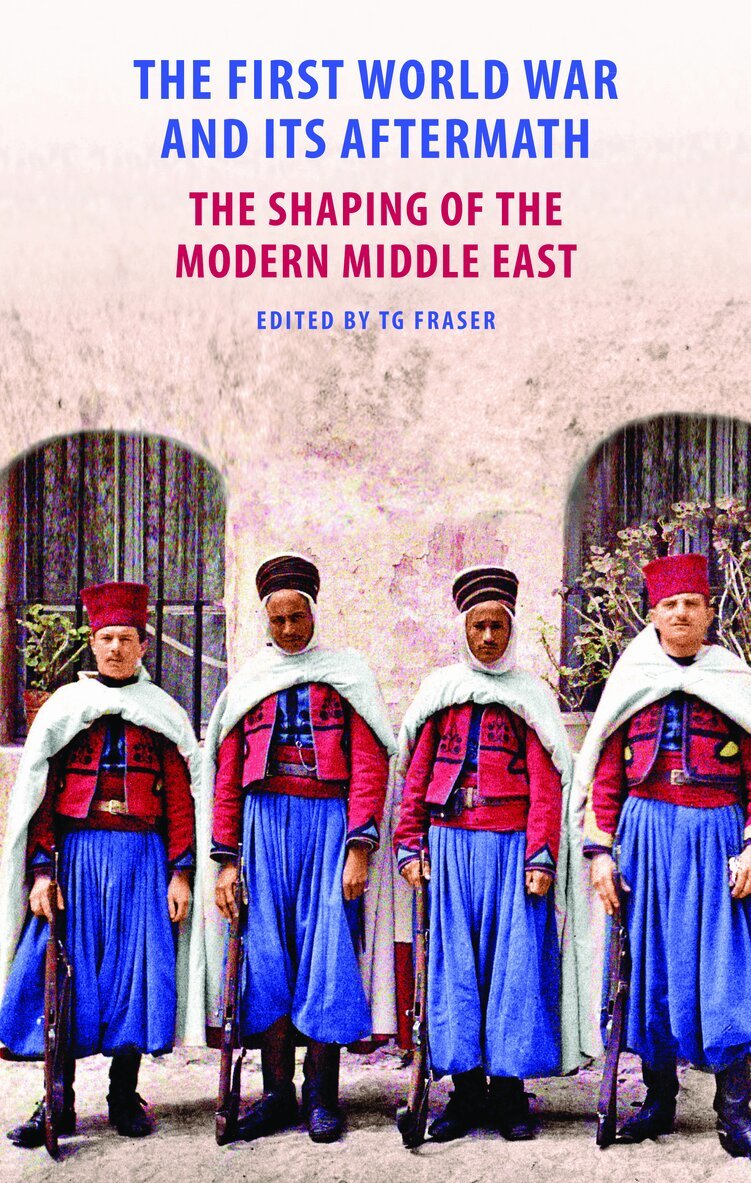
    First World War and Its Aftermath in the Middle East

    The Shaping of the Modern Middle East

    AvFraser

    Häftad, Engelska, 2024

    363 kr

    Beställningsvara. Skickas inom 7-10 vardagar. Fri frakt över 249 kr.

    Beskrivning

    This book gathers together leading scholars in the field to examine the impact of the First World War on the Middle East, so crucial to understanding the conflicts unfolding in the region today.In addition to recounting the international politics of the Great Powers that drew lines in the sand, contributors address topics ranging from the war’s effects on women, the experience of the Kurds, sectarianism, the evolution of Islamism, and the importance of prominent intellectuals like Ziya Gökalp and Michel ‘Aflaq. They examine the dissolution of the Ottoman empire, the exploitation of notions of Islamic unity and Pan-Arabism, the influences of Wilson and American ideals on Middle East leaders, and likewise the influence of Lenin’s vision of a communist utopia. Altogether, they tell a story of promises made and promises broken, of the struggle between self- determination and international recognition.

    Produktinformation

    • Utgivningsdatum:2024-10-24
    • Mått:210 x 20 x 130 mm
    • Vikt:340 g
    • Format:Häftad
    • Språk:Engelska
    • Antal sidor:350
    • Förlag:GINGKO
    • ISBN:9781914983269

    Utforska kategorier

    • Mellanösterns historia inom Historia och arkeologi

    Mer om författaren

    T.G. Fraser MBE is Emeritus Professor of History at Ulster University, UK. He was previously Head of the School of History, Philosophy and Politics and Provost of the Magee Campus.

    Recensioner i media

    ‘In light of this nascent regional awareness of the Middle East’s historical boundaries, the inaugural Gingko Conference’s decision to focus on the aftermath of the First World War is more pertinent than ever.’– Eugene Rogan, Associate Professor of the Modern History of the Middle East, University of Oxford‘The Gingko Library Conference will throw light on how the Middle East and its problems came to be as they are: this is a highly important event and very appropriate in this centenary year marking the beginning of the First World War.’– Anthony Grayling, Master of the New College of the Humanities‘The institutions that concentrate on culture hold the most hope for looking beyond the immediate struggles for land and power. This is why the Gingko Library is important for the service it does bringing out the common elements in the literature, arts, and productions of the peoples of the Middle East. The conference also reminds us about what is common between peoples and civilizations, and we need it to never stop looking for what draws us together, not only for what divides us.’– Leila Fawaz, Issam M. Fares Professor of Lebanese and Eastern Mediterranean Studies, Tufts University‘A major role of literature is to show us that we can differ in religion, skin colour or culture but are still all basically human beings with the same feelings, the same pain and the same hopes. That is why the conference is so important, because we should get to know each other more and more in order to make the this world a better place.’– Alaa Al Aswany, bestselling author of The Yacoubian Building‘[…] This would make an excellent resource for students and scholars of the Middle East who are interested in history from the perspective of people in the Middle East themselves, rather than an imperial history.’– Review of Middle East Studies

    Innehållsförteckning

    • ContentsIntroduction: the political transformation of the Middle East 1914–1923 – T.G. Fraser1. The rise of Egyptian nationalism and the perception of foreigners in Egypt 1914–1923 – Amany Soliman2. The antecedents and implications of the so-called Anglo-Sanussi War 1915–1917 – Jason Pack3. British intelligence and Arab nationalism: the origins of the modern Middle East – Steven Wagner4. The First World War and its legacy for women in Iraq – Noga Efrati5. From anti-imperial dissent to national consent: the First World War and the formation of a trans-sectarian national consciousness in Lebanon – Mark Farha6. Historicising hunger: the famine in wartime Lebanon and Syria – Najwa al-Qattan7. The patriarch, the amir and the patriots: civilisation and self- determination at the Paris Peace Conference – Andrew Arsan8. A thoroughly modern Caliphate: could legitimate governance for the Middle East in the aftermath of the First World War have been found by looking within? – Louise Pyne-Jones9. From the Archduke to the Caliph: the Islamist evolution that led to ‘The Islamic State’ – Aaron Y. Zelin10. Some reflections on whether the Mandates were a slow burning fuse for toxic sectarianism in Arab countries – John Mchugo11. Oil, state and society in Iran in the aftermath of the First World War – Kaveh Ehsani12. The new Arab intellectuals of the post-First World War period: the case of Taha Husayn – Bruno Ronfard13. A Tale of Two Nationalists: Parallelisms in the Writings of Ziya Gökalp and Michel Aflaq – Michael Erdman14. Women, war and the foundations of the Turkish Republic: the vision of New Womanhood in Halide Edib Adıvar’s The Shirt of Flame (1922) – Sevinç Elaman-Garner15. The limits of soft power: why Kurdish nationalism failed in the French Mandate of Syria – Laila McQuade and Nabil Al-Tikriti16. The other jihad: Enver Pasha, Bolsheviks, and politics of anticolonial Muslim nationalism during the Baku Congress 1920 – Alp Yenen17. A point of order: a battle for autonomy in the First Legislative Council of Transjordan – Harrison Guthorn18. Drawing the line: Calouste Gulbenkian and the Red Line Agreement of 1928 – Jonathan ConlinAcknowledgementsContributorsIndex