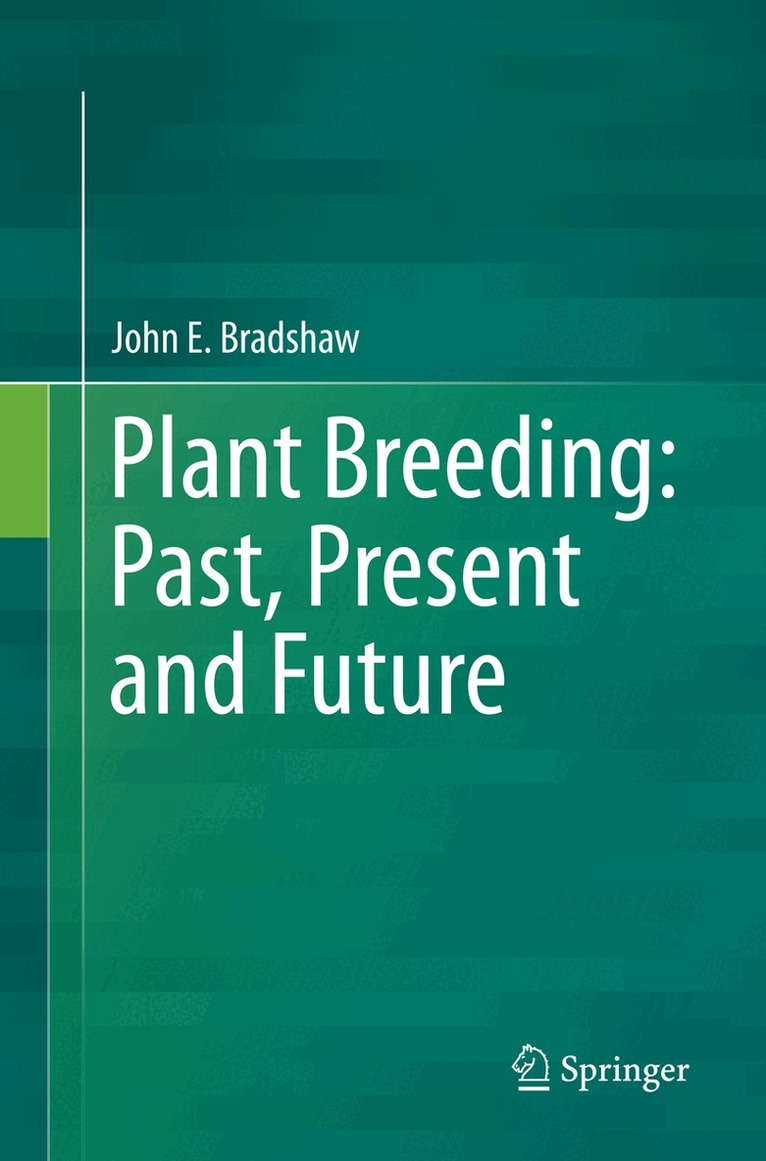
Häftad, Engelska, 2018
Plant Breeding: Past, Present and Future
2407 kr
Beställningsvara. Skickas inom 10-15 vardagar. Fri frakt över 249 kr.
Beskrivning
This book aims to help plant breeders by reviewing past achievements, currently successful practices, and emerging methods and techniques. Theoretical considerations are also presented to strike the right balance between being as simple as possible but as complex as necessary.The United Nations predicts that the global human population will continue rising to 9.0 billion by 2050. World food production will need to increase between 70-100 per cent in just 40 years. First generation bio-fuels are also using crops and cropland to produce energy rather than food. In addition, land area used for agriculture may remain static or even decrease as a result of degradation and climate change, despite more land being theoretically available, unless crops can be bred which tolerate associated abiotic stresses. Lastly, it is unlikely that steps can be taken to mitigate all of the climate change predicted to occur by 2050, and beyond, and hence adaptation of farming systems and crop production will be required to reduce predicted negative effects on yields that will occur without crop adaptation. Substantial progress will therefore be required in bridging the yield gap between what is currently achieved per unit of land and what should be possible in future, with the best farming methods and best storage and transportation of food, given the availability of suitably adapted cultivars, including adaptation to climate change. My book is divided into four parts: Part I is an historical introduction; Part II deals with the origin of genetic variation by mutation and recombination of DNA; Part III explains how the mating system of a crop species determines the genetic structure of its landraces; Part IV considers the three complementary options for future progress: use of sexual reproduction in further conventional breeding, base broadening and introgression; mutation breeding; and genetically modified crops.
Produktinformation
- Utgivningsdatum: 2018-04-19
- Mått: 155 x 235 x 39 mm
- Vikt: 1 077 g
- Format: Häftad
- Språk: Engelska
- Antal sidor: 693
- Förlag: Springer International Publishing AG
- ISBN: 9783319794648
Utforska kategorier
Betyg & recensioner
0 recensioner
Inga recensioner tillgängliga.