Inbunden, Engelska, 2014
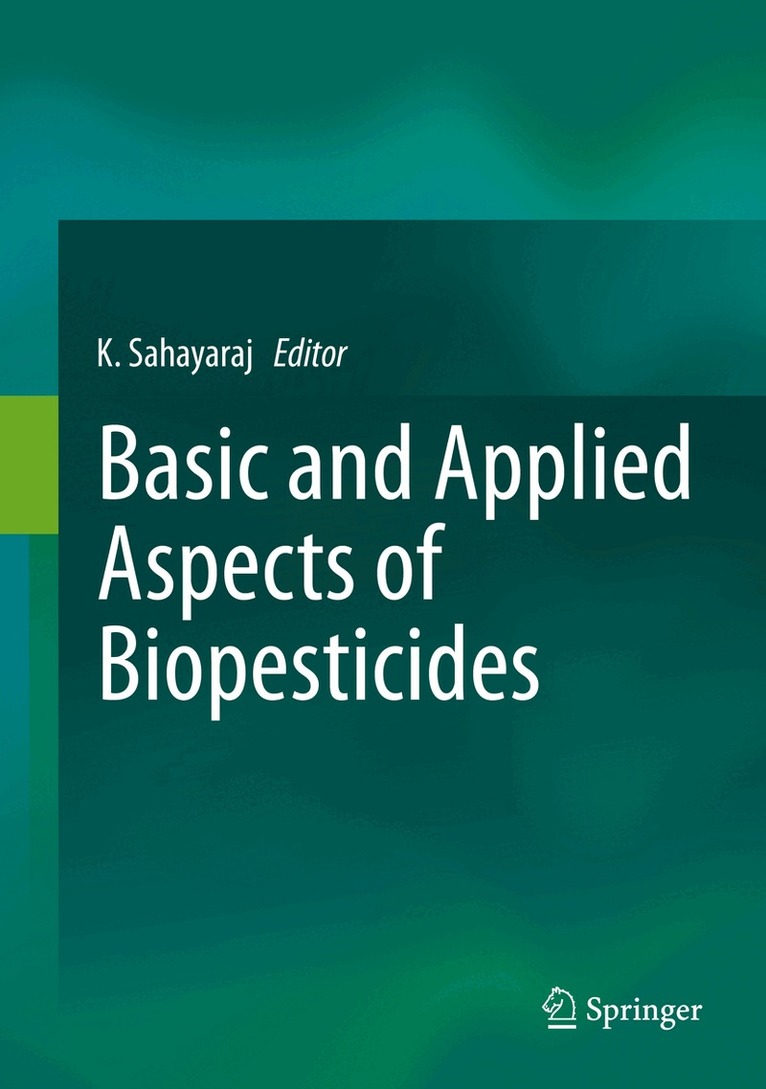
Basic and Applied Aspects of Biopesticides
Av K. Sahayaraj
1663 kr
Skickas inom 10-15 vardagar
Beskrivning
Currently, the major challenge of humanity is focused on population growth through agricultural production in order to meet the demand for food. The food crunch is mainly due to pest and disease. Traditional methods, synthetic insecticides and microbicides cause health hazards to human beings, domestic animals and also affect our immediate environments. Serious concerns were implemented by both developing and developed countries as Integrated Pest Management (IPM) and Bio-intensive Integrated Pest Management (BIPM) systems where biopesticides play an important role worldwide. The available books are limited to particular aspects of biopesticides. Hence, it is imperative to bring out a holistic documentation which will provide the reader information on all aspects of biopesticides. The book consists of five sections namely microbials, botanicals, natural enemies semio- chemicals and biotechnology and equipments, bioinformatics tools and IPM. In Section I, microbial deals with utilization of Bacillus in control of phytonematodes; biological control of pest and diseases with fluorescent pseudomonads, entomopathogenic fungus and entomopathogenic nematodes in pest management, microbial viral insecticides and microbial elicitors to induce immunity for plant disease control in chilli and tomato. Importance of plant essential oils, botanicals in endocrine disruption, relevance of botanicals and use of plant volatile on pest management has been discussed in Section II. Importance and role of reduviidae, weaver ants, ground beetles, Odonatas, spiders in biological control has been discussed in Section III. In addition, genetic improvement of biocontrol agents for sustainable pest management has also been highlighted. In Section IV, classical practices and pheromone, kairomonal enhancement to natural enemies and use of transgenic plants in insect control are highlighted. Equipment and their application methodologies for application of biopesticides; relevance ofbioinformatics in biopesticides management; pest management of soybean, bio fouling and eco friendly antifoulants have been highlighted in Section V. Each chapter has objectives and conclusion along with recommendations.
Produktinformation
- Utgivningsdatum: 2014-07-24
- Mått: 178 x 254 x 27 mm
- Vikt: 910 g
- Format: Inbunden
- Språk: Engelska
- Antal sidor: 384
- Förlag: Springer, India, Private Ltd
- ISBN: 9788132218760
Utforska kategorier
Betyg & recensioner
0 recensioner
Inga recensioner tillgängliga.