• Fri frakt över 249 kr
  • •
  • Snabba leveranser
  • •
  • Billiga böcker
Kundservice

Du är på sajten för privatpersoner.

Företag, bibliotek eller offentlig verksamhet?

Du handlar på classic.bokus.com, där alla dina funktioner finns intakta.
Till classic.bokus.com
Bokus logotyp. Gå till startsidan.
  • Erbjudanden
  • Student
  • Topplistor
  • Barn & ungdom
  • Bokus Play
  • E-böcker
  • Ljudböcker
  • Pocketböcker
  • Spel och pussel

Pocketfynda! Hundratals böcker för 49 kr/st →

Sidfot

Mina sidor

    Hjälp

    • Kundservice
    • Vanliga frågor och svar
    • Frakt och leverans
    • Retur vid ångerrätt
    • Reklamera vara
    • Betalning
    • Köpvillkor
    • Allmänna villkor
    • Information om webbplatsens tillgänglighet

    Om Bokus

    • Om oss
    • Pressrum
    • För studenter
    • För företag
    • För bibliotek och offentlig verksamhet
    • För leverantörer
    • Hållbarhet

    Populärt

    • Aktuella erbjudanden
    • Presentkort
    • Studentlitteratur
    • Nya böcker
    • Topplistor
    • Signerade böcker
    • Engelska böcker

    Inspiration

    • Boktips
    • BookTok
    • Barnbokskaraktärer
    • Populära författare
    Logotyp för Bokus
    Följ oss på Facebook (extern länk)Följ oss på Instagram (extern länk)Följ oss på YouTube (extern länk)Följ oss på TikTok (extern länk)
    bokus @ CookiesAnpassa cookiesIntegritetspolicyKöpvillkor
    Till Citymail hemsida (extern länk)Till Budbee hemsida (extern länk)Till Postnord hemsida (extern länk)Till Schenker hemsida (extern länk)Till Early Bird hemsida (extern länk)Till Walleys hemsida (extern länk)
    1. Skönlitteratur
    2. Dramatik

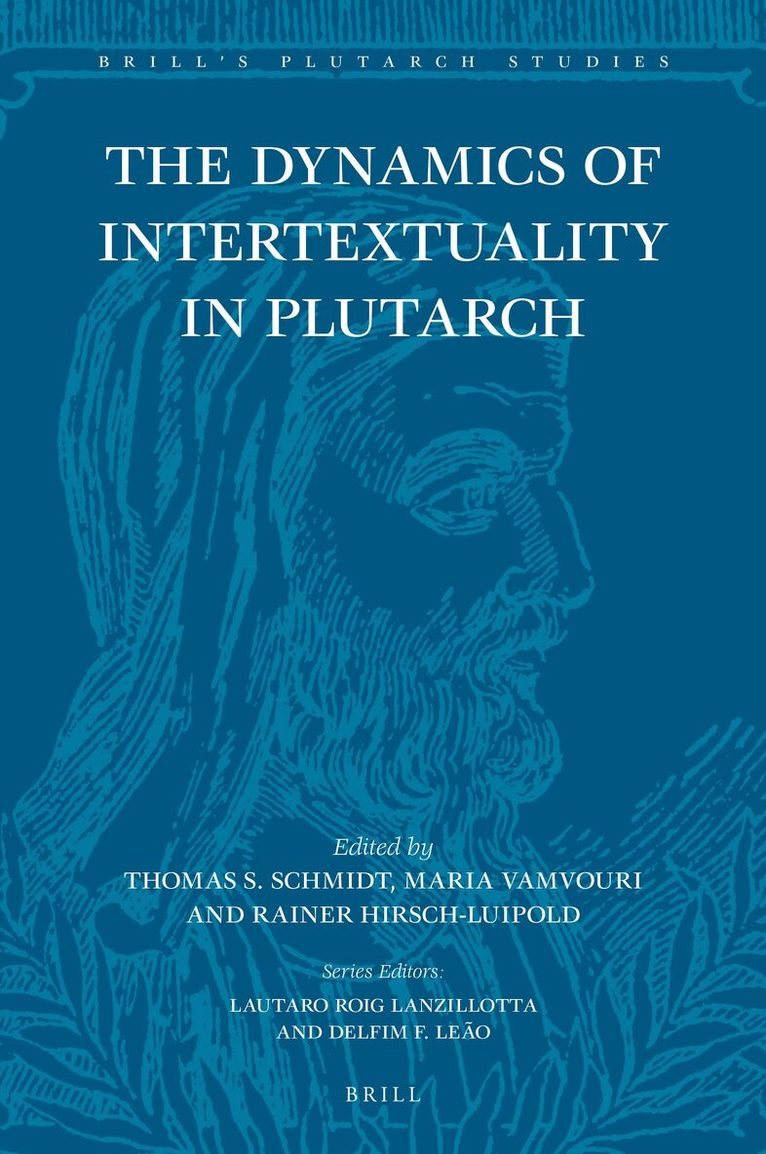
    Dynamics of Intertextuality in Plutarch

    AvThomas Schmidt

    Inbunden, Engelska, 2020

    Del 5 i serien Brill's Plutarch Studies

    2 805 kr

    Beställningsvara. Skickas inom 5-8 vardagar. Fri frakt över 249 kr.

    Beskrivning

    The Dynamics of Intertextuality in Plutarch explores the numerous aspects and functions of intertextual links both within the Plutarchan corpus itself (intratextuality) and in relation with other authors, works, genres or discourses of Ancient Greek literature (interdiscursivity, intergenericity) as well as non-textual sources (intermateriality). Thirty-six chapters by leading specialists set Plutarch within the framework of modern theories on intertextuality and its various practical applications in Plutarch’s Moralia and Parallel Lives. Specific intertextual devices such as quotations, references, allusions, pastiches and other types of intertextual play are highlighted and examined in view of their significance for Plutarch’s literary strategies, argumentative goals, educational program, and self-presentation.

    Produktinformation

    • Utgivningsdatum:2020-05-23
    • Mått:155 x 235 x 37 mm
    • Vikt:1 131 g
    • Format:Inbunden
    • Språk:Engelska
    • Serie:Brill's Plutarch Studies
    • Antal sidor:666
    • Förlag:Brill
    • ISBN:9789004421707

    Utforska kategorier

    • Dramatik inom Skönlitteratur
    • Forntidens historia inom Historia och arkeologi

    Mer om författaren

    Thomas Schmidt is Professor of Classics at the University of Fribourg. His publications include Plutarque et les barbares (1999) and Perceptions of the Second Sophistic and its Times (2011). He is currently preparing the Budé edition of the fragments of Plutarch’s works.Maria Vamvouri teaches Ancient Greek at the Gymnasium Auguste Piccard in Lausanne. She is the author of monographs on Greek Hymns (Kernos 2004) and on Plutarch’s banquet (Belles Lettres 2012). Her new book is a commented edition of Yannis Ritsos’ translation of Sophocles’ Antigone (Kedros 2020).Rainer Hirsch-Luipold is Professor of New Testament and History of Ancient Religions, Faculty of Theology, University of Bern, and Extraordinary Professor, University of Stellenbosch (SA), Department of Ancient Studies. Publications include Plutarchs Denken in Bildern. Studien zur literarischen, philosophischen und religiösen Funktion des Bildhaften (Tübingen, 2002).Contributors are: Eran Almagor, Stefano Amendola, Mark Beck, Frederick E. Brenk, Brad Buszard, Chrysanthos S. Chrysanthou, Craig Cooper, Philip Davies, Timothy E. Duff, José-Antonio Fernández-Delgado, Delfim F. Leão, Lucy E. Fletcher, Olivier Gengler, Chandra Giroux, Christina Harker, Rainer Hirsch-Luipold, Gennaro D’Ippolito, Susan Jacobs, Katarzyna Jazdzewska, Argyri G. Karanasiou, Anna Lefteratou, Michiel Meeusen, Michael Nerdahl, Christopher Pelling, Aurelio Pérez Jiménez, Eleni Plati, Francisca Pordomingo, Geert Roskam, Alessio Ruta, Elsa Giovanna Simonetti, Philip A. Stadter, Fabio Tanga, Theofanis Tsiampokalos, Maria Vamvouri, Paola Volpe Cacciatore, Andrew Worley, Alexei V. Zadorojnyi.

    Recensioner i media

    "In conclusione, il volume rappresenta un contributo significativo agli studi su Plutarco, in particolare per quello che riguarda gli aspetti letterari della sua vasta produzione. La metodologia adottata si rivela duttile e capace di illuminare aspetti poco frequentati del corpus plutarcheo, rifuggendo in generale dal rischio di una eccessiva schematicità. [...] Il risultato è una panoramica esaustiva, intelligente e aggiornata rispetto al tema dell’intertestualità in Plutarco, nonché uno strumento facilmente consultabile per chi volesse approfondire le singole sfaccettature del problema nel complesso del corpus plutarcheo." Francesco Padovani, BMCR 2021.02.37.

    Innehållsförteckning

    • PrefaceList of Figures and TablesAbbreviations of Plutarch’s WorksIntroduction: Plutarch and the Academic ReaderMaria VamvouriPart 1 Defining Intertextuality in Plutarch1 Intertextuality in Plutarch: What’s the Point?Christopher Pelling2 Hearing Voices: φωνή and Intertextual Orality in PlutarchAlexei V. Zadorojnyi3 Forms and Functions of Intratextuality in Plutarch’s CorpusGennaro D’IppolitoPart 2 Intertextuality at Work4 Voices from the Past: Quotations and Intertextuality in Plutarch’s The Oracles at DelphiFrederick E. Brenk5 Homer as a Model for Plutarchan Advice on Good GovernanceJosé-Antonio Fernández-Delgado6 Pericles and Athens: An Intertextual Reading of Plutarch and ThucydidesMark Beck7 Plutarch’s and Xenophon’s Sparta: Intra- and Intertextual Relations in the Spartan LivesOlivier Gengler8 The Mechanics of Intertextuality in PlutarchTimothy E. Duff9 Shrieking Volumes: Plutarch’s Use of the Ath.Pol. as Intertextual Bridge between Athens and RomeAndrew Worley10 How to Do Things with Hellenistic Historiography: Plutarch’s Intertextual Use(s) of PolybiusEran Almagor11 “Let Us Make the Most of What They Offer Us”: Different Layers of Intertextuality in Plutarch’s Non posse suaviter vivi secundum EpicurumGeert Roskam12 The Encounter between Roman Virtue and Platonism in Plutarch’s Cato the ElderMichael Nerdahl13 Plutarch’s Theseus-Romulus and the Murder of RemusBrad BuszardPart 3 Intratextuality and the Plutarchan Corpus14 Heroes Imitating Heroes: Ethical and Pragmatic Intratextuality in the Parallel LivesSusan Jacobs15 Ejemplos de responsio gramatical en el Teseo-Rómulo de PlutarcoAurelio Pérez Jiménez16 Reading Plutarch through Plutarch (?): De sera numinis vindicta and the Commentary on Hesiod’s ErgaStefano Amendola17 Demetrius of Phalerum in Plutarch: A Multimodal Expression of Intertextuality and IntratextualityDelfim F. Leão18 “As Each Came to Mind”: Intertextualizing Plutarch’s Mentality of Intricacy in the Table Talk and QuestionsMichiel Meeusen19 Un ‘galateo’ intestestuale del simposio: le raccomandazioni di Plutarco personaggio dei MoraliaPaola Volpe CacciatorePart 4 Through the Lens of Interdiscursivity20 Sympotic Intertextuality in Plutarch’s Maxime cum principibus philosopho esse disserendumCraig Cooper21 Aesopic Wisdom in PlutarchPhilip A. Stadter22 Plutarch’s Proverbial Intertexts in the LivesAlessio Ruta23 Who Is the Best Prophet? The ‘Manifold’ Character of a Quotation in PlutarchElsa Giovanna Simonetti24 Aspetti e funzioni dell’intertestualità nei De tuenda sanitate praecepta di PlutarcoFabio Tanga25 Medical Allusions and Intertext of Physis in Plutarch’s Comp. Cim. et Luc. 2.7Eleni PlatiPart 5 Intergenericity: Plutarch’s Works at the Crossroads26 Generic and Intertextual Enrichment: Plutarch’s Alexander 30Chrysanthos S. Chrysanthou27 Intertextuality Across Paired Lives: Plutarch’s Nicias-CrassusLucy E. Fletcher28 Plutarch’s Less Tragic Heroes: Drama and Epic in the PelopidasAnna Lefteratou29 From Inter-textuality to Inter-mediality: Plutarch’s Lyric Quotations from Greek TragedyArgyri G. Karanasiou30 Love in Many Dimensions: Hesiod and Empedocles in Plutarch’s AmatoriusKatarzyna Jazdzewska31 Las Vitae de Plutarco y el epigramaFrancisca Pordomingo32 Defining Rhetoric While Playing with Pre-texts: Some Aspects of Intertextuality in Plutarch’s Praecepta gerendae reipublicae 801C–DTheofanis TsiampokalosPart 6 Beyond Text: Plutarch and Intermateriality33 Plutarch’s Sparta: Intertextual and ExperientialPhilip Davies34 ὕλη θεολογίας: Religious Lore as Inter‘text’ in Plutarch’s MoraliaRainer Hirsch-Luipold35 The Power of Bones: An Intertextual and Intermaterial Reading of the Retrieval of Theseus’ Bones in Plutarch’s Life of CimonChandra Giroux36 Plutarch’s Intertextual References to Tattoos and BrandsChristina HarkerBibliographyIndex locorumGeneral index