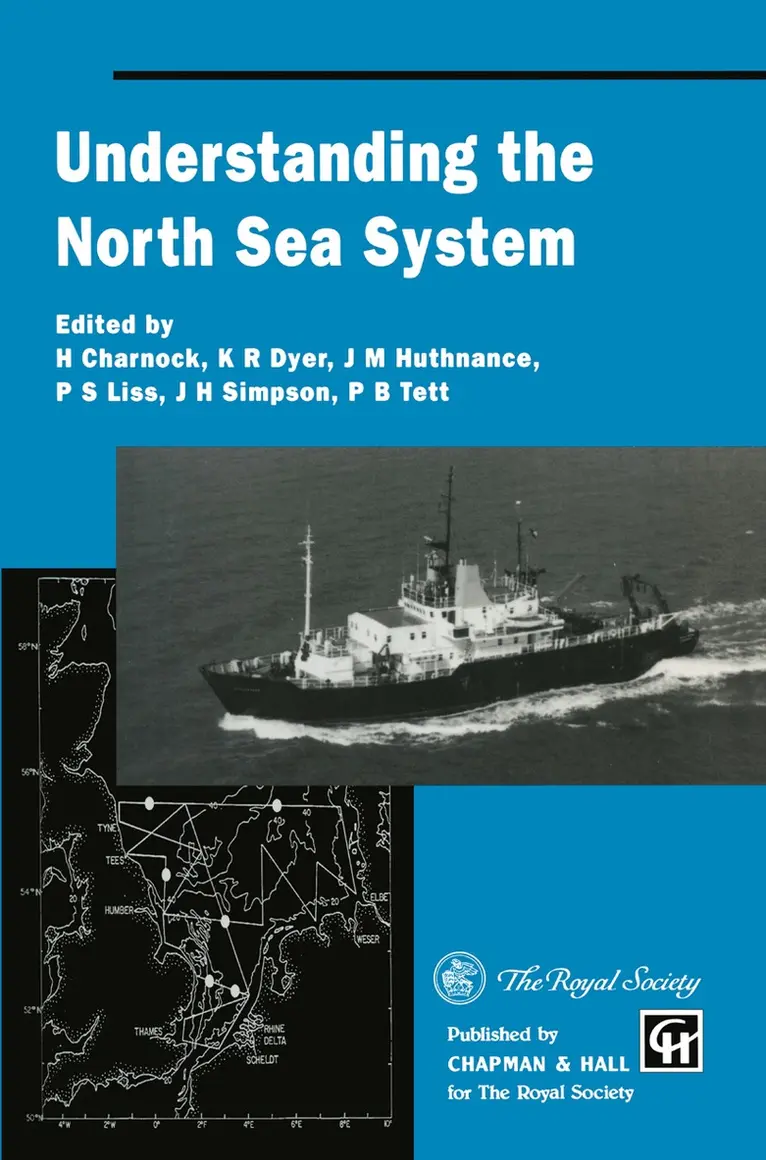
Häftad, Engelska, 2012
Understanding the North Sea System
Av H. Charnock, K.R. Dyer, J.M. Huthnance, Peter Liss, B.H. Simpson
552 kr
Beställningsvara. Skickas inom 10-15 vardagar. Fri frakt över 249 kr.
Beskrivning
The continental shelf seas have an importance which is out of proportion to the rela tively small fraction of the area of the global ocean which they occupy. These shallow seas play an important role as the high energy boundary zones of the deep ocean where much of the ocean's tidal and wave energies are dissipated. They are highly productive biologically and are responsible for most of the world's fishery production. In many cases, they are also sources of economically important resources, notably hydrocarbons and they are frequently important as thorough fares for merchant shipping. Because they are the regions of the ocean closest to our centres of population and industrial activity, they have been the first to feel the impact of the increasing pressures imposed by large scale waste disposal into the ocean. The North Sea is an archetypal representative of such seas: we need to be able to understand its processes and predict them if we are to achieve a degree of rational management in the future, as the environmental threats increase. The understanding required extends through a wide range of processes that operate in the shelf seas from the fundamental physics to the chemistry and biology of the water column and the seabed sediments. These processes, and the interactions between them, cut across the traditional discipline boundaries within marine science and require a substantial inter disciplinary effort for their effective study.
Produktinformation
- Utgivningsdatum: 2012-11-02
- Mått: 155 x 235 x 17 mm
- Vikt: 396 g
- Format: Häftad
- Språk: Engelska
- Antal sidor: 222
- Förlag: Springer
- ISBN: 9789401045407
Utforska kategorier
Betyg & recensioner
0 recensioner
Inga recensioner tillgängliga.