
Martin Rees - Böcker
Visar alla böcker från författaren Martin Rees. Handla med fri frakt och snabb leverans.
21 produkter
21 produkter
440 kr
Skickas inom 7-10 vardagar
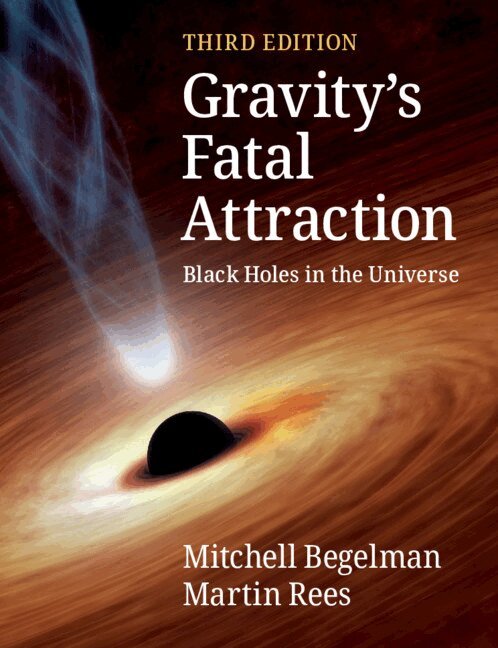
Richly illustrated with the images from observatories on the ground and in space, and computer simulations, this book shows how black holes were discovered, and discusses what we've learned about their nature and their role in cosmic evolution. This thoroughly updated third edition covers new discoveries made in the past decade, including the discovery of gravitational waves from merging black holes and neutron stars, the first close-up images of the region near a black hole event horizon, and observations of debris from stars torn apart when they ventured too close to a supermassive black hole. Avoiding mathematics, the authors blend theoretical arguments with observational results to demonstrate how both have contributed to the subject. Clear, explanatory illustrations and photographs reveal the strange and amazing workings of our universe. The engaging style makes this book suitable for introductory undergraduate courses, amateur astronomers, and all readers interested in astronomy and physics.
373 kr
Skickas inom 3-6 vardagar

295 kr
Skickas
136 kr
Skickas inom 7-10 vardagar
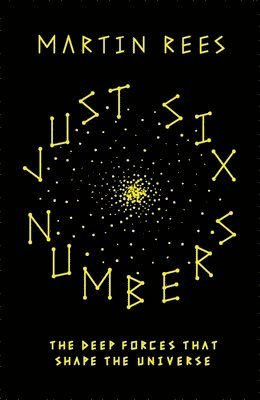
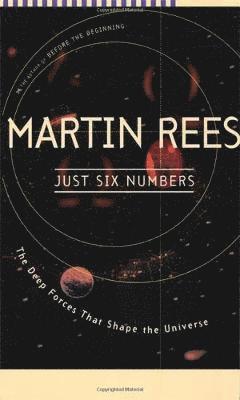
Astronomer Royal Martin Rees shows how the behaviour and origins of the universe can be explained by just six numbers.How did a single genesis event create billions of galaxies, black holes, stars and planets? How did atoms assemble - here on Earth, and perhaps on other worlds - into living beings intricate enough to ponder their origins? This book describes the recent avalanche of discoveries about the universe's fundamental laws, and the deep connections that exist between stars and atoms - the cosmos and the microscopic world. Just six numbers, imprinted in the big bang, determine the essence of our world, and this book devotes one chapter to explaining each.
349 kr
Skickas
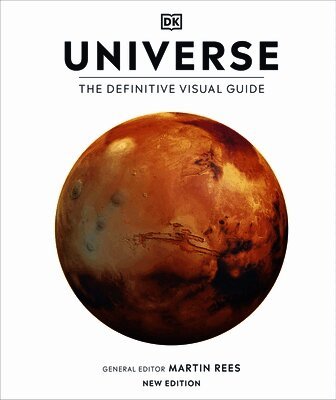
Marvel at the wonders of the Universe, from stars and planets to black holes and nebulae, in this exploration of our Solar System and beyond.Universe opens with a look at astronomy and the history of the Universe, using 3D artworks to provide a comprehensive grounding in the fundamental concepts of astronomy, including the basic techniques of practical astronomy.The core of the book is a tour of the cosmos covering the Solar System, the Milky Way, and galaxies beyond our own. Explanatory pages introduce different celestial phenomena, such as galaxies, and are followed by catalogues that profile the most interesting and important examples.A comprehensive star atlas completes the picture, with entries on each of the 88 constellations and a monthly sky guide showing the night sky as it appears throughout the year as viewed from both the northern and southern hemispheres.
373 kr
Skickas inom 3-6 vardagar
573 kr
Skickas inom 7-10 vardagar
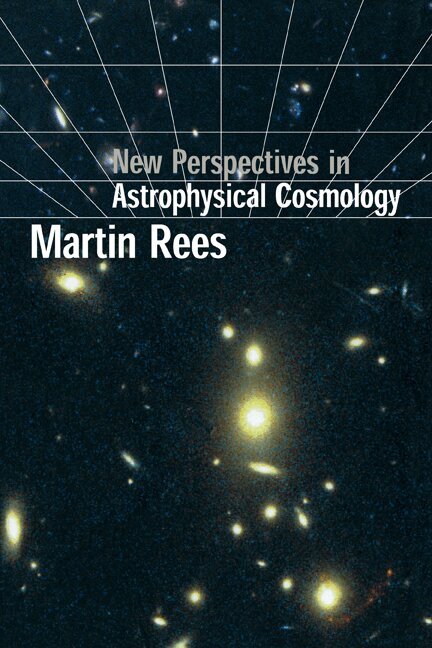
This volume presents a unique and accessible synthesis of our understanding of modern cosmology, written by one of the world's foremost contemporary cosmologists. In recent years, observational cosmology has made remarkable advances, bringing into sharper focus a new set of fundamental questions that Professor Rees addresses in this book. Why is the universe expanding the way it is? What were the 'seeds' that caused galaxies, clusters and superclusters to form? What is the nature of 'dark matter'? What happened in the very early universe? The latest exciting advances and theories are discussed, while maintaining a clear distinction between aspects that now have a firm empirical basis and those that remain speculative. Its wide scope and clear writing will be welcomed by anyone interested in cosmology and extragalactic astrophysics who has a basic grounding in physics, as well as academic researchers and graduate students in the field.
230 kr
Skickas
215 kr
Skickas inom 7-10 vardagar
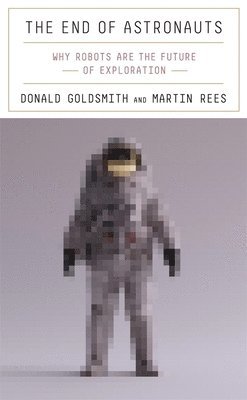
A History Today Book of the YearA world-renowned astronomer and an esteemed science writer make the provocative argument for space exploration without astronauts.Human journeys into space fill us with wonder. But the thrill of space travel for astronauts comes at enormous expense and is fraught with peril. As our robot explorers grow more competent, governments and corporations must ask, does our desire to send astronauts to the Moon and Mars justify the cost and danger? Donald Goldsmith and Martin Rees believe that beyond low-Earth orbit, space exploration should proceed without humans.In The End of Astronauts, Goldsmith and Rees weigh the benefits and risks of human exploration across the solar system. In space humans require air, food, and water, along with protection from potentially deadly radiation and high-energy particles, at a cost of more than ten times that of robotic exploration. Meanwhile, automated explorers have demonstrated the ability to investigate planetary surfaces efficiently and effectively, operating autonomously or under direction from Earth. Although Goldsmith and Rees are alert to the limits of artificial intelligence, they know that our robots steadily improve, while our bodies do not. Today a robot cannot equal a geologist’s expertise, but by the time we land a geologist on Mars, this advantage will diminish significantly.Decades of research and experience, together with interviews with scientific authorities and former astronauts, offer convincing arguments that robots represent the future of space exploration. The End of Astronauts also examines how spacefaring AI might be regulated as corporations race to privatize the stars. We may eventually decide that humans belong in space despite the dangers and expense, but their paths will follow routes set by robots.
151 kr
Skickas inom 7-10 vardagar
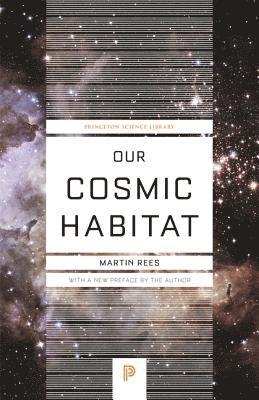
Our universe seems strangely "biophilic," or hospitable to life. Is this happenstance, providence, or coincidence? According to cosmologist Martin Rees, the answer depends on the answer to another question, the one posed by Einstein's famous remark: "What interests me most is whether God could have made the world differently." This highly engaging book explores the fascinating consequences of the answer being "yes." Rees explores the notion that our universe is just a part of a vast "multiverse," or ensemble of universes, in which most of the other universes are lifeless. What we call the laws of nature would then be no more than local bylaws, imposed in the aftermath of our own Big Bang. In this scenario, our cosmic habitat would be a special, possibly unique universe where the prevailing laws of physics allowed life to emerge. Rees begins by exploring the nature of our solar system and examining a range of related issues such as whether our universe is or isn't infinite. He asks, for example: How likely is life? How credible is the Big Bang theory? Rees then peers into the long-range cosmic future before tracing the causal chain backward to the beginning.He concludes by trying to untangle the paradoxical notion that our entire universe, stretching 10 billion light-years in all directions, emerged from an infinitesimal speck. As Rees argues, we may already have intimations of other universes. But the fate of the multiverse concept depends on the still-unknown bedrock nature of space and time on scales a trillion trillion times smaller than atoms, in the realm governed by the quantum physics of gravity. Expanding our comprehension of the cosmos, Our Cosmic Habitat will be read and enjoyed by all those--scientists and nonscientists alike--who are as fascinated by the universe we inhabit as is the author himself.
159 kr
Skickas inom 7-10 vardagar
A provocative and inspiring look at the future of humanity and science from world-renowned scientist and bestselling author Martin ReesHumanity has reached a critical moment. Our world is unsettled and rapidly changing, and we face existential risks over the next century. Various outcomes—good and bad—are possible. Yet our approach to the future is characterized by short-term thinking, polarizing debates, alarmist rhetoric, and pessimism. In this short, exhilarating book, renowned scientist and bestselling author Martin Rees argues that humanity’s prospects depend on our taking a very different approach to planning for tomorrow.The future of humanity is bound to the future of science and hinges on how successfully we harness technological advances to address our challenges. If we are to use science to solve our problems while avoiding its dystopian risks, we must think rationally, globally, collectively, and optimistically about the long term. Advances in biotechnology, cybertechnology, robotics, and artificial intelligence—if pursued and applied wisely—could empower us to boost the developing and developed world and overcome the threats humanity faces on Earth, from climate change to nuclear war. At the same time, further advances in space science will allow humans to explore the solar system and beyond with robots and AI. But there is no “Plan B” for Earth—no viable alternative within reach if we do not care for our home planet.Rich with fascinating insights into cutting-edge science and technology, this accessible book will captivate anyone who wants to understand the critical issues that will define the future of humanity on Earth and beyond.
109 kr
Skickas inom 7-10 vardagar
A provocative and inspiring look at the future of humanity and science from world-renowned scientist and bestselling author Martin ReesHumanity has reached a critical moment. Our world is unsettled and rapidly changing, and we face existential risks over the next century. Various outcomes—good and bad—are possible. Yet our approach to the future is characterized by short-term thinking, polarizing debates, alarmist rhetoric, and pessimism. In this short, exhilarating book, renowned scientist and bestselling author Martin Rees argues that humanity’s prospects depend on our taking a very different approach to planning for tomorrow.The future of humanity is bound to the future of science and hinges on how successfully we harness technological advances to address our challenges. If we are to use science to solve our problems while avoiding its dystopian risks, we must think rationally, globally, collectively, and optimistically about the long term. Advances in biotechnology, cybertechnology, robotics, and artificial intelligence—if pursued and applied wisely—could empower us to boost the developing and developed world and overcome the threats humanity faces on Earth, from climate change to nuclear war. At the same time, further advances in space science will allow humans to explore the solar system and beyond with robots and AI. But there is no “Plan B” for Earth—no viable alternative within reach if we do not care for our home planet.Rich with fascinating insights into cutting-edge science and technology, this accessible book will captivate anyone who wants to understand the critical issues that will define the future of humanity on Earth and beyond.
- Nyhet
198 kr
Kommande
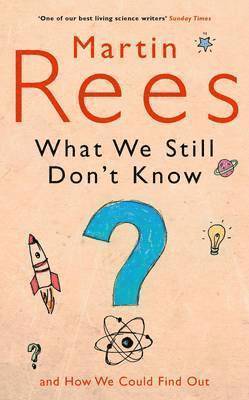
Science in the twenty-first century inherits a fantastic record of accomplishment. Yet there remain enormous questions to answer - some of them revealed by those very past successes. Why is 95 per cent of the universe undetectable dark matter', and does it control the cosmos - how it began, its eventual fate and whether it is finite or infinite? Is our universe the only one, or could there be an infinity of others? Do other universes operate on different physical laws. Is there complex life in other star systems. If so, how far could it outstrip our intelligence? Could a sufficiently advanced life form even create new universes to its own design? In this playful and accessible book, Britain's best-known commentator on the most profound questions in science looks at whether they could be answered and asks, if they are, will the human brain be capable of comprehending the results? What we Still Don't Know looks beyond the edge of current scientific understanding, and poses problems for a new generation of inquiry.
402 kr
Skickas inom 3-6 vardagar
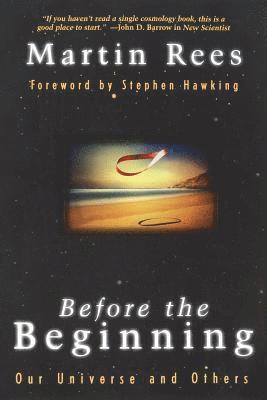
In this landmark book, one of the twentieth century's greatest astronomers presents scientific evidence that our vast universe may be only a grain of sand on the infinite cosmic shore.It is now widely accepted that our universe exploded around 15 billion years ago from an unimaginably energetic initial event: the big bang. As the primordial material expanded and cooled, it evolved into the exquisite patterns of stars and galaxies we now observe. The mix of energy and radiation that characterizes our universe was imprinted in that initial instant,as were the binding forces of nuclear physics and gravity that controlled our universe's evolution.The experimental triumphs and theoretical insights of recent years,from the detection of neutrinos from exploding stars to the search for extraterrestrial life,offer the most dramatic enlargement in our concept of the universe since astronomers first realized the sun's true place among the stars. In this illuminating work, Sir Martin Rees, Britain's Astronomer Royal and one of the most creative and original of contemporary scientists, draws these advances together with up-to-the-minute research on black holes, dark matter, and nucleosynthesis of the elements. He also sheds light on some of the personalities behind the science, offering first-hand impressions of Subrahmanyan Chandrasekhar, Stephen Hawking, John Archibald Wheeler, and Fred Hoyle, among others.With stunning clarity, Professor Rees argues that a family,even an infinity,of universes may have been created, each by its own big bang, and each acquiring a distinctive imprint and its own laws of physics. These baby universes will either live out their immense cosmic cycle, or die because those laws do not allow them to achieve longevity.Our "home universe," then, is just one element in a cosmic archipelago where impassable barriers prohibit communication between the islands. But, as Rees demonstrates, our universe is an exceptional member of this infinite ensemble, for it is still near the beginning of a fascinating evolutionary process that will end either in the heat-death of external expansion, or in what scientists call a "big crunch." Most remarkable of all, our universe contains creatures able to observe it. The multi-universe revolution in cosmological thought limned by Rees casts a piercing light on man's place in the cosmos, and argues that the conditions permitting the evolution of life stand on the razor's edge between a dead universe and one filled with living beings.
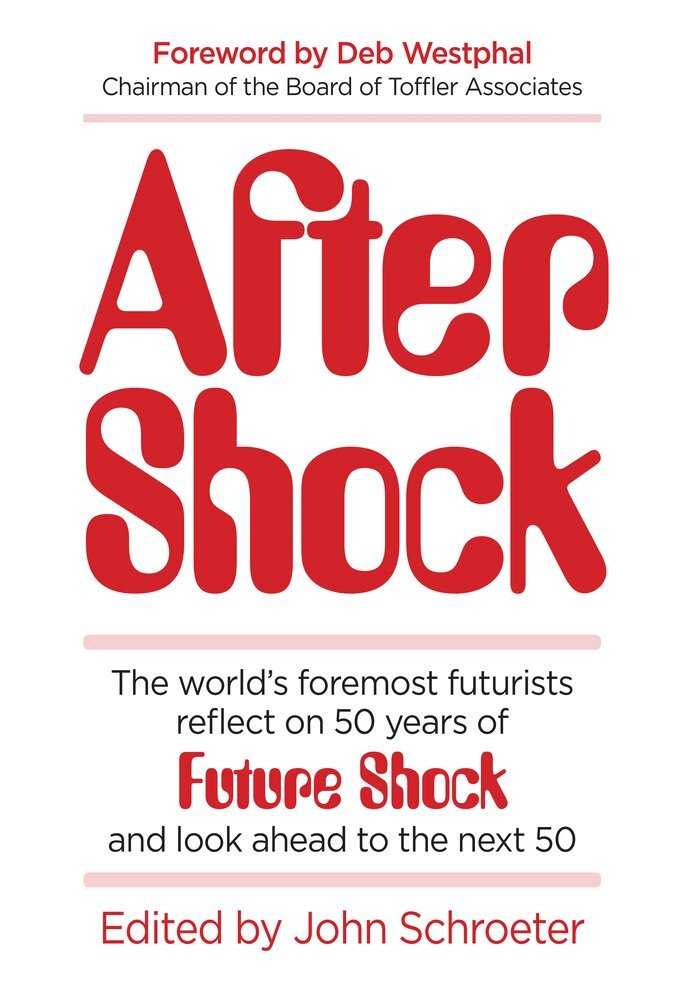
After Shock
The World’s Foremost Futurists Reflect on 50 Years of Future Shock—and Look Ahead to the Next 50
Inbunden, Engelska, 2020
372 kr
Skickas
106 kr
Skickas inom 7-10 vardagar
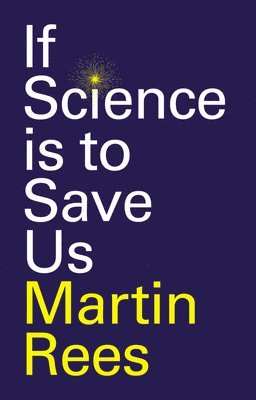
There has never been a time when ‘following the science’ has been more important for humanity. At no other point in history have we had such advanced knowledge and technology at our fingertips, nor had such astonishing capacity to determine the future of our planet.But the decisions we must make on how science is applied belong outside the lab and should be the outcome of wide public debate. For that to happen, science needs to become part of our common culture. Science is not just for scientists: if it were, it could never save us from the multiple crises we face. For science can save us, if its innovations mesh carefully into society and its applications are channelled for the common good.As Martin Rees argues in this expert and personal analysis of the scientific endeavour on which we all depend, we need to think globally, we need to think rationally and we need to think long-term, empowered by twenty-first-century technology but guided by values that science alone cannot provide.Also available as an audiobook.
- Nyhet
105 kr
Skickas inom 7-10 vardagar
There has never been a time when ‘following the science’ has been more important for humanity. At no other point in history have we had such advanced knowledge and technology at our fingertips, nor had such astonishing capacity to determine the future of our planet.But the decisions we must make on how science is applied belong outside the lab and should be the outcome of wide public debate. For that to happen, science needs to become part of our common culture. Science is not just for scientists: if it were, it could never save us from the multiple crises we face. For science can save us, if its innovations mesh carefully into society and its applications are channelled for the common good.As Martin Rees argues in this expert and personal analysis of the scientific endeavour on which we all depend, we need to think globally, we need to think rationally and we need to think long-term, empowered by twenty-first-century technology but guided by values that science alone cannot provide.Also available as an audiobook.
336 kr
Skickas inom 5-8 vardagar
531 kr
Skickas inom 5-8 vardagar
190 kr
Skickas inom 5-8 vardagar
521 kr
Skickas inom 3-6 vardagar