
Matthew Humphreys - Böcker
Visar alla böcker från författaren Matthew Humphreys. Handla med fri frakt och snabb leverans.
7 produkter
7 produkter
644 kr
Skickas inom 5-8 vardagar
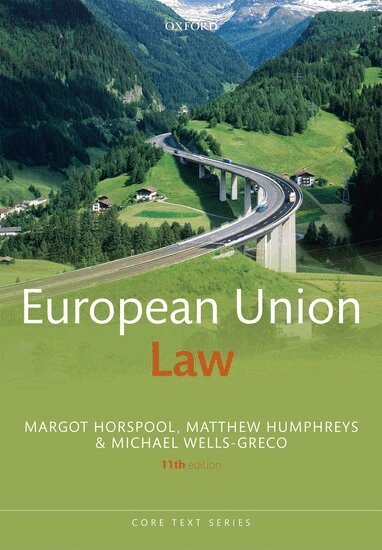
Providing wide-ranging coverage and clear explanations, European Union Law is a trusted guide to the subject with a no-fuss style. Written in its trademark concise prose, the text distils complex ideas without sacrificing academic integrity.Focusing on the key debates surrounding EU law, this book encourages students to critique and apply the law, and to take a contextual approach to the subject. Students are invited to consider the key concepts in the law and to think for themselves, with the help of self-test questions and numerous suggestions for further reading. Digital formats and resourcesThe eleventh edition is available for students and institutions to purchase in a variety of formats.The e-book offers a mobile experience and convenient access, along with functionality tools, navigation features, and links that offer extra learning support: www.oxfordtextbooks.co.uk/ebooks.As the process of the UK leaving the EU unfolds, readers can also visit the OUP Brexit and EU Law online resources for up-to-date comment, opinion, and updates created to engage students with the legal and political issues and considerations at play: www.oxfordtextbooks.co.uk/brexit

697 kr
Skickas inom 10-15 vardagar
One of the principal arguments put forth by Brexit supporters is that by freeing the UK from the stranglehold of EU law, the country will be able to expand its markets through increased bilateral trade and enhance economic growth. This book tests this proposition by reference to the car industry.Brexit and the Car Industry explores the international position of the car market to argue that the hope of Brexit bringing regulatory freedom is illusory. The book starts by examining the structure of the vehicle industry, how its regulatory framework evolved and how the environment in which it operates is constrained by international standards and the practicalities associated with trading across different regulatory systems. By examining the evolution of vehicle regulations, particularly related to the environment, it argues that a UK independent path is not only impractical but self-defeating. The private car market is structured in such a way that is global, and meeting the various international regulatory requirements is a price of entry requirement which no bilateral trade agreements are likely to alter. The book also considers changing environment affecting the car industry in the context of an aspiration for regulatory freedom. The response to climate change and the impact of technological change – specifically driverless vehicles – are big questions for the industry and both are examined in this book. The book also considers the emergence of large metropolitan areas imposing their own use and environmental requirements operating separately to national standards. The future of electric and autonomous vehicles combined with the complexity of the regulatory environment with both international and localised pollution measures make the UK navigating a safe independent path through with a viable car industry highly questionable. Providing a comprehensive review of the relationship between regulatory frameworks and free trading models, this book is aimed at industry and legal professionals. It will also be of interest to students studying market behaviour, free trade law and the free movement of goods, and environmental protection.

572 kr
Skickas inom 10-15 vardagar
This book undertakes a critical appraisal of the concept of sustainable development in the European Union. In addition to existing issues of sustainability, it examines the development of a European "general principle" of sustainable development. This original, critical approach examines legal, political, and economic implications of the emergence of the principle and places the impact of such in local, national, intranational, and international contexts. While essentially focusing on the development of the principle, the discussion also includes a normative assessment of current policy and practice, and appraises European efforts in the light of international goals.
2 306 kr
Skickas inom 10-15 vardagar
The construction of the European Economic Communities in 1950 primarily set out to build an integrated economic zone in which national borders were, to a large extent, overcome. The ability of persons and goods to move freely within the economic zone was seminal in the realisation of economic integration. Underlying this, and therefore an implied necessity for European growth, an effective transport infrastructure was essential. However, with rising awareness of environmental issues, and a closer regard to sustainability of development, European transport systems and their regulation have come under scrutiny. This book sets out a critical analysis of the body of law and policy initiatives that constitute the EU's common transport policy. The development of the transport policy is charted through amending and founding Treaties as well as non-legislative documents. The book uses a model of sustainability as the basis for the analysis as the criteria for sustainable development were set out under Article Eleven of the Treaty on the Functioning of the European Union. However, sustainable development, when taken in the context of transport is difficult to reconcile with unbridled economic growth and unchecked freedom of movement and the book identifies a contradiction at the heart of European policy which can only become more accentuated as environmental trends become more explicit. The book argues that European regulation will eventually be forced to recognize this dichotomy, and take more forceful action to protect environmental and social development, even at the cost of economic progress.This book will be of great interest to researchers and students on European Union law and policy courses, transport studies courses and European integration courses. The book is of relevance to all those interested in environmental and transport matters.
649 kr
Skickas inom 10-15 vardagar
The construction of the European Economic Communities in 1950 primarily set out to build an integrated economic zone in which national borders were, to a large extent, overcome. The ability of persons and goods to move freely within the economic zone was seminal in the realisation of economic integration. Underlying this, and therefore an implied necessity for European growth, an effective transport infrastructure was essential. However, with rising awareness of environmental issues, and a closer regard to sustainability of development, European transport systems and their regulation have come under scrutiny. This book sets out a critical analysis of the body of law and policy initiatives that constitute the EU's common transport policy. The development of the transport policy is charted through amending and founding Treaties as well as non-legislative documents. The book uses a model of sustainability as the basis for the analysis as the criteria for sustainable development were set out under Article Eleven of the Treaty on the Functioning of the European Union. However, sustainable development, when taken in the context of transport is difficult to reconcile with unbridled economic growth and unchecked freedom of movement and the book identifies a contradiction at the heart of European policy which can only become more accentuated as environmental trends become more explicit. The book argues that European regulation will eventually be forced to recognize this dichotomy, and take more forceful action to protect environmental and social development, even at the cost of economic progress.This book will be of great interest to researchers and students on European Union law and policy courses, transport studies courses and European integration courses. The book is of relevance to all those interested in environmental and transport matters.
306 kr
Skickas inom 10-15 vardagar
One of the principal arguments put forth by Brexit supporters is that by freeing the UK from the stranglehold of EU law, the country will be able to expand its markets through increased bilateral trade and enhance economic growth. This book tests this proposition by reference to the car industry.Brexit and the Car Industry explores the international position of the car market to argue that the hope of Brexit bringing regulatory freedom is illusory. The book starts by examining the structure of the vehicle industry, how its regulatory framework evolved and how the environment in which it operates is constrained by international standards and the practicalities associated with trading across different regulatory systems. By examining the evolution of vehicle regulations, particularly related to the environment, it argues that a UK independent path is not only impractical but self-defeating. The private car market is structured in such a way that is global, and meeting the various international regulatory requirements is a price of entry requirement which no bilateral trade agreements are likely to alter. The book also considers changing environment affecting the car industry in the context of an aspiration for regulatory freedom. The response to climate change and the impact of technological change – specifically driverless vehicles – are big questions for the industry and both are examined in this book. The book also considers the emergence of large metropolitan areas imposing their own use and environmental requirements operating separately to national standards. The future of electric and autonomous vehicles combined with the complexity of the regulatory environment with both international and localised pollution measures make the UK navigating a safe independent path through with a viable car industry highly questionable. Providing a comprehensive review of the relationship between regulatory frameworks and free trading models, this book is aimed at industry and legal professionals. It will also be of interest to students studying market behaviour, free trade law and the free movement of goods, and environmental protection.

1 921 kr
Skickas inom 10-15 vardagar
This book undertakes a critical appraisal of the concept of sustainable development in the European Union. In addition to existing issues of sustainability, it examines the development of a European "general principle" of sustainable development. This original, critical approach examines legal, political, and economic implications of the emergence of the principle and places the impact of such in local, national, intranational, and international contexts. While essentially focusing on the development of the principle, the discussion also includes a normative assessment of current policy and practice, and appraises European efforts in the light of international goals.