
Navnita Chadha Behera - Böcker
Visar alla böcker från författaren Navnita Chadha Behera. Handla med fri frakt och snabb leverans.
5 produkter
5 produkter

392 kr
Skickas inom 10-15 vardagar
The Kashmir issue is typically cast as a ""territorial dispute"" between two belligerent neighbors in South Asia. But there is much more to the story than that. The Jammu and Kashmir state, home to an extraordinary medley of races, tribal groups, languages, and religions, makes up one of the most diverse regions in the subcontinent. Demystifying Kashmir argues that recognizing the rich, complex, and multi-faceted character of Kashmir is important not only for understanding the structural causes of this conflict but also for providing opportunities to establish a just, viable, and lasting solution. In this remarkable book, Navnita Chadha Behera traces the history of Kashmir from the pre-partition India to the current-day situation. She provides a comprehensive analysis of the philosophical underpinnings and the local, bilateral, and international dynamics of the key players involved in this flashpoint of conflict, including New Delhi, Islamabad, political groups and militant outfits on both sides of the Line of Control, and international powers. The book explores the political and military components of India's and Pakistan's Kashmir strategy, the self-determination debate, and the insurgent movement that began in 1989. The conclusion focuses on what Behera terms the four P's: parameters, players, politics, and prognosis of the ongoing peace process in Kashmir. Behera also reflects on the devastation of the October 2005 earthquake and its implications for the future of the area. Based on extensive field research and primary sources, Demystifying Kashmir breaks new ground by framing the conflict as a political battle of state-making between India and Pakistan rather than as a rigid and ideological Hindu-Muslim conflict. Behera's work will be an essential guide for journalists, scholars, activists, policymakers, and anyone interested in how to avert a war between these nuclear powers.
3 730 kr
Skickas inom 10-15 vardagar
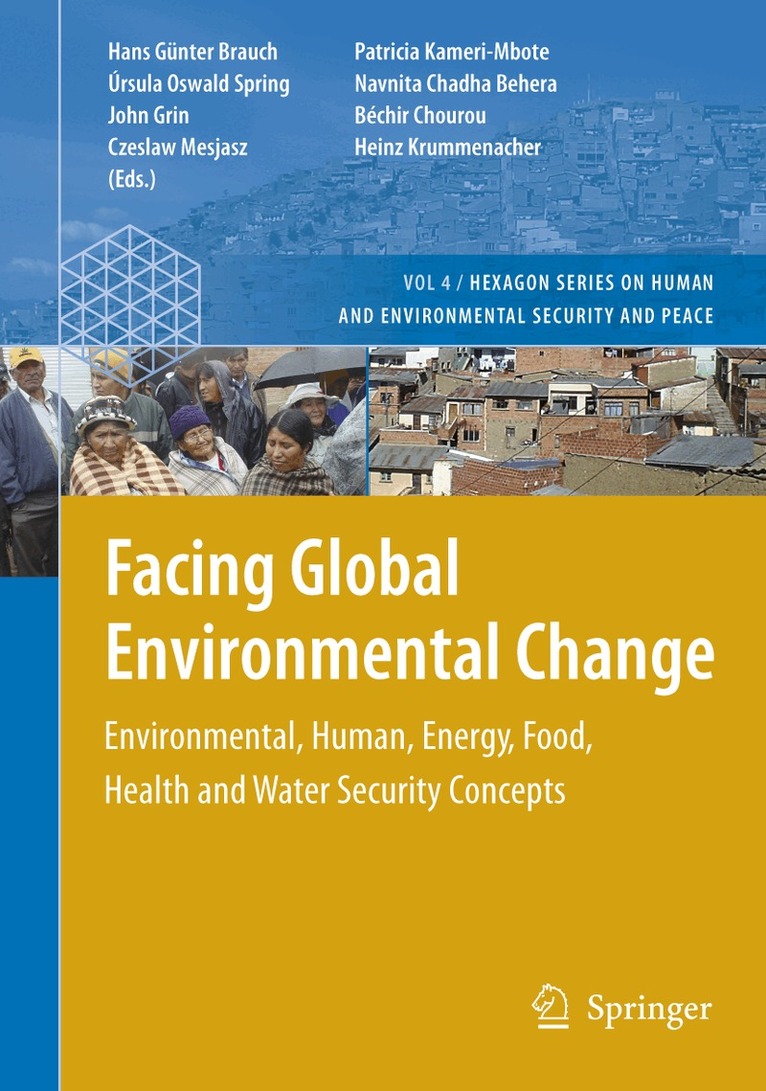
The year 2007 could perhaps accurately be described as the year when climate change finally received the attention that this challenge deserves globally. Much of the information and knowledge that was created in this field during the year was the result of the findings of the Fourth - sessment Report (AR4) of the Intergovernmental Panel on Climate Change (IPCC), which were disseminated on a large scale and reported extensively by the media. This was the result not only of a heightened interest on the part of the public on various aspects of climate change, but also because the IPCC itself proactively attempted to spread the findings of its AR4 to the public at large. The interest generated on the scientific realities of climate change was further enhanced by the award of the Nobel Peace Prize to the IPCC and former Vice President of the US, Al Gore. By taking this decision in favour of a leader who has done a great deal to create awareness on c- mate change, and a body that assesses all scientific aspects of climate change and disseminates the result of its findings, the Norwegian Nobel Committee has clearly drawn the link between climate change and peace in the world.
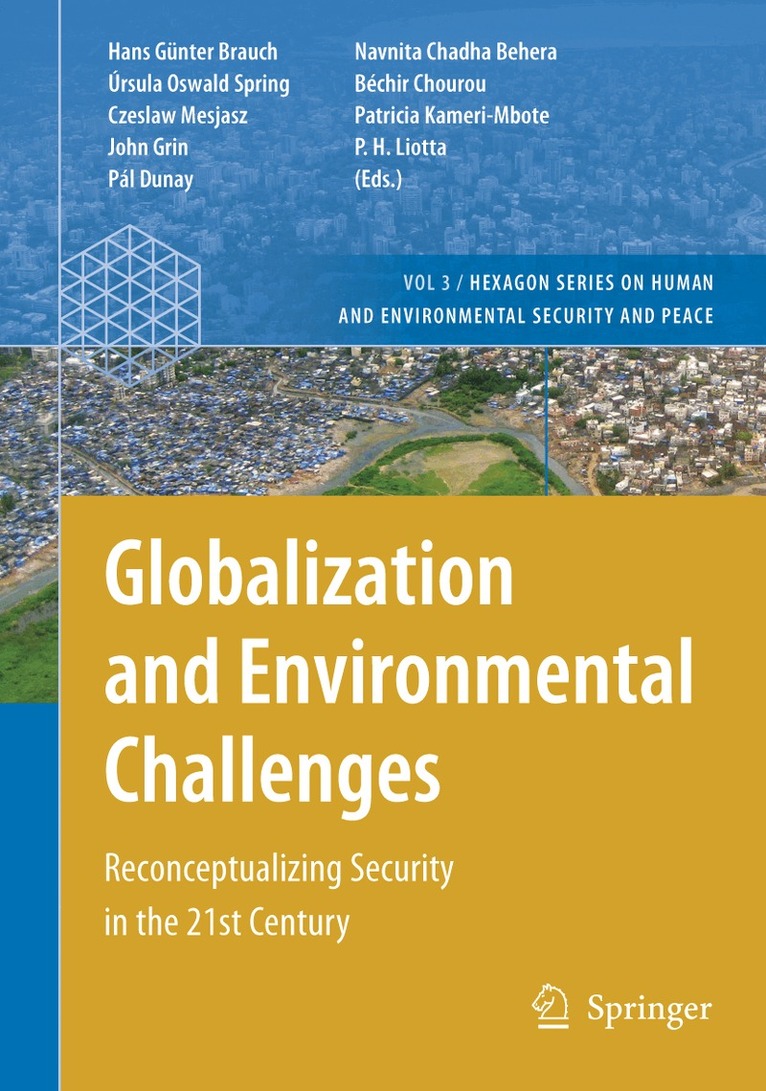
Globalization and Environmental Challenges
Reconceptualizing Security in the 21st Century
Inbunden, Engelska, 2007
5 267 kr
Skickas inom 10-15 vardagar
Put quite simply, the twin impacts of globalization and environmental degradation pose new security dangers and concerns. In this new work on global security thinking, 91 authors from five continents and many disciplines, from science and practice, assess the worldwide reassessment of the meaning of security triggered by the end of the Cold War and globalization, as well as the multifarious impacts of global environmental change in the early 21st century.
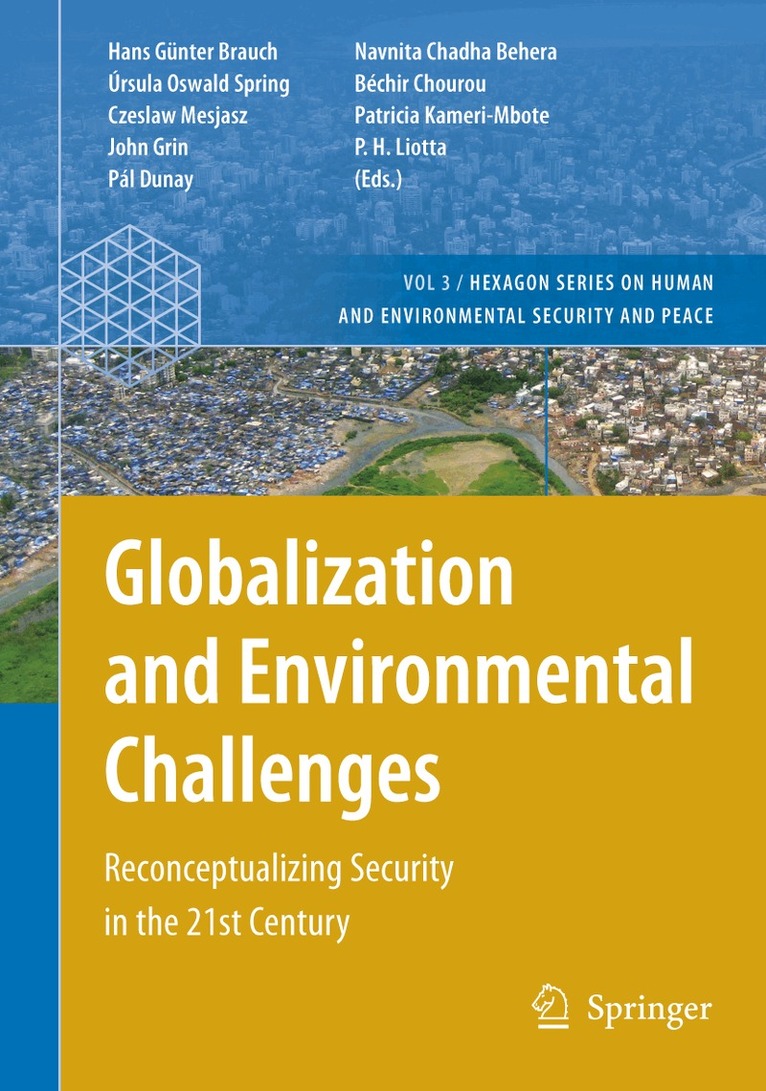
Globalization and Environmental Challenges
Reconceptualizing Security in the 21st Century
Häftad, Engelska, 2016
3 481 kr
Skickas inom 10-15 vardagar
Globalization and Environmental Challenges pose new security dangers and concerns. In this reference book on global security thinking, 92 authors from five continents and many disciplines, from science and practice, assess the global reconceptualization of security triggered by the end of the Cold War, globalization and manifold impacts of global environmental change in the early 21st century. In 10 parts, 75 chapters address the theoretical, philosophical, ethical and religious and spatial context of security; discuss the relationship between security, peace, development and environment; review the reconceptualization of security in philosophy, international law, economics and political science and for the political, military, economic, social and environmental security dimension and the adaptation of the institutional security concepts of the UN, EU and NATO; analyze the reconceptualization of regional security and alternative security futures and draw conclusions for future research and action.This book contains carefully revised papers from three workshops at ISA (Montreal), IPRA (Sopron) and the Fourth Pan European Conference on International Relations (The Hague) and additional commissioned papers. All chapters were anonymously peer reviewed.
3 431 kr
Skickas inom 10-15 vardagar
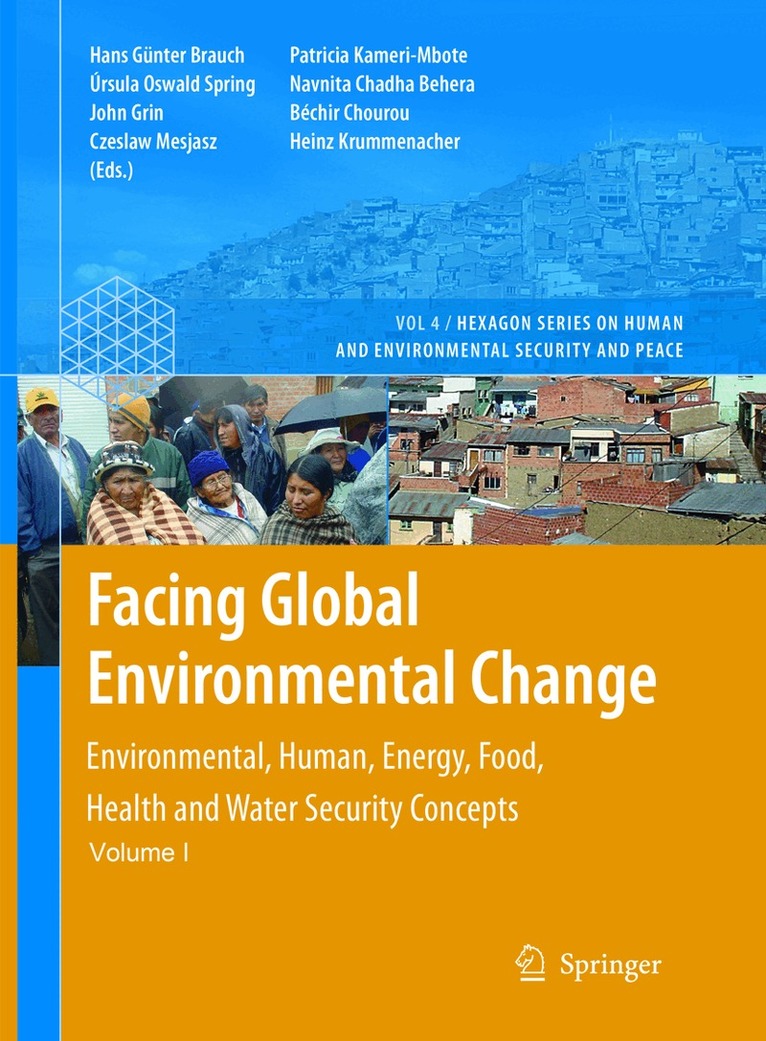
The year 2007 could perhaps accurately be described as the year when climate change finally received the attention that this challenge deserves globally. Much of the information and knowledge that was created in this field during the year was the result of the findings of the Fourth - sessment Report (AR4) of the Intergovernmental Panel on Climate Change (IPCC), which were disseminated on a large scale and reported extensively by the media. This was the result not only of a heightened interest on the part of the public on various aspects of climate change, but also because the IPCC itself proactively attempted to spread the findings of its AR4 to the public at large. The interest generated on the scientific realities of climate change was further enhanced by the award of the Nobel Peace Prize to the IPCC and former Vice President of the US, Al Gore. By taking this decision in favour of a leader who has done a great deal to create awareness on c- mate change, and a body that assesses all scientific aspects of climate change and disseminates the result of its findings, the Norwegian Nobel Committee has clearly drawn the link between climate change and peace in the world.