A. Hagenbeek – författare
Visar alla böcker från författaren A. Hagenbeek. Handla med fri frakt och snabb leverans.
5 produkter
5 produkter
Inbunden, Engelska, 1986
2 223 kr
Skickas inom 10-15 vardagar
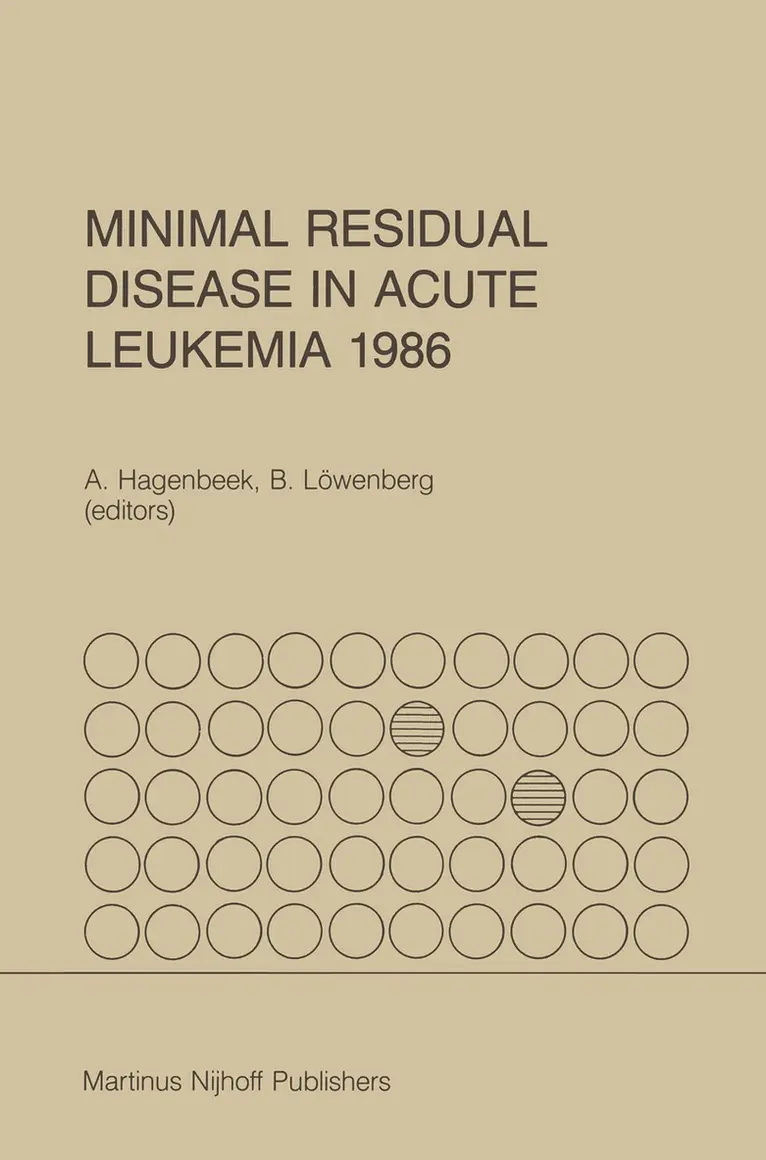
Relapse of leukemia following successful remission-induction therapy remains a major obstacle in the treatment of patients with acute leukemia. Leukemia recurs most frequently in patients with acute myeloblastic leukemia (AML) and high risk acute lymphoblastic leukemia (ALL) following chemotherapy and less often in patients with low risk ALL and particularly in patient groups> submitted to allogeneic marrow transplantation. ' It is likely that the great majority of these recurrences originate from residual leukemic cells that survive initial remission-induction chemotherapy. Today, several research groups throughout the world place emphasis on studies concerned with the detection and treatment of 'minimal residual disease' (MRD). These investigations are conducted with the common objective to tackle the remaining cells. 'Minimal Residual Disease in Acute Leukemia: 1986' summarizes the fast advancements in this area. Several disciplines are concerned with the analysis of leukemic cells. The perspectives of cytogenetic and molecular genetic approaches for applica tion in the detection of MRD are reviewed. In this respect, modern cyto genetics provide highly specific tumor markers. The resolution of cyto genetic methods can be particularly improved when combined with other techniques which select relevant subpopulations of cells. Characterization of oncogenes and gene rearrangements, including those of immunoglobulin and T-cell receptor genes, and the measurement of gene products, have been established. Techniques based on these approaches offer interesting tools for the detection of MRD. New possibilities of employing monoclonal anti bodies are also presented.
E-bok
PDF, Engelska, 20122 822 kr
Läs direkt efter köp
Relapse of leukemia following successful remission-induction therapy remains a major obstacle in the treatment of patients with acute leukemia. Leukemia recurs most frequently in patients with acute myeloblastic leukemia (AML) and high risk acute lymphoblastic leukemia (ALL) following chemotherapy and less often in patients with low risk ALL and particularly in patient groups> submitted to allogeneic marrow transplantation. '' It is likely that the great majority of these recurrences originate from residual leukemic cells that survive initial remission-induction chemotherapy. Today, several research groups throughout the world place emphasis on studies concerned with the detection and treatment of ''minimal residual disease'' (MRD). These investigations are conducted with the common objective to tackle the remaining cells. ''Minimal Residual Disease in Acute Leukemia: 1986'' summarizes the fast advancements in this area. Several disciplines are concerned with the analysis of leukemic cells. The perspectives of cytogenetic and molecular genetic approaches for applica tion in the detection of MRD are reviewed. In this respect, modern cyto genetics provide highly specific tumor markers. The resolution of cyto genetic methods can be particularly improved when combined with other techniques which select relevant subpopulations of cells. Characterization of oncogenes and gene rearrangements, including those of immunoglobulin and T-cell receptor genes, and the measurement of gene products, have been established. Techniques based on these approaches offer interesting tools for the detection of MRD. New possibilities of employing monoclonal anti bodies are also presented.
E-bok
PDF, Engelska, 2013708 kr
Läs direkt efter köp
The objective of the treatment of acute leukemia involves the eradication of all neoplastic cells, including the last one. Ideally, treatment should be controlled by monitoring cell kill. If the last cells could be discovered and their biological properties be determined, the qualitative and quantitative effects of treatment should be directly evaluable. This should ultimately permit a calculated tumor cell reduction thereby avoiding overtreatment and excessive toxicity and thus providing a basis for individualized antileukemic treatment. In recent years several new developments have contributed to the selective discovery of minimal numbers of leukemic cells which are hidden among the normal cells in the marrow cavities. These methods are the first steps to the realization of the therapeutic goals indicated above. They include the production and ap plication of monoclonal antibodies against differentiation antigens on the cell sur face, the use of pulse cytophotometry - and cell sorter techniques, the employment of cytogenetics, the development of culture techniques for selective growth of precursor cells and several others. These methodologies offer prospects for refined diagnosis and, as far as the elimination of leukemic cells is concerned, the further development of autologous bone marrow transplantation. Eliminating tumor cells from autologous grafts requires the detailed knowledge of the cellular inter relationships within the neoplasm so that the neoplastic cells responsible for tumor propagation are specifically removed. Recognition and characterization of the clonogenic cells of the neoplasm should then lead to determining their sensitivity to the therapeutic agents which are clinically applied.
Häftad, Engelska, 2011
2 202 kr
Skickas inom 10-15 vardagar
Relapse of leukemia following successful remission-induction therapy remains a major obstacle in the treatment of patients with acute leukemia.
Del 19 - Developments in Oncology
Minimal Residual Disease in Acute Leukemia
Häftad, Engelska, 2011
556 kr
Skickas inom 10-15 vardagar
They include the production and ap plication of monoclonal antibodies against differentiation antigens on the cell sur face, the use of pulse cytophotometry - and cell sorter techniques, the employment of cytogenetics, the development of culture techniques for selective growth of precursor cells and several others.