A. M. Allchin – författare
Visar alla böcker från författaren A. M. Allchin. Handla med fri frakt och snabb leverans.
6 produkter
6 produkter
Häftad, Engelska, 1998
179 kr
Skickas inom 3-6 vardagar
An exploration of the spirituality of the Welsh people through the ages by means of a study of the spiritual pilgrimages of seven Welsh men and women, namely Meilyr Brydydd, Guto'r Glyn, William Williams, Pantycelyn, Mary Jones, Ann Griffiths, Ruth Evans, Waldo Williams and D. Gwenallt Jones.
Häftad, Danska
581 kr
Skickas inom 3-6 vardagar
Häftad, Engelska, 1987
149 kr
Tillfälligt slut
Inbunden, Engelska, 1991
412 kr
Tillfälligt slut
Häftad, Engelska, 1995
267 kr
Tillfälligt slut
This text explores the theme of praise in the Welsh poetic tradition. It reveals a persistence in the appearance of this theme in writings ranging form the ninth century to the present day. The first part of the work gives an introductory overview of the tradition while the second part offers more detailed studies of aspects of this theme. Particular attention is given to the 18th-century works of Ann Griffiths and Williams Pantycelyn but there is also much illuminating discussion of 20th-century writers including Saunders Lewis, Gwenallt, Waldo Williams, Euros Bowen, Bobi Jones and Gwyn Thomas. In these studies the author develops contrasts and comparisons between the Welsh tradition and those of other nations and thus enables us to percieve its specific quality in a European and international context.
Inbunden, Engelska, 2015
405 kr
Tillfälligt slut
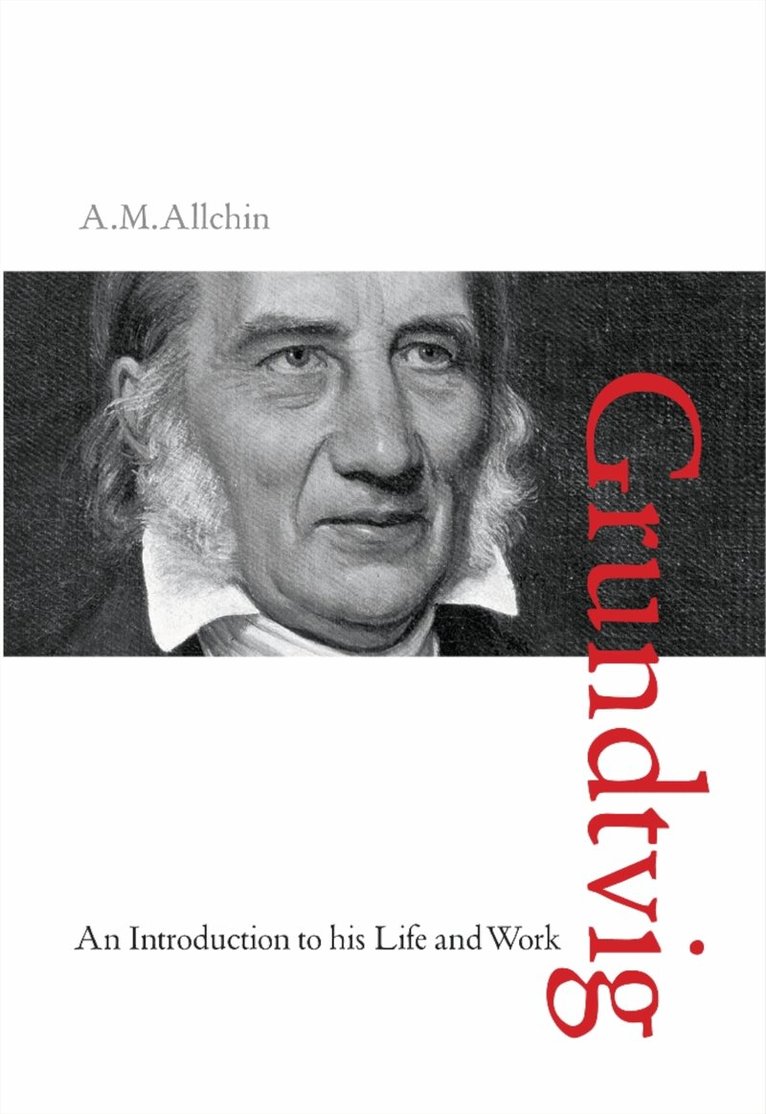
N F S Grundtvig (1783-1872) was a prominent preacher, poet, scholar and politician, who played a crucial role in the life of nineteenth-century Denmark. His sermons and hymns, and his educational and historical writings, gave birth to a national and spiritual awakening, which still strongly affects Danish life and thought today. This book is an introduction to Grundtvig to the English speaking world. It begins with an overview of Grundtvig's long and varied life, concentrating on a number of critical moments in his intellectual and spiritual development. He was a man of irrepressible energy and a volcanic temperament, and his life was not without moments of high drama. The second part of the book looks at vital aspects of his presentation of the Christian faith, beginning from his vision of the Church as a living sacramental and historical reality. It centres on the deeply Trinitarian nature of his thinking: for him faith in God as Trinity has its outworking in the whole of daily life, social and political, as well as personal. The third section of the book follows Grundtvig's exposition of the faith through the festivals of the Christian year. Grundtvig was a man firmly rooted in his own time and place. But his thoughts often have a prophetic ring to them. They have still much to say about the underlying unity of the Christian tradition, about questions of national identity and national interdependence, and about the way in which we may come to a new understanding of the creation itself as made in God's image and likeness.