Abbas Rajabifard - Böcker
Visar alla böcker från författaren Abbas Rajabifard. Handla med fri frakt och snabb leverans.
11 produkter
11 produkter
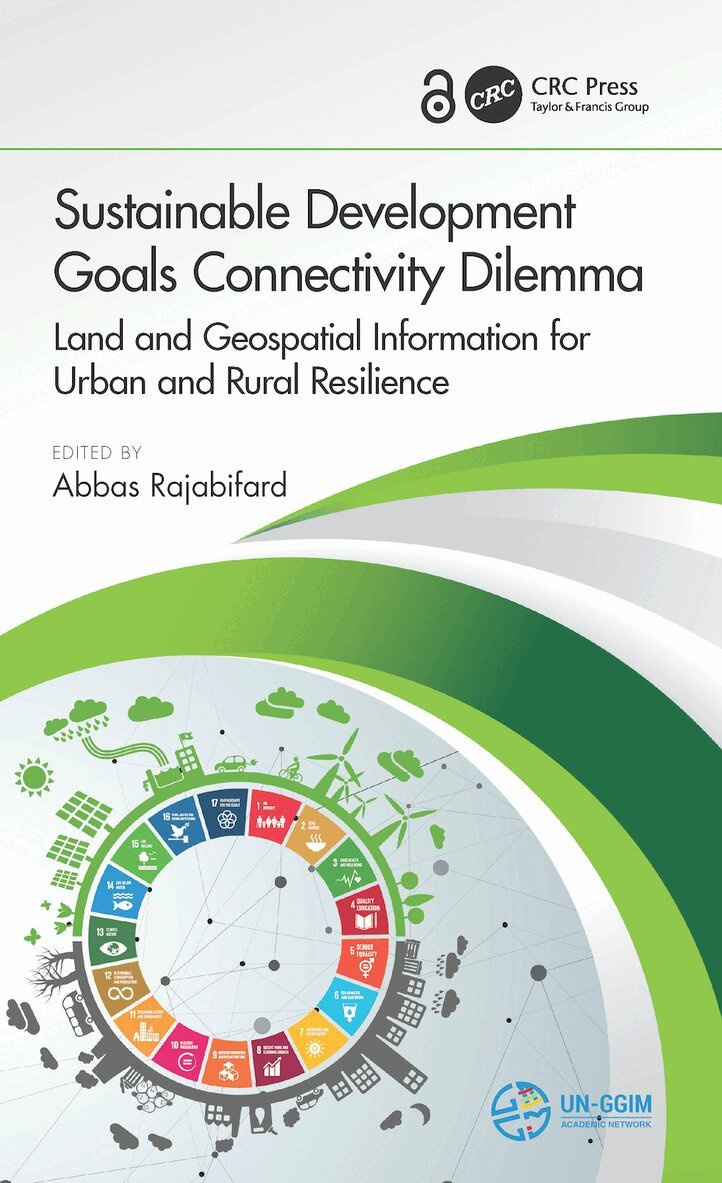
Sustainable Development Goals Connectivity Dilemma
Land and Geospatial Information for Urban and Rural Resilience
Inbunden, Engelska, 2019
1 333 kr
Skickas inom 10-15 vardagar
The Open Access version of this book, available at https://doi.org/10.4324/9780429290626, has been made available under a Creative Commons Attribution-Non Commercial-No Derivatives 4.0 license.Large-scale migration from rural to urban areas, and between countries, affects sustainable development at local, national, and regional levels. To strengthen urban and rural resilience to global challenges, Sustainable Development Goals Connectivity Dilemma: Land and Geospatial Information for Urban and Rural Resilience, brings together leading international geospatial experts to analyze the role of land and geospatial data infrastructures and services for achieving the United Nations' Sustainable Development Goals (SDGs). While the goals outlined in the 2030 Agenda have been longstanding aspirations worldwide, the complexity and connectivity between social, economic, environmental, and governance challenges are changing with large-scale urbanization and population growth. Structured in 5 parts, the themes and objectives of the book are in line with the critical challenges, gaps, and opportunities raised at all UN-GGIM events and UN-GGIM Academic Network forums. Through the different perspectives of scholars, industry actors, and policy-makers, this book provides interdisciplinary analysis and multisectoral expertise on the interconnection between the SDGs, geospatial information, and urban and rural resilience. Sustainable Development Goals Connectivity Dilemma: Land and Geospatial Information for Urban and Rural Resilience is an essential reference for researchers, industry professionals, and postgraduate students in fields such as geomatics, land administration, urban planning, GIS, and sustainable development. It will also prove a vital resource for environmental protection specialists, government practitioners, UN-GGIM delegates, and geospatial and land administration agencies.Features: Introduces a holistic and new approach to sustainable development Brings together social, economic, and environmental dimensions of sustainability Highlights the significance and the role of geospatial information in sustainable development Examines urban and rural interdependencies in the context of strengthening resilience Written by experts with diverse academic and professional backgrounds who examine connectivity and develop strategic pathways
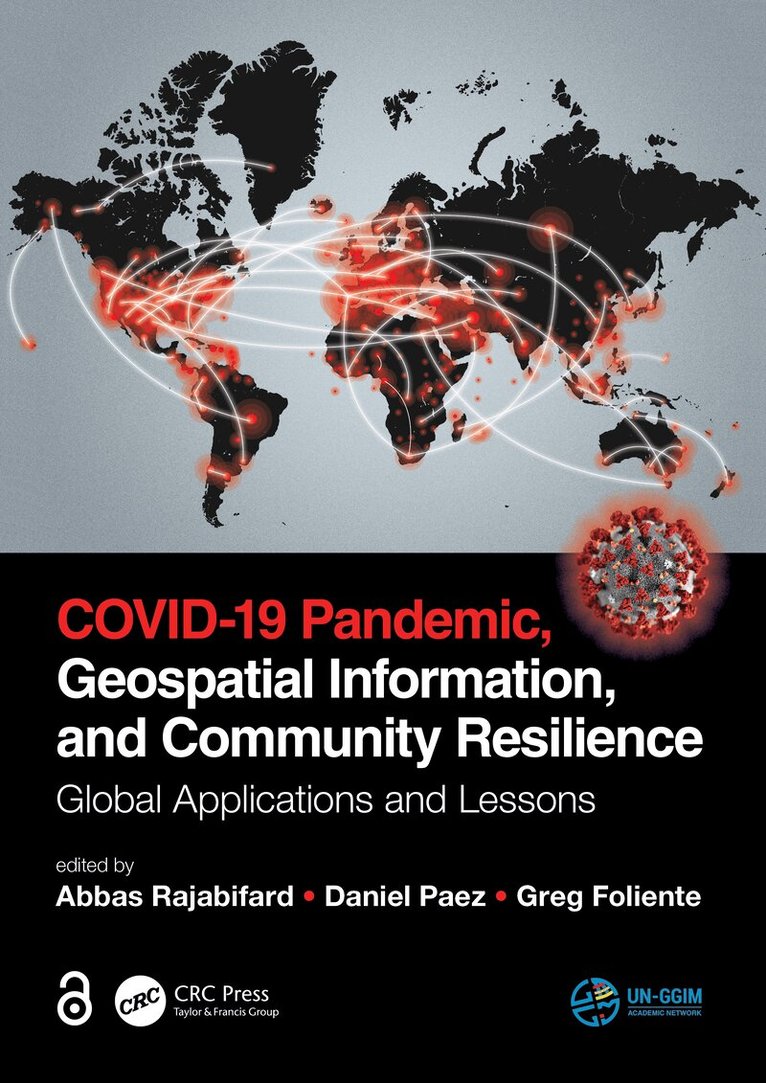
COVID-19 Pandemic, Geospatial Information, and Community Resilience
Global Applications and Lessons
Inbunden, Engelska, 2021
2 565 kr
Skickas inom 10-15 vardagar
"The Open Access version of this book, available at https://www.taylorfrancis.com/books/oa-edit/10.1201/9781003181590, has been made available under a Creative Commons Attribution-Non Commercial-No Derivatives 4.0 license."Geospatial information plays an important role in managing location dependent pandemic situations across different communities and domains. Geospatial information and technologies are particularly critical to strengthening urban and rural resilience, where economic, agricultural, and various social sectors all intersect. Examining the United Nations' SDGs from a geospatial lens will ensure that the challenges are addressed for all populations in different locations. This book, with worldwide contributions focused on COVID-19 pandemic, provides interdisciplinary analysis and multi-sectoral expertise on the use of geospatial information and location intelligence to support community resilience and authorities to manage pandemics.
2 557 kr
Skickas inom 10-15 vardagar
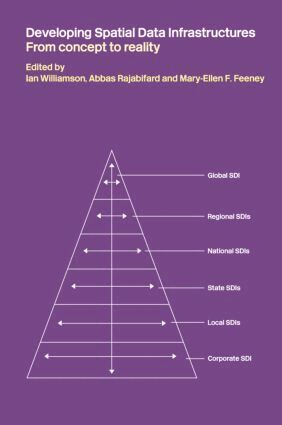
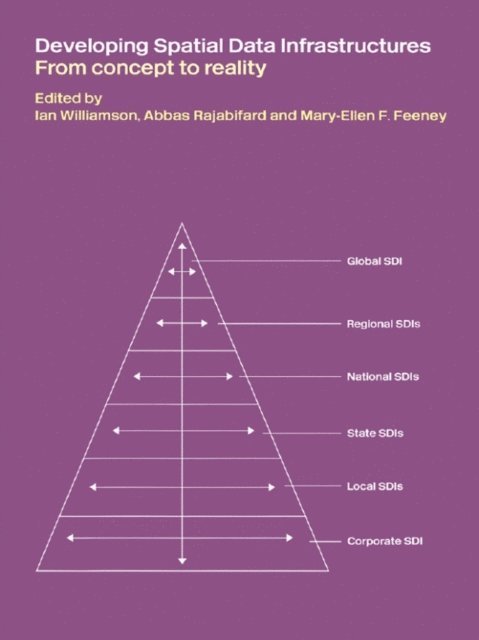
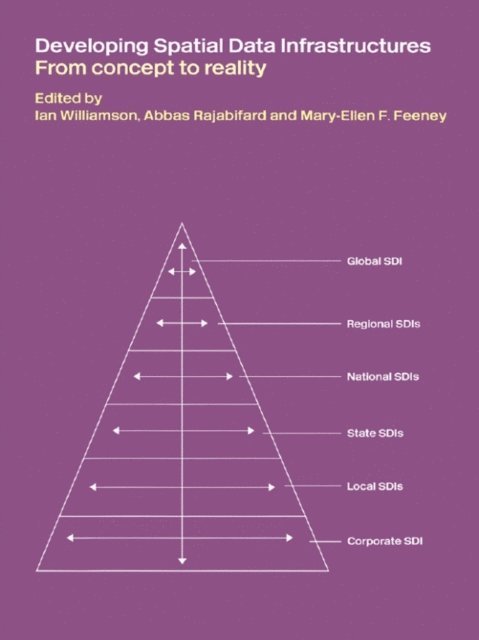
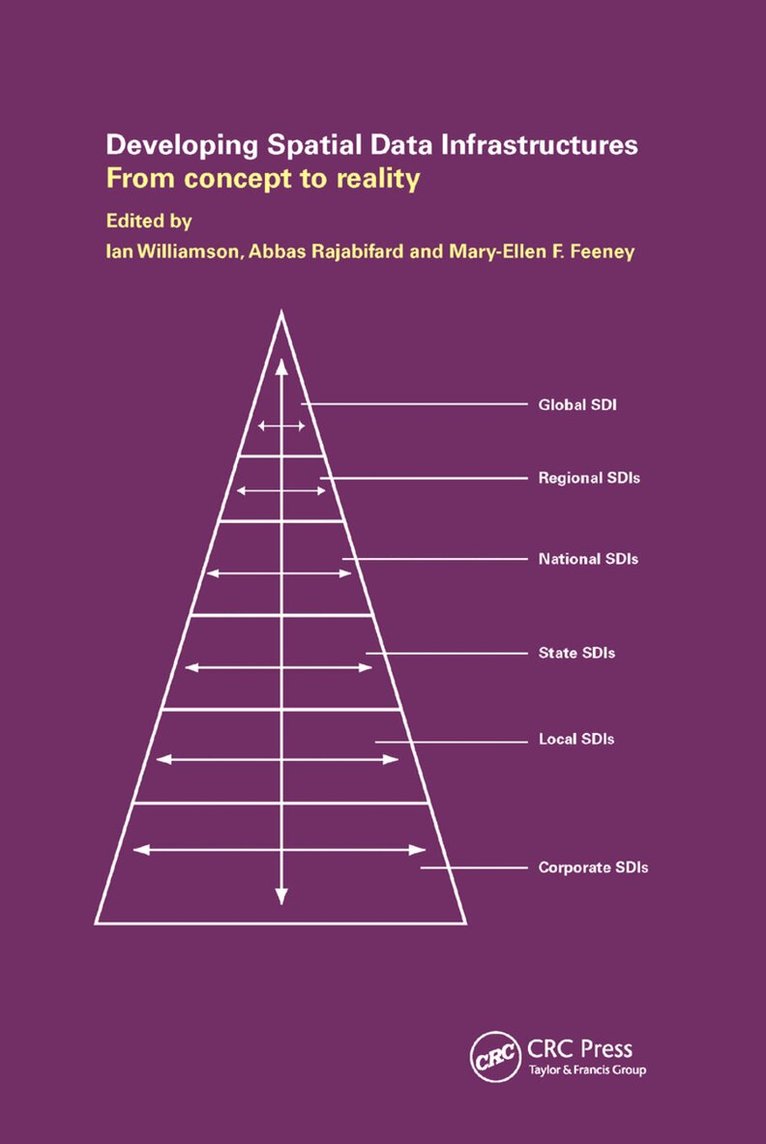
Expert perspectives on SDI theory and practiceThe spatial data infrastructure (SDI) concept continues to evolve and become an increasingly important element of the infrastructure that supports economic development, environmental management, and social stability. Because of its dynamic and complex nature, however, it remains a fuzzy concept to many, and depending on their needs and circumstances, practitioners, researchers, and governments adopt different views of it.Developing Spatial Data Infrastructures: from Concept to Reality makes a timely contribution to the theory and practice of SDIs and breaks new ground in improving understanding of their relevance and value. It provides expert overviews of policies, concepts, standards, and practices associated with the design, implementation, and operation of SDIs. It introduces the concept of an SDI Hierarchy based on Hierarchical Spatial Reasoning, sets out the similarities and differences between SDIs operating within and between different jurisdictions, and identifies factors key to the success of SDI initiatives.Built on key contributions to the International Symposium on Spatial Data Infrastructure held in Melbourne in November 2001, this book is the first of its kind to provide address both the theoretical and practical aspects of developing appropriate SDIs. It offers unique, detailed discussions on the challenges and direction of future SDI development and thus provides an outstanding resource for those involved in building and maintaining SDIs and for GIS professionals and students.
COVID-19 Pandemic, Geospatial Information, and Community Resilience
Global Applications and Lessons
Häftad, Engelska, 2024
942 kr
Skickas inom 10-15 vardagar
"The Open Access version of this book, available at https://www.taylorfrancis.com/books/oa-edit/10.1201/9781003181590, has been made available under a Creative Commons Attribution-Non Commercial-No Derivatives 4.0 license."Geospatial information plays an important role in managing location dependent pandemic situations across different communities and domains. Geospatial information and technologies are particularly critical to strengthening urban and rural resilience, where economic, agricultural, and various social sectors all intersect. Examining the United Nations' SDGs from a geospatial lens will ensure that the challenges are addressed for all populations in different locations. This book, with worldwide contributions focused on COVID-19 pandemic, provides interdisciplinary analysis and multi-sectoral expertise on the use of geospatial information and location intelligence to support community resilience and authorities to manage pandemics.
685 kr
Skickas inom 10-15 vardagar
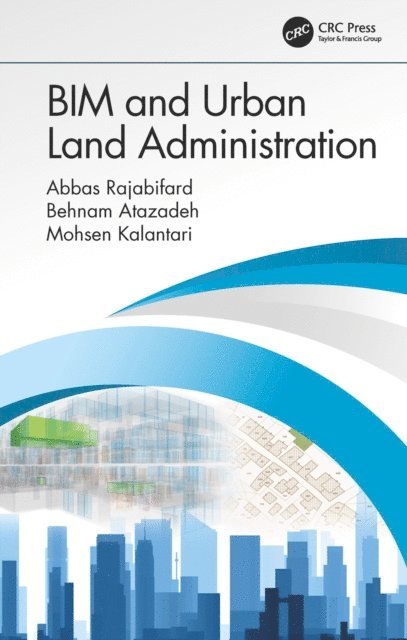
Rapid urbanization has created an unprecedented pressure on the use of land in cities around the world, resulting in physical and legal complexities. This book explains the theoretical basis and practicality of connecting urban land administration practices with the 3D digital data environment of Building Information Modelling (BIM). The main focus is to adopt a BIM-based paradigm for enhancing communication and management of complex ownership rights in multi-story buildings, which are prevalent in urban built environments. This book first elaborates on a range of data elements required for managing legal information in current land administration practices pertaining to subdivision of legal interests within multi-story building developments. It then explains how an open data model in the BIM domain – Industry Foundation Classes (IFC) – can be extended with legal data elements to lay the foundation for adopting BIM in urban land administration. The book also highlights benefits and barriers of implementing BIM-enabled urban land administration.Features Explains the theoretical basis and practicality of connecting urban land administration practices with the 3D digital data environment of BIM. Highlights the existing challenges associated with current practice of urban land administration for multi-story buildings. Introduces the potential of 3D digital environment of BIM for the purpose of mapping and registering legal interests. Describes how BIM-based data models can be extended for recording, managing, and representing legal ownership of properties over a building's lifecycle. Includes models of multi-story buildings as case studies to demonstrate the feasibility of extended BIM-based data models.
Sustainable Development Goals Connectivity Dilemma
Land and Geospatial Information for Urban and Rural Resilience
Häftad, Engelska, 2024
677 kr
Skickas inom 10-15 vardagar
The Open Access version of this book, available at https://doi.org/10.4324/9780429290626, has been made available under a Creative Commons Attribution-Non Commercial-No Derivatives 4.0 license.Large-scale migration from rural to urban areas, and between countries, affects sustainable development at local, national, and regional levels. To strengthen urban and rural resilience to global challenges, Sustainable Development Goals Connectivity Dilemma: Land and Geospatial Information for Urban and Rural Resilience, brings together leading international geospatial experts to analyze the role of land and geospatial data infrastructures and services for achieving the United Nations' Sustainable Development Goals (SDGs). While the goals outlined in the 2030 Agenda have been longstanding aspirations worldwide, the complexity and connectivity between social, economic, environmental, and governance challenges are changing with large-scale urbanization and population growth. Structured in 5 parts, the themes and objectives of the book are in line with the critical challenges, gaps, and opportunities raised at all UN-GGIM events and UN-GGIM Academic Network forums. Through the different perspectives of scholars, industry actors, and policy-makers, this book provides interdisciplinary analysis and multisectoral expertise on the interconnection between the SDGs, geospatial information, and urban and rural resilience. Sustainable Development Goals Connectivity Dilemma: Land and Geospatial Information for Urban and Rural Resilience is an essential reference for researchers, industry professionals, and postgraduate students in fields such as geomatics, land administration, urban planning, GIS, and sustainable development. It will also prove a vital resource for environmental protection specialists, government practitioners, UN-GGIM delegates, and geospatial and land administration agencies.Features:Introduces a holistic and new approach to sustainable development Brings together social, economic, and environmental dimensions of sustainabilityHighlights the significance and the role of geospatial information in sustainable developmentExamines urban and rural interdependencies in the context of strengthening resilience Written by experts with diverse academic and professional backgrounds who examine connectivity and develop strategic pathways
Land Intelligence and Geospatial Ecosystem
Sustainability, Digital and AI Innovations, and Applications
Inbunden, Engelska, 2026
1 895 kr
Kommande
This book provides a comprehensive understanding of how advanced intelligent geospatial technologies are transforming the way we record, register, manage, and use land. It explains the basics of intelligent land administration systems, explores new innovative technologies for capturing, validating, storing, querying, and analysing aboveground and underground land ownership, and discusses how geospatial innovations impact urban planning, sustainability, and legal frameworks. Readers will gain insight into how incorporating new intelligence into land administration and geospatial ecosystems can shape our cities, improve infrastructure management, and address location-based challenges in a rapidly changing world. FeaturesProvides new content on digital, integrated, and intelligent solutions for delivering on-demand knowledge about land and geospatial information and examines the value of this information for sustainability and resilience.Includes several case studies, prototype systems, and models that demonstrate the feasibility of intelligent land administration system design and development.Explains the foundational role of intelligent land administration system in improving geospatially enabled decision making for design, planning, construction, and management of complex urban environments.Describes the complexity of land and geospatial information in aboveground and underground environments and how digitally intelligent solutions can help address land and geospatial data management and communication challenges.Includes new material on digital environments that provides a fully integrated view interlinking the legal ownership of land parcels and physical reality of complex environments, including buildings and urban infrastructure.This is an excellent book for professionals, academics, researchers, and students in land administration, geospatial information systems, geomatics and surveying, remote sensing and urban planning, sustainability science, disaster management, architecture, infrastructure engineering, and digital construction.
915 kr
Skickas inom 10-15 vardagar
Expert perspectives on SDI theory and practiceThe spatial data infrastructure (SDI) concept continues to evolve and become an increasingly important element of the infrastructure that supports economic development, environmental management, and social stability. Because of its dynamic and complex nature, however, it remains a fuzzy concept to many, and depending on their needs and circumstances, practitioners, researchers, and governments adopt different views of it.Developing Spatial Data Infrastructures: from Concept to Reality makes a timely contribution to the theory and practice of SDIs and breaks new ground in improving understanding of their relevance and value. It provides expert overviews of policies, concepts, standards, and practices associated with the design, implementation, and operation of SDIs. It introduces the concept of an SDI Hierarchy based on Hierarchical Spatial Reasoning, sets out the similarities and differences between SDIs operating within and between different jurisdictions, and identifies factors key to the success of SDI initiatives.Built on key contributions to the International Symposium on Spatial Data Infrastructure held in Melbourne in November 2001, this book is the first of its kind to provide address both the theoretical and practical aspects of developing appropriate SDIs. It offers unique, detailed discussions on the challenges and direction of future SDI development and thus provides an outstanding resource for those involved in building and maintaining SDIs and for GIS professionals and students.
1 685 kr
Skickas inom 10-15 vardagar
Rapid urbanization has created an unprecedented pressure on the use of land in cities around the world, resulting in physical and legal complexities. This book explains the theoretical basis and practicality of connecting urban land administration practices with the 3D digital data environment of Building Information Modelling (BIM). The main focus is to adopt a BIM-based paradigm for enhancing communication and management of complex ownership rights in multi-story buildings, which are prevalent in urban built environments. This book first elaborates on a range of data elements required for managing legal information in current land administration practices pertaining to subdivision of legal interests within multi-story building developments. It then explains how an open data model in the BIM domain – Industry Foundation Classes (IFC) – can be extended with legal data elements to lay the foundation for adopting BIM in urban land administration. The book also highlights benefits and barriers of implementing BIM-enabled urban land administration.Features Explains the theoretical basis and practicality of connecting urban land administration practices with the 3D digital data environment of BIM. Highlights the existing challenges associated with current practice of urban land administration for multi-story buildings. Introduces the potential of 3D digital environment of BIM for the purpose of mapping and registering legal interests. Describes how BIM-based data models can be extended for recording, managing, and representing legal ownership of properties over a building's lifecycle. Includes models of multi-story buildings as case studies to demonstrate the feasibility of extended BIM-based data models.
1 948 kr
Skickas inom 10-15 vardagar
This book offers a timely review of modern technologies for health, with a special emphasis on wireless and wearable technologies, GIS tools and machine learning methods for managing the impacts of pandemics.
1 948 kr
Skickas inom 10-15 vardagar
This book offers a timely review of modern technologies for health, with a special emphasis on wireless and wearable technologies, GIS tools and machine learning methods for managing the impacts of pandemics.