
Abdilatif Abdalla – författare
Visar alla böcker från författaren Abdilatif Abdalla. Handla med fri frakt och snabb leverans.
4 produkter
4 produkter
Häftad, Engelska, 2024
568 kr
Skickas inom 5-8 vardagar
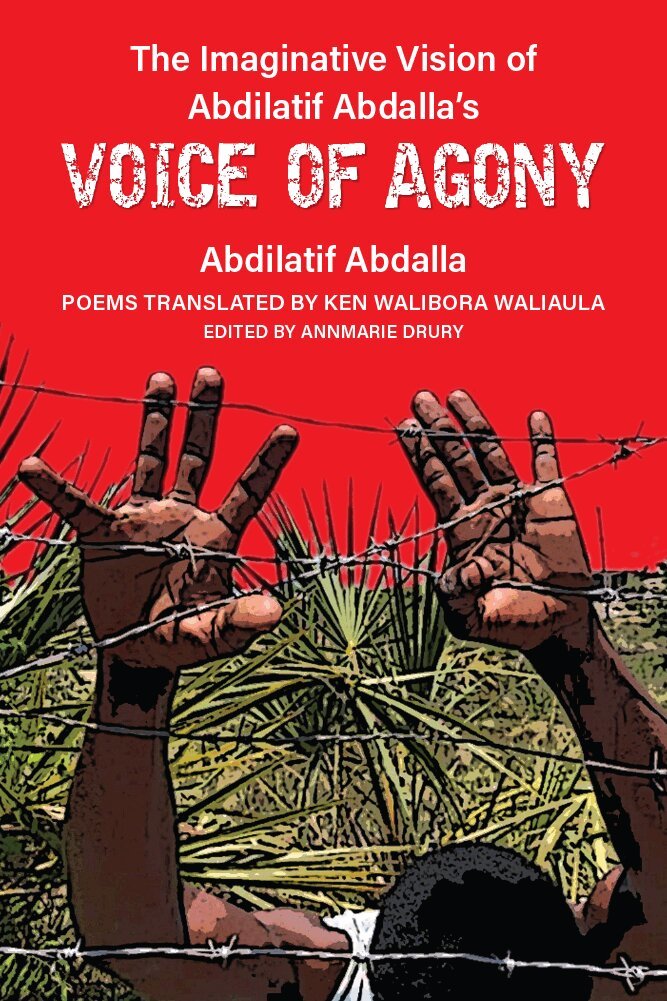
The extraordinary Swahili poetry collection Sauti ya Dhiki (Voice of Agony) is a collection of prison poems composed by Abdilatif Abdalla between 1969 and 1972. He originally wrote the poems while incarcerated by the government of Jomo Kenyatta for sedition as a result of his political activism and smuggled them out of prison on scraps of paper. Imaginative Vision is the first complete literary translation into English—translated by the late Kenyan novelist and scholar Ken Walibora Waliaula and edited by Annmarie Drury—of one of the most esteemed and influential collections of Swahili poetry of the twentieth century. Yet, Imaginative Vision is also something more. Even as it centers on a literary translation of a singularly beautiful and influential book of poetry, it tells English-language readers the story of that book. Supporting materials illuminate the circumstances of its inception when Abdilatif, aged 22, was arrested and tried. They explore what the volume meant to its first readers and its affiliations with subsequent extraordinary works of prison literature by Alamin Mazrui and Ngũgĩ wa Thiong’o. They trace its links to literary art of the past, including the nineteenth-century poet Muyaka bin Haji, and to writing that followed. And they explain social and historical aspects of the Swahili coastal world that nurtured Abdilatif’s political engagement and stunning verbal art. Under the editorship of scholar, translator, and poet Annmarie Drury, contributors bring insights from their diverse backgrounds to present contextualizing material that illuminates the poems at the heart of this book.
Inbunden, Engelska, 2024
1 191 kr
Skickas inom 5-8 vardagar
The extraordinary Swahili poetry collection Sauti ya Dhiki (Voice of Agony) is a collection of prison poems composed by Abdilatif Abdalla between 1969 and 1972. He originally wrote the poems while incarcerated by the government of Jomo Kenyatta for sedition as a result of his political activism and smuggled them out of prison on scraps of paper. Imaginative Vision is the first complete literary translation into English—translated by the late Kenyan novelist and scholar Ken Walibora Waliaula and edited by Annmarie Drury—of one of the most esteemed and influential collections of Swahili poetry of the twentieth century. Yet, Imaginative Vision is also something more. Even as it centers on a literary translation of a singularly beautiful and influential book of poetry, it tells English-language readers the story of that book. Supporting materials illuminate the circumstances of its inception when Abdilatif, aged 22, was arrested and tried. They explore what the volume meant to its first readers and its affiliations with subsequent extraordinary works of prison literature by Alamin Mazrui and Ngũgĩ wa Thiong’o. They trace its links to literary art of the past, including the nineteenth-century poet Muyaka bin Haji, and to writing that followed. And they explain social and historical aspects of the Swahili coastal world that nurtured Abdilatif’s political engagement and stunning verbal art. Under the editorship of scholar, translator, and poet Annmarie Drury, contributors bring insights from their diverse backgrounds to present contextualizing material that illuminates the poems at the heart of this book.
E-bok
PDF, Engelska, 2024845 kr
Läs direkt efter köp
The extraordinary Swahili poetry collection Sauti ya Dhiki (Voice of Agony), is a collection of prison poems composed by Abdilatif Abdalla between 1969 and 1972. He originally wrote the poems while incarcerated by the government of Jomo Kenyatta for sedition as a result of his political activism and smuggled them out of prison on scraps of paper. Imaginative Vision is the first complete literary translation into English—translated by the late Kenyan novelist and scholar Ken Walibora Waliaula and edited by Annmarie Drury—of one of the most esteemed and influential collections of Swahili poetry of the twentieth century. Yet, Imaginative Vision is also something more. Even as it centers on a literary translation of a singularly beautiful and influential book of poetry, it tells English-language readers the story of that book. Supporting materials illuminate the circumstances of its inception when Abdilatif, aged 22, was arrested and tried. They explore what the volume meant to its first readers and its affiliations with subsequent extraordinary works of prison literature by Alamin Mazrui and Ngũgĩ wa Thiong’o. They trace its links to literary art of the past, including the nineteenth-century poet Muyaka bin Haji, and to writing that followed. And they explain social and historical aspects of the Swahili coastal world that nurtured Abdilatif’s political engagement and stunning verbal art. Under the editorship of scholar, translator, and poet Annmarie Drury, contributors bring insights from their diverse backgrounds to present contextualizing material that illuminates the poems at the heart of this book.
E-bok
PDF, Swahili, 2011472 kr
Läs direkt efter köp
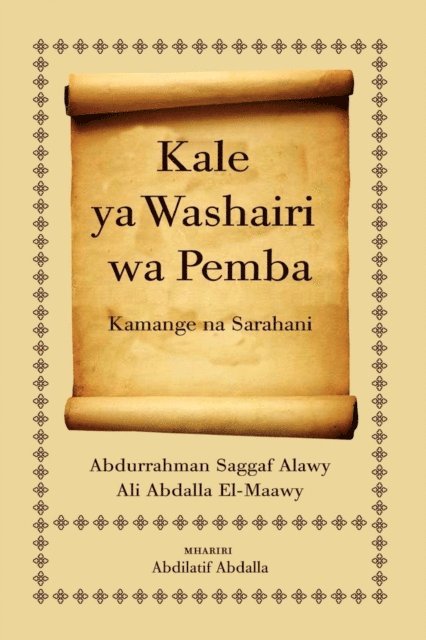
The title of this collection of poetry, Kale ya Washairi wa Pemba: Kamange na Sarahani is translated as, ,The Past of Pemba Poets: Kamange and Sarahani,. Pemba, for those who may need reminding is the smaller of the two islands known as Zanzibar, the other being Unguja. The poets whose works make up the collection lived between the last half of the 19th and early 20th century in Pemba, but their poetry was known and much appreciated throughout the Swahili world of the time, meaning the coastal towns of East Africa, in particular, Mombasa, Lamu, Zanzibar and other settlements. The two famous and rival poets, Kamange and Sarahani, were influenced, as all artists inevitably are, by their environment and culture, among the most important of its manifestations being religion and language. Both of them were Muslims, and were therefore influenced by Islamic literature and Arabic language. But they were also influenced by the multiplicity of Swahili sub-cultures and dialects , which were not in fact called Swahili but Kim vita, Kiamu, Kipemba, Kimrima and Kivumba respectively (for the Swahili spoken in Mombasa, Lamu, Pemba, Vanga and Wasini off the Southern Kenya coast) and several others. One aspect of the richness of the collection of Kamange and Sarahani,s poetry is the length and breadth of their command of the different dialects. At the height of their fame, the two poets divided the world of poetry into followers of Kamange or Sarahani. This rivalry became even fiercer after Kamange,s death with Sarahani refusing to be engaged in it, because as he voiced it, in the absence of his real sparring partner there was no one to pit himself against. Kamange was the boisterous, and daring one writing on subjects of love and bravery while Sarahani was interested in religion erudition, philosophy and moral instruction. The collectors of the poems, Abdurrahman Saggaf Alawy and Ali Abdala El Maawy saved the poems from extinction after the1964 revolution in Zanzibar and kept them for more than forty years before presenting them to Abdilatif Abdala, editor of this collection (himself a renowned poet) to find a publisher for them. This is a real treasure of Swahili poetry that will open up a new window to the richness of Swahili literary and poetic culture.