Abu Hamid Muhammad Al-Ghazali – författare
Visar alla böcker från författaren Abu Hamid Muhammad Al-Ghazali. Handla med fri frakt och snabb leverans.
15 produkter
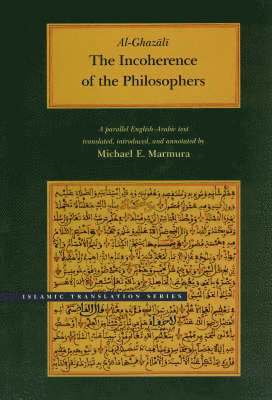
Incoherence of the Philosophers, 2nd Edition
Av Abu Hamid Muhammad Al-Ghazali
Inbunden, 2002
542 kr
Lägg i varukorg
Although Abu Hamid Muhammad al-Ghazali lived a relatively short life (1058-1111), he established himself as one of the most important thinkers in the history of Islam. The Incoherence of the Philosophers, written after more than a decade of travel and ascetic contemplation, contends that while such …
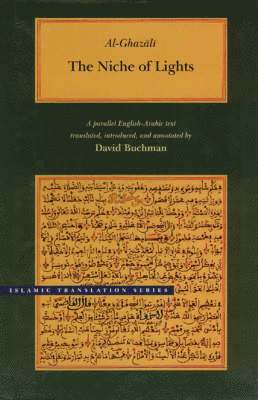
Niche of Lights
Av Abu Hamid Muhammad Al-Ghazali
Inbunden, 1998
261 kr
Lägg i varukorg
Abu Hamid Muhammad al-Ghazali's philosophical explorations covered nearly the entire spectrum of twelfth-century beliefs. Beginning his career as a skeptic, he ended it as a scholar of mysticism and orthodoxy. The Niche of Lights, written near the end of his illustrious career, advances the …
Bane of the Tongue
Book 24 of Ihya' 'ulum al-din, The Revival of the Religious Sciences
Av Abu Hamid Muhammad al-Ghazali
Häftad, 2024
301 kr
Lägg i varukorg
The Bane of Tongue (Kitab afat al-lisan) is Book 24 of the Imam al-Ghazali’ s magnum opus, I?ya? ?ulum al-din, The Revival of the Religious Sciences. Within the architecture of this monumental work, Afat al-lisan is the fourth book of the third quarter, The Ways to Perdition (Rub? al-muhlikat), in …
Al-Ghazali's "Moderation in Belief"
Av Abu Hamid Muhammad Al-Ghazali
Häftad, 2017
452 kr
Lägg i varukorg
Centuries after his death, al-Ghazali remains one of the most influential figures of the Islamic intellectual tradition. Although he is best known for his Incoherence of the Philosophers, Moderation in Belief is his most profound work of philosophical theology. In it, he offers what scholars …
The Jerusalem Epistle: A Tract on the Fundamentals of Muslim Doctrine
Av Safaruk Z. Chowdhury, Abu Hamid Muhammad Al-Ghazali
Häftad
178 kr
Lägg i varukorg
The Alchemy of Happiness (Volume One)
Av Abu Hamid Muhammad Al-Ghazali
Häftad, 2026
403 kr
Lägg i varukorg
The Alchemy of Happiness (Volume Two)
Av Abu Hamid Muhammad Al-Ghazali
Häftad, 2026
412 kr
Lägg i varukorg
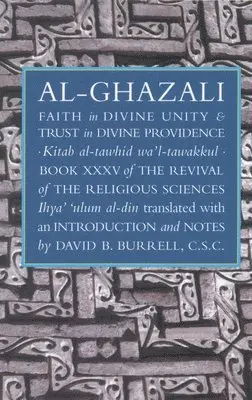
Faith in Divine Unity and Trust in Divine Providence
The Revival of the Religious Sciences Book XXXV
Av Abu Hamid Muhammad al-Ghazali, David B. Burrell
Häftad, 2001
293 kr
Lägg i varukorg
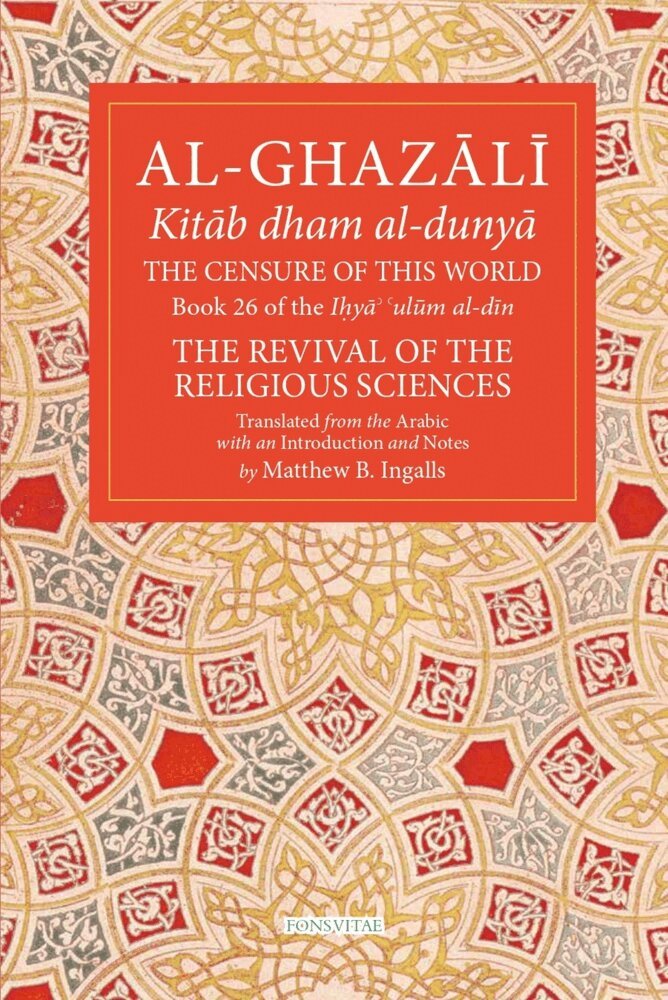
Censure of This World
Book 26 of Ihya' 'ulum al-din, The Revival of the Religious Sciences
Av Abu Hamid Muhammad al-Ghazali
Häftad, 2023
350 kr
Lägg i varukorg
Die Nische der Lichter
Av Abu-Hamid Muhammad al-Ghazali, Abd-Elsamad Abd-Elhamid Elschazli
E-bok, 1987
329 kr
Lägg i varukorg
Diese Spätschrift besticht durch ihre Knappheit, Geschlossenheit und Prägnanz. In der literarischen Form der Belehrung eines fragenden Schülers demonstriert al-Ghazali unter Verwendung der Licht-Metaphorik den Grundsatz seiner Lehre, nach der uns gewisse Erkenntnis weder durch die Sinne zufällt, …
Der Erretter aus dem Irrtum
Av Abu-Hamid Muhammad al-Ghazali, Abd-Elsamad Abd-Elhamid Elschazli
E-bok, 1987
192 kr
Lägg i varukorg
Diese erste deutsche Ausgabe der philosophischen Autobiographie al-Ghazalis (1059–1111) ist besonders geeignet, einen originären Zugang zu den klassischen Quellen der arabischen Philosophie zu eröffnen. Zum einen gibt al-Ghazali Aufschluß über den Denkweg, der ihn dazu führte, in seiner bekannten …
Mahakk al Nazar fi al Mantiq - محك النظر في المنطق
Av Abu Hamid Muhammad Al Ghazali, Dr Abu Mazhar Khalid Siddique
Häftad, 2026
154 kr
Lägg i varukorg
Miyar al-Ilm fi Fann al-Mantiq - معيار العلم في فن المنطق
Av Abu Hamid Muhammad Al-Ghazali, Dr Abu Mazhar Khalid Siddique
Häftad, 2026
235 kr
Lägg i varukorg
Faraid Al-Laali...from Al-Ghazali's letters
Av Abu Hamid Muhammad al-Ghazali
E-bok, 2024
55 kr
Lägg i varukorg
The truth about ascension, climbing higher, says: I stumbled up the ladder lame. Words have two aspects of meaning. One aspect is in indicating physical things, such as the concept of stairs and ascension. The second aspect is the indication of the meanings of corporeal objects and their spirits, …
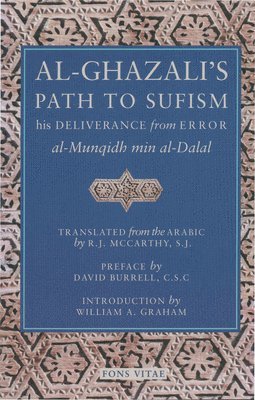
Al-Ghazali's Path to Sufisim
His Deliverance from Error (al-Munqidh min al-Dalal) and Five Key Texts
Av Abu Hamid Muhammad al-Ghazali, R. J. McCarthy
Häftad, 2000
260 kr
Tillfälligt slut