Adalberto Perulli – författare
2 226 kr
Skickas inom 10-15 vardagar
626 kr
Skickas inom 10-15 vardagar
743 kr
Läs direkt efter köp
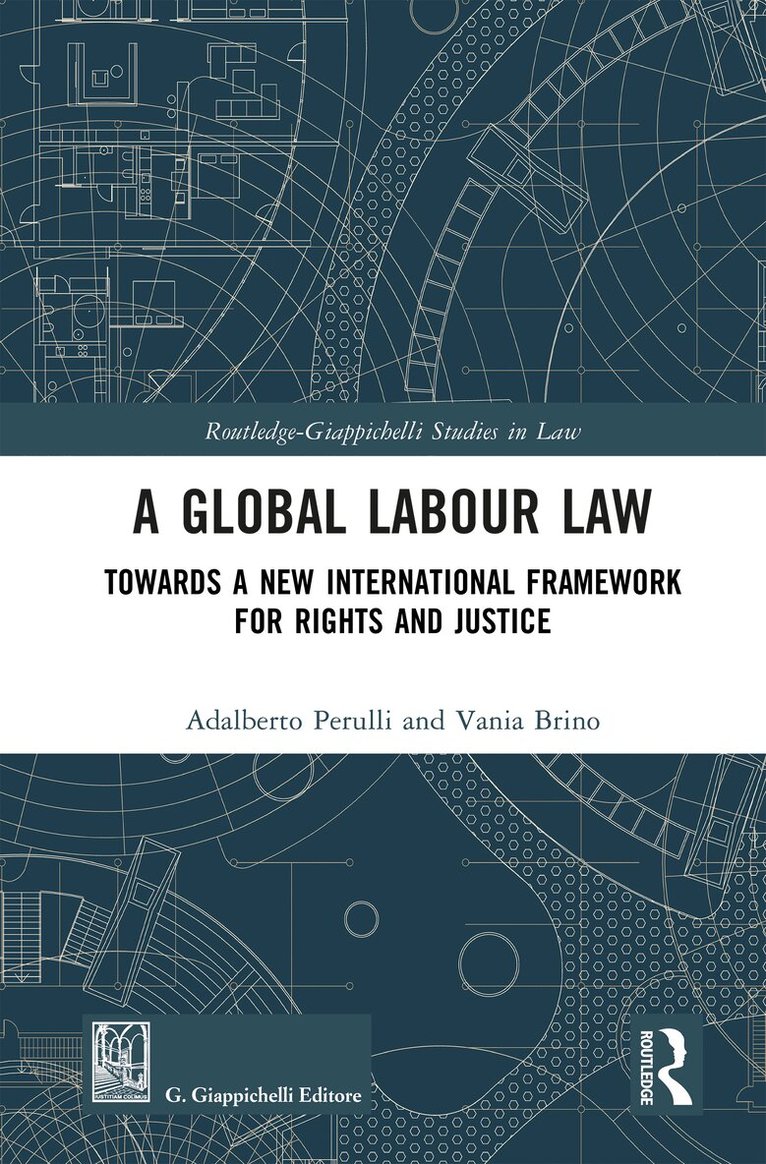
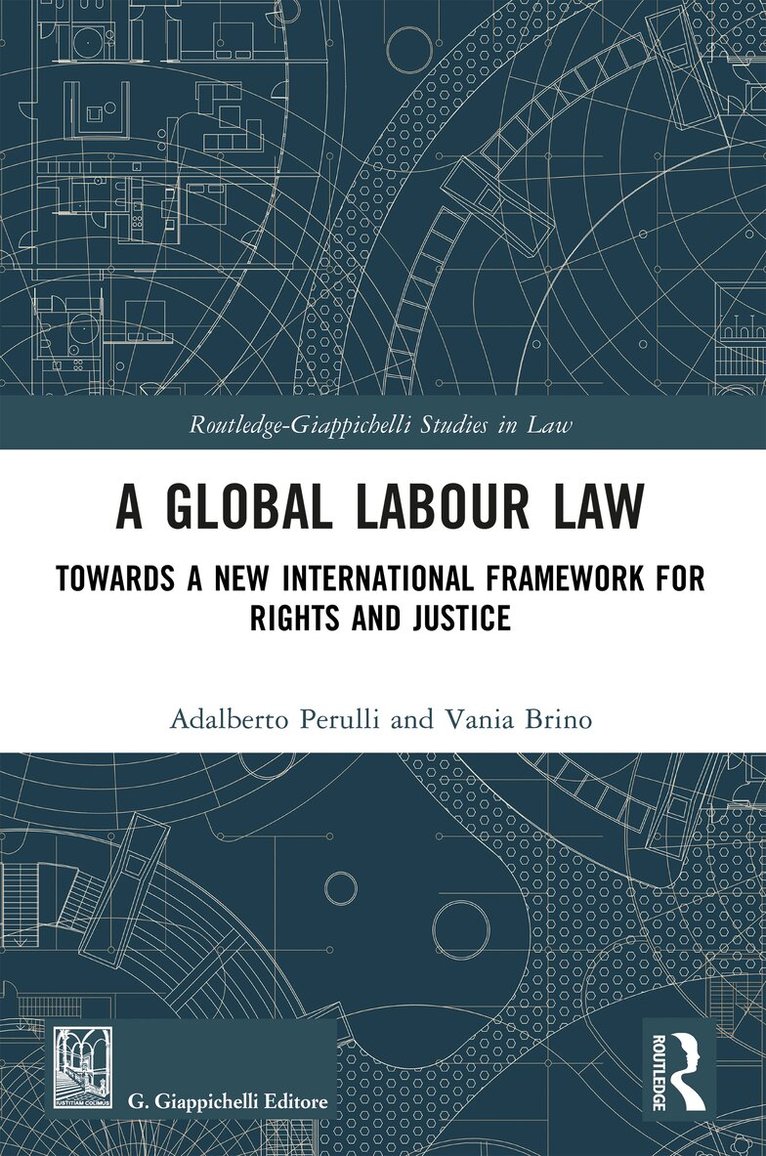
This book explores the prospects of a global labour law system. Global labour law is understood as a still non-coherent set ofnorms that at different levels and with different legal effectiveness regulate legal labour relations, promote respect for fundamental social rights, and condition the behavior of the multinational enterprise, from a social justice and sustainability perspective. The book deals with both international labour law and regulatory instruments of different kinds, such as social clauses in international trade treaties or corporate codes of conduct, transnational collective bargaining, and EU directives on due diligence. This complex normative “system” is partly reconstructed and partly subjected to critique, with the aim of producing a hybrid handbook in which the elements of normative knowledge are accompanied by problematic reasoning about the forms, contents and purposes of a possible global labour law. The book will be of interest to academics, researchers and policy-makers working in the areas of Labour Law, Employment Law, International Human Rights Law and Social Justice.
743 kr
Läs direkt efter köp
This book explores the prospects of a global labour law system. Global labour law is understood as a still non-coherent set ofnorms that at different levels and with different legal effectiveness regulate legal labour relations, promote respect for fundamental social rights, and condition the behavior of the multinational enterprise, from a social justice and sustainability perspective. The book deals with both international labour law and regulatory instruments of different kinds, such as social clauses in international trade treaties or corporate codes of conduct, transnational collective bargaining, and EU directives on due diligence. This complex normative “system” is partly reconstructed and partly subjected to critique, with the aim of producing a hybrid handbook in which the elements of normative knowledge are accompanied by problematic reasoning about the forms, contents and purposes of a possible global labour law. The book will be of interest to academics, researchers and policy-makers working in the areas of Labour Law, Employment Law, International Human Rights Law and Social Justice.
444 kr
Läs direkt efter köp
460 kr
Läs direkt efter köp
428 kr
Skickas inom 10-15 vardagar
2 158 kr
Läs direkt efter köp
Globalization has led to growing labour fragmentation and widening of gaps in social protection. Although the enterprise is increasingly expected to be socially responsible, in actuality extreme worker inequalities and social dumping have become ubiquitous worldwide. This volume – the first to focus attention on the ‘theory of the firm’ as it reveals itself in today’s world from a multidisciplinary perspective – underscores the necessity to rebuild a new scientifically controlled paradigm that acknowledges and regulates the dimension of power in the functioning of the organization.
In their contributed essays, nineteen renowned scholars in labour law and industrial relations rethink the firm, its conception, its value, and its regulation, analysing such aspects as the following:
– labour-management relations issues that arise when companies go global but workers remain local;– the firm as a social construction;– the continuing necessity for collective bargaining;– concealment of the employment relationship under the guise of self-employment; – concealment of the real employer behind figureheads and shell companies;– social welfare effects of outsourcing;– the company’s interaction with the network of suppliers and with local education processes; – determining who actually carries responsibility towards workers;– overcoming companies’ drive to enter the global market in response to national regulation;– realizing the notion of ‘duty of care’;– mechanisms of participation of workers in the management of the enterprise; and– the persistent limitations that women face in the workplace, even when worker participation is advocated.With attention to innovative developments in Germany, Italy, Japan, and other countries, analyses include case studies of specific companies as well as case law, in particular the European Court of Justice’s jurisprudence in matters of collective dismissals, seconded workers, and public contracts.
In their head-on tackling of the fragmentation and blurring of social responsibility in enterprise organization, these important essays propose a view of the enterprise as a factor in a new ‘constitutionalisation’ of labour that shifts employment protection from single legal entities to the network’s economic activity, thus realigning the legal boundaries of the enterprise with its economic reality. As a compelling investigation of how a satisfactory implementation of labour standards in the fragmented enterprise can be guaranteed, this book will be studied by entrepreneurs, managers, consultants, corporate lawyers, judges, human rights experts, and trade unionists, and will be welcomed by academics and researchers in industrial relations and labour law.
2 158 kr
Läs direkt efter köp
Globalization has led to growing labour fragmentation and widening of gaps in social protection. Although the enterprise is increasingly expected to be socially responsible, in actuality extreme worker inequalities and social dumping have become ubiquitous worldwide. This volume – the first to focus attention on the ‘theory of the firm’ as it reveals itself in today’s world from a multidisciplinary perspective – underscores the necessity to rebuild a new scientifically controlled paradigm that acknowledges and regulates the dimension of power in the functioning of the organization.
In their contributed essays, nineteen renowned scholars in labour law and industrial relations rethink the firm, its conception, its value, and its regulation, analysing such aspects as the following:
– labour-management relations issues that arise when companies go global but workers remain local;– the firm as a social construction;– the continuing necessity for collective bargaining;– concealment of the employment relationship under the guise of self-employment; – concealment of the real employer behind figureheads and shell companies;– social welfare effects of outsourcing;– the company’s interaction with the network of suppliers and with local education processes; – determining who actually carries responsibility towards workers;– overcoming companies’ drive to enter the global market in response to national regulation;– realizing the notion of ‘duty of care’;– mechanisms of participation of workers in the management of the enterprise; and– the persistent limitations that women face in the workplace, even when worker participation is advocated.With attention to innovative developments in Germany, Italy, Japan, and other countries, analyses include case studies of specific companies as well as case law, in particular the European Court of Justice’s jurisprudence in matters of collective dismissals, seconded workers, and public contracts.
In their head-on tackling of the fragmentation and blurring of social responsibility in enterprise organization, these important essays propose a view of the enterprise as a factor in a new ‘constitutionalisation’ of labour that shifts employment protection from single legal entities to the network’s economic activity, thus realigning the legal boundaries of the enterprise with its economic reality. As a compelling investigation of how a satisfactory implementation of labour standards in the fragmented enterprise can be guaranteed, this book will be studied by entrepreneurs, managers, consultants, corporate lawyers, judges, human rights experts, and trade unionists, and will be welcomed by academics and researchers in industrial relations and labour law.
1 373 kr
Läs direkt efter köp
Three major fields of international law – trade, the environment, and human rights – have become inextricably intertwined in today’s world. A practitioner, policymaker, businessperson, or academic involved in any one of these fields must now be conversant with the other two. This groundbreaking book considers the crucial elements of this complex engagement, with eleven authoritative discussions by some of the most important and widely renowned professors of labor, commercial, and international law and experts from the International Labour Organization and the International Society for Labour and Social Security Law.
Focusing primarily on the “social pillar” of sustainability, the authors cover such critical issues as the following:
– the “creeping de-globalization” manifested by Brexit and US protectionist policies;– new and renegotiated multilateral “mega” treaties;– prospects for effectively codifying social responsibilities of multinational corporations;– nexus of economic comparative advantage and excessive exploitation of natural resources;– weak (or non-existent) enforcement of labor clauses in trade agreements;– assessing and managing environmental and social risk in project finance; and– stabilization clauses in state–investor agreements.An analysis of MERCOSUR serves as a revealing insight into the differences between trade agreements concluded among developing countries and those concluded among developed countries.
A much-needed probing of the future of global trade in the light of a resurgence of economic nationalisms, this book takes a giant step towards a new consensus and cohesion phase in the international community where development policies, international business transactions, and social and environmental sustainability coexist harmoniously. It will be welcomed by practitioners, academics, and researchers in trade law, environmental law, and labor law, as well as by policymakers and businesspersons concerned with how these legal fields interact with economic justice.
1 325 kr
Läs direkt efter köp
Three major fields of international law – trade, the environment, and human rights – have become inextricably intertwined in today’s world. A practitioner, policymaker, businessperson, or academic involved in any one of these fields must now be conversant with the other two. This groundbreaking book considers the crucial elements of this complex engagement, with eleven authoritative discussions by some of the most important and widely renowned professors of labor, commercial, and international law and experts from the International Labour Organization and the International Society for Labour and Social Security Law.
Focusing primarily on the “social pillar” of sustainability, the authors cover such critical issues as the following:
– the “creeping de-globalization” manifested by Brexit and US protectionist policies;– new and renegotiated multilateral “mega” treaties;– prospects for effectively codifying social responsibilities of multinational corporations;– nexus of economic comparative advantage and excessive exploitation of natural resources;– weak (or non-existent) enforcement of labor clauses in trade agreements;– assessing and managing environmental and social risk in project finance; and– stabilization clauses in state–investor agreements.An analysis of MERCOSUR serves as a revealing insight into the differences between trade agreements concluded among developing countries and those concluded among developed countries.
A much-needed probing of the future of global trade in the light of a resurgence of economic nationalisms, this book takes a giant step towards a new consensus and cohesion phase in the international community where development policies, international business transactions, and social and environmental sustainability coexist harmoniously. It will be welcomed by practitioners, academics, and researchers in trade law, environmental law, and labor law, as well as by policymakers and businesspersons concerned with how these legal fields interact with economic justice.
1 443 kr
Läs direkt efter köp
The Role of the State and Industrial Relations
Edited by Adalberto Perulli & Tiziano Treu
The new era of industrial relations that has been stealthily changing the world of work in recent decades seems to have reached a stage where it can be systematically monitored and analyzed, in great part because the “creeping renationalization” that has been noted since the financial crisis of 2008 has reinvigorated state intervention in essential economic structures. The contributions in this unrivalled book provide important new perspectives on the many challenges inherent in the present and future of the relationship between industrial relations and the state.
Analyzing industrial relations systems from international, supranational, European and national points of view—and with an interdisciplinary approach connecting labour law, commercial law, corporate governance and international law—this one-of-kind book examines such salient aspects of the subject as the following:
cooperative versus conflictual industrial relations systems; phenomenon of constitutionalization of power by multinational enterprises; competitive, illiberal and protectionist patterns of state regulation; freedom of association and industrial relations; potential power of transnational collective bargaining; impact of worktime arrangements; role of European Works Councils; exemplary value of the German system of workers’ participation; and global framework agreements.Using a comparative approach (the European Union, France, Spain, Germany, Italy, Japan, China, the United States, Brazil, South Africa, India), the book reconstructs the general framework of global industrial relations, considering challenges and future prospects and proposing a new agenda for the state. Contributors include widely renowned professors of labour, commercial and international law, as well as experts from the International Labour Organization and the International Society for Labour and Social Security Law.
The debate about industrial relations and the state in our globalized world is of major concern for practitioners in governments, companies, employers’ associations and trade unions, as well as for company managers, entrepreneurs, consultants, judges, human rights lawyers and academics interested in labour, industrial relations and social rights in European and international contexts.
1 443 kr
Läs direkt efter köp
The Role of the State and Industrial Relations
Edited by Adalberto Perulli & Tiziano Treu
The new era of industrial relations that has been stealthily changing the world of work in recent decades seems to have reached a stage where it can be systematically monitored and analyzed, in great part because the “creeping renationalization” that has been noted since the financial crisis of 2008 has reinvigorated state intervention in essential economic structures. The contributions in this unrivalled book provide important new perspectives on the many challenges inherent in the present and future of the relationship between industrial relations and the state.
Analyzing industrial relations systems from international, supranational, European and national points of view—and with an interdisciplinary approach connecting labour law, commercial law, corporate governance and international law—this one-of-kind book examines such salient aspects of the subject as the following:
cooperative versus conflictual industrial relations systems; phenomenon of constitutionalization of power by multinational enterprises; competitive, illiberal and protectionist patterns of state regulation; freedom of association and industrial relations; potential power of transnational collective bargaining; impact of worktime arrangements; role of European Works Councils; exemplary value of the German system of workers’ participation; and global framework agreements.Using a comparative approach (the European Union, France, Spain, Germany, Italy, Japan, China, the United States, Brazil, South Africa, India), the book reconstructs the general framework of global industrial relations, considering challenges and future prospects and proposing a new agenda for the state. Contributors include widely renowned professors of labour, commercial and international law, as well as experts from the International Labour Organization and the International Society for Labour and Social Security Law.
The debate about industrial relations and the state in our globalized world is of major concern for practitioners in governments, companies, employers’ associations and trade unions, as well as for company managers, entrepreneurs, consultants, judges, human rights lawyers and academics interested in labour, industrial relations and social rights in European and international contexts.
1 684 kr
Skickas inom 5-8 vardagar
1 429 kr
Läs direkt efter köp
Although the existential threat of climate change has at last been generally acknowledged, its influence on the labour market and the regulation of labour relations remains ambivalent at best. This supremely important volume, with contributions by thirteen prominent labour law practitioners and academics, shows how labour law not only can but absolutely must assume a greater role in the debate on the climate crisis and move towards a new eco-friendly labour paradigm.
Committed to the proposition that employment must come to terms with the natural environment and open a new chapter in the relationship between human work and the Earth, the authors examine critical issues and perspectives on the role of labour law in a just ecological transition, focusing on such aspects as the following:
negative externalities associated with the value chains production model;
(in)effectiveness of corporate social responsibility and sustainability initiatives;
protection of human rights from violations attributable to private sector activities;
protection of whistleblowers;
need for professional training in new occupations;
environmental migrants;
reskilling and active inclusion of workers and jobseekers;
role of remote work and flexible working time; and
evaluation and reward of employees.
The impact of the green transition on industrial activities is already creating strong tensions among the social parties, leading inevitably to massive restructuring of enterprises and relocation of thousands of workers. This detailed analysis of the implications of climate change for the labour contract and the industrial relations system provides appropriate tools to understand trends and possible solutions for the future. It will be welcomed by managers, consultants, corporate lawyers, judges, human rights experts, trade unionists, researchers, and professors placed at the nexus of labour, industrial relations, and social rights in Europe and worldwide.
1 429 kr
Läs direkt efter köp
Although the existential threat of climate change has at last been generally acknowledged, its influence on the labour market and the regulation of labour relations remains ambivalent at best. This supremely important volume, with contributions by thirteen prominent labour law practitioners and academics, shows how labour law not only can but absolutely must assume a greater role in the debate on the climate crisis and move towards a new eco-friendly labour paradigm.
Committed to the proposition that employment must come to terms with the natural environment and open a new chapter in the relationship between human work and the Earth, the authors examine critical issues and perspectives on the role of labour law in a just ecological transition, focusing on such aspects as the following:
negative externalities associated with the value chains production model;
(in)effectiveness of corporate social responsibility and sustainability initiatives;
protection of human rights from violations attributable to private sector activities;
protection of whistleblowers;
need for professional training in new occupations;
environmental migrants;
reskilling and active inclusion of workers and jobseekers;
role of remote work and flexible working time; and
evaluation and reward of employees.
The impact of the green transition on industrial activities is already creating strong tensions among the social parties, leading inevitably to massive restructuring of enterprises and relocation of thousands of workers. This detailed analysis of the implications of climate change for the labour contract and the industrial relations system provides appropriate tools to understand trends and possible solutions for the future. It will be welcomed by managers, consultants, corporate lawyers, judges, human rights experts, trade unionists, researchers, and professors placed at the nexus of labour, industrial relations, and social rights in Europe and worldwide.
1 717 kr
Skickas inom 5-8 vardagar
1 457 kr
Läs direkt efter köp
Labour Law in the Mirror
Categories, Values, Interlocutors
Edited by Adalberto Perulli & Tiziano Treu
The norms and categories of labour law are exposed more directly than other legal sectors to the increasing complexity of the digital society and the impact of technologies on forms of employment. This in-depth legal appraisal of the crisis of the foundational categories of labour law focuses not only on the stresses coming from the seismic changes in economic and social reality but also on labour law participation in major changes in the national, international, and global spheres.
In the light of these changes, both those that have taken place and those that are in progress, the contributors – a gathering of well-known and experienced labour law scholars and practitioners – present critical analyses of such aspects as the following:
labour law as a synthesis of antagonistic values;
decentralisation of industrial relations systems;
states’ function as regulators of social processes;
attribution to private operators of missions previously ensured by the state;
corporate sustainability due diligence;
relationship between antitrust law and labour law;
priority of the moral commands of reason over selfish interests;
education and vocational training to facilitate the transition to green high-tech jobs; and
protection of human and environmental rights in global value chains.
For its analytic clarification of the conceptual pairs inherent in labour law – individual and collective, public and private, autonomy and subordination, local and global, national and European – and its close attention to the consequences of values and philosophical approaches for labour law policies, this book will be welcomed by corporate lawyers, judges, human rights experts, trade unionists, academic researchers, business persons, and all others interested in protecting the role of labour law as a fundamental arbiter of social justice in a globalised world.
1 406 kr
Läs direkt efter köp
Labour Law in the Mirror
Categories, Values, Interlocutors
Edited by Adalberto Perulli & Tiziano Treu
The norms and categories of labour law are exposed more directly than other legal sectors to the increasing complexity of the digital society and the impact of technologies on forms of employment. This in-depth legal appraisal of the crisis of the foundational categories of labour law focuses not only on the stresses coming from the seismic changes in economic and social reality but also on labour law participation in major changes in the national, international, and global spheres.
In the light of these changes, both those that have taken place and those that are in progress, the contributors – a gathering of well-known and experienced labour law scholars and practitioners – present critical analyses of such aspects as the following:
labour law as a synthesis of antagonistic values;
decentralisation of industrial relations systems;
states’ function as regulators of social processes;
attribution to private operators of missions previously ensured by the state;
corporate sustainability due diligence;
relationship between antitrust law and labour law;
priority of the moral commands of reason over selfish interests;
education and vocational training to facilitate the transition to green high-tech jobs; and
protection of human and environmental rights in global value chains.
For its analytic clarification of the conceptual pairs inherent in labour law – individual and collective, public and private, autonomy and subordination, local and global, national and European – and its close attention to the consequences of values and philosophical approaches for labour law policies, this book will be welcomed by corporate lawyers, judges, human rights experts, trade unionists, academic researchers, business persons, and all others interested in protecting the role of labour law as a fundamental arbiter of social justice in a globalised world.
1 749 kr
Skickas inom 5-8 vardagar
1 485 kr
Läs direkt efter köp
Studies in Employment and Social Policy Volume 56
Digitalization, far from being solely a technological issue, has broad implications in the social, labour, and economic spheres. It leads to dangers as well as to new chances for the workforce, and thus labour law must develop effective ways to both protect workers and allow them to profit from new technological developments. The most thorough book of its kind, this collection of expert essays provides an abundance of well-thought-out material for understanding the consequences of digitalization for the labour market and industrial relations.
Recognizing that only an international perspective can make it possible to face the challenges of the present (and the future), renowned authorities from the International Labour Organization and the International Society for Labour and Social Security Law, as well as outstanding labour law professors, examine in depth such salient issues as the following:
transformation of production systems; the spread of artificial intelligence; precariousness and exploitation in the gig economy; lessons learned from COVID-19; employment status of platform workers; new cross-border issues; rights to trade union association and collective bargaining; role of the State in the new digital labour market; and blurred lines between work and private life.Thanks to the international team of contributors, the issues are dealt with from a variety of overlapping perspectives and points of view, combining aspects of labour law, commercial law, corporate governance, and international law.
Highlighting the need to adapt, especially through the right to training, work, and professionalism with respect to the new technological landscape, the book draws on legislative, judicial, and theoretical initiatives suggesting ways of responding positively to the requests for protection that arise in the new forms of production. A uniquely valuable tool for study and reflection for policymakers and academics, the book is also sure to be valued by entrepreneurs, managers, consultants, corporate lawyers, judges, human rights experts, and trade unionists who are interested in the issues of labour, industrial relations, and social rights in European and international contexts.
1 485 kr
Läs direkt efter köp
Studies in Employment and Social Policy Volume 56
Digitalization, far from being solely a technological issue, has broad implications in the social, labour, and economic spheres. It leads to dangers as well as to new chances for the workforce, and thus labour law must develop effective ways to both protect workers and allow them to profit from new technological developments. The most thorough book of its kind, this collection of expert essays provides an abundance of well-thought-out material for understanding the consequences of digitalization for the labour market and industrial relations.
Recognizing that only an international perspective can make it possible to face the challenges of the present (and the future), renowned authorities from the International Labour Organization and the International Society for Labour and Social Security Law, as well as outstanding labour law professors, examine in depth such salient issues as the following:
transformation of production systems; the spread of artificial intelligence; precariousness and exploitation in the gig economy; lessons learned from COVID-19; employment status of platform workers; new cross-border issues; rights to trade union association and collective bargaining; role of the State in the new digital labour market; and blurred lines between work and private life.Thanks to the international team of contributors, the issues are dealt with from a variety of overlapping perspectives and points of view, combining aspects of labour law, commercial law, corporate governance, and international law.
Highlighting the need to adapt, especially through the right to training, work, and professionalism with respect to the new technological landscape, the book draws on legislative, judicial, and theoretical initiatives suggesting ways of responding positively to the requests for protection that arise in the new forms of production. A uniquely valuable tool for study and reflection for policymakers and academics, the book is also sure to be valued by entrepreneurs, managers, consultants, corporate lawyers, judges, human rights experts, and trade unionists who are interested in the issues of labour, industrial relations, and social rights in European and international contexts.
1 261 kr
Läs direkt efter köp
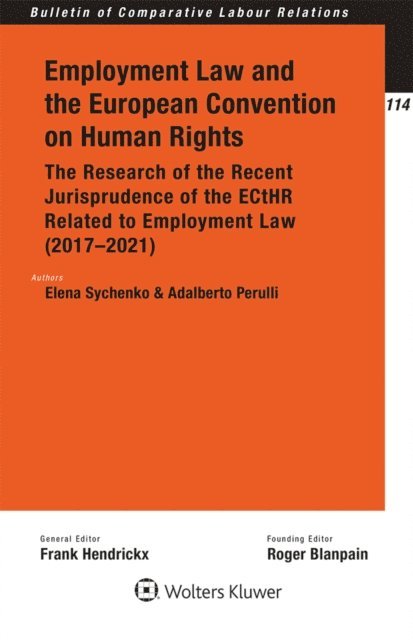
In recent years, the tendency of the European Court of Human Rights (ECtHR) to treat human rights as indivisible and consider cases relevant to employment has contributed significantly to jurisprudence relating to human rights at work in the Council of Europe. This indispensable book is the first to thoroughly survey and analyse recent ECtHR’s cases relevant to employment law. It is based on a deeply informed structural analysis of more than fifty cases considered by the ECtHR during 2017–2021, many of which have not heretofore been considered in the legal literature.
The authors examine, in particular, the following topics raised in the jurisprudence of the ECtHR:
privacy and surveillance;
freedom of thought, conscience and religion;
freedom of expression;
discrimination;
unfair dismissal;
forced labour;
collective bargaining; and
the right to strike.
The authors explore the reasoning that led the ECtHR to broaden the scope of Article 8 ECHR, which protects the right to private life, in order to develop new employment rights. They also detail the impact of International Labour Organization (ILO) standards on the Court’s jurisprudence.
As a clear and eminently useable guide to the applicability of ECHR for protection of labour rights and human rights at work, this book is of practical value to labour lawyers in spelling out the legal positions of the ECtHR which might support individual and collective labour rights protection in national proceedings. Academics in the field will appreciate the authors’ clarification of the trends of the ECtHR’s reasoning, especially in respect of the right to workplace privacy.
1 261 kr
Läs direkt efter köp
In recent years, the tendency of the European Court of Human Rights (ECtHR) to treat human rights as indivisible and consider cases relevant to employment has contributed significantly to jurisprudence relating to human rights at work in the Council of Europe. This indispensable book is the first to thoroughly survey and analyse recent ECtHR’s cases relevant to employment law. It is based on a deeply informed structural analysis of more than fifty cases considered by the ECtHR during 2017–2021, many of which have not heretofore been considered in the legal literature.
The authors examine, in particular, the following topics raised in the jurisprudence of the ECtHR:
privacy and surveillance;
freedom of thought, conscience and religion;
freedom of expression;
discrimination;
unfair dismissal;
forced labour;
collective bargaining; and
the right to strike.
The authors explore the reasoning that led the ECtHR to broaden the scope of Article 8 ECHR, which protects the right to private life, in order to develop new employment rights. They also detail the impact of International Labour Organization (ILO) standards on the Court’s jurisprudence.
As a clear and eminently useable guide to the applicability of ECHR for protection of labour rights and human rights at work, this book is of practical value to labour lawyers in spelling out the legal positions of the ECtHR which might support individual and collective labour rights protection in national proceedings. Academics in the field will appreciate the authors’ clarification of the trends of the ECtHR’s reasoning, especially in respect of the right to workplace privacy.