Adalyat Issiyeva – författare
Visar alla böcker från författaren Adalyat Issiyeva. Handla med fri frakt och snabb leverans.
3 produkter
3 produkter
Inbunden, Engelska, 2021
652 kr
Skickas inom 5-8 vardagar
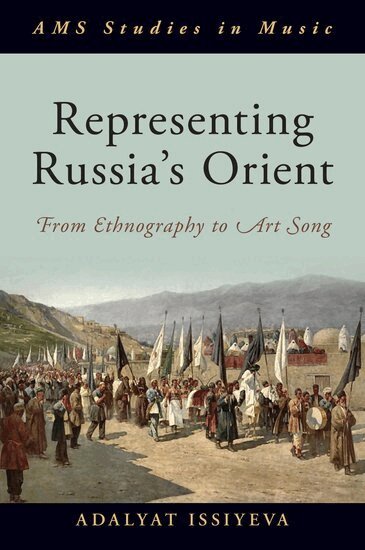
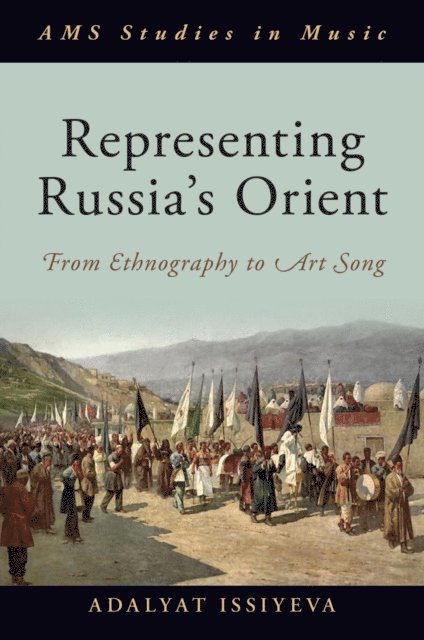
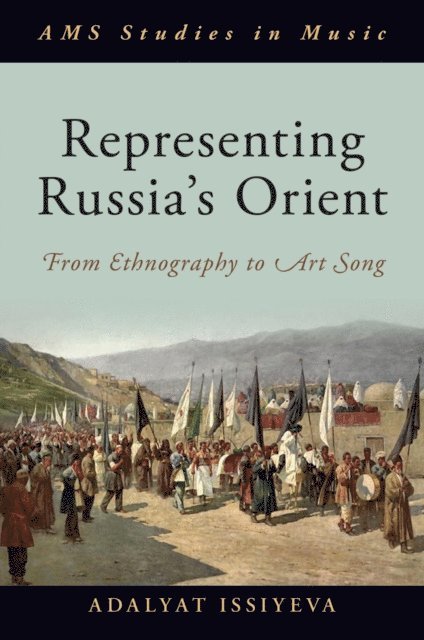
What is the place of ethnic minorities in the identity and culture of the majority? What happens when the colonizer appropriates the culture of the colonized? Throughout Russia's nineteenth-century expansion into the Caucasus and Central Asia, Russian intellectuals struggled with these questions that cut to the core of imperial identity. Representing Russia's Orient draws on political, cultural, and social history to tell the story of how Russia's imperial advancements and encounters with its southern and eastern neighbors influenced the development of Russian musical identity. While Russia's ethnic minorities, or inorodtsy, were located at the geographical and cultural periphery, they loomed large in composers' musical imagination and became central to the definition of Russianness itself.Drawing from previously untapped archival and published materials, including music scores, visual art, and ethnographies, author Adalyat Issiyeva offers an in-depth study of Russian musical engagement with oriental subjects. Within a complex matrix of politics, competing ideological currents, and social and cultural transformations, some Russian composers and writers developed multidimensional representations of oriental "others" and sometimes even embraced elements of Asian musical identity. Mapping the vast repertoire of bylinas, military and children songs, music ethnographies, rare collections of Asian folk songs, art songs inspired by Decembrist literature, and the art music of famous composers from the Mighty Five and their followers — all set against the development of oriental studies in Russia — the book sheds new light on how and why Russians sometimes rejected, sometimes absorbed and transformed elements of Asian history and culture in forging their own national identity.
E-bok
PDF, Engelska, 2020637 kr
Läs direkt efter köp
Throughout history, Russia''s geo-political and cultural position between the East and West has shaped its national identity. Representing Russia''s Orient tells the story of how Russia''s imperial expansion and encounters with its Asian neighbors influenced the formation and development of Russian musical identity in the long nineteenth century. While Russia''s ethnic minorities, or inorodtsy, were located at the geographical and cultural periphery, they loomed large in composers'' perception and musical imagination and became central to the definition of Russianness itself.Drawing from a long-forgotten archive of Russian musical examples, visual art, and ethnographies, author Adalyat Issiyeva offers an in-depth study of Russian art music''s engagement with oriental subjects. Within a complex matrix of politics, competing ideological currents, and social and cultural transformations, some Russian composers and writers developed multidimensional representations of oriental "others" and sometimes even embraced elements of Asian musical identity. In three detailed case studies--on the leader of the Mighty Five, Milii Balakirev, Decembrist sympathizer Alexander Aliab''ev, and the composers affiliated with the Music-Ethnography Committee--Issiyeva traces how and why these composers adopted "foreign" musical elements. In this way, she provides a fresh look at how Russians absorbed and transformed elements of Asian history and culture in forging a national identity for themselves.
E-bok
Engelska, 2020643 kr
Läs direkt efter köp
Throughout history, Russia''s geo-political and cultural position between the East and West has shaped its national identity. Representing Russia''s Orient tells the story of how Russia''s imperial expansion and encounters with its Asian neighbors influenced the formation and development of Russian musical identity in the long nineteenth century. While Russia''s ethnic minorities, or inorodtsy, were located at the geographical and cultural periphery, they loomed large in composers'' perception and musical imagination and became central to the definition of Russianness itself.Drawing from a long-forgotten archive of Russian musical examples, visual art, and ethnographies, author Adalyat Issiyeva offers an in-depth study of Russian art music''s engagement with oriental subjects. Within a complex matrix of politics, competing ideological currents, and social and cultural transformations, some Russian composers and writers developed multidimensional representations of oriental "others" and sometimes even embraced elements of Asian musical identity. In three detailed case studies--on the leader of the Mighty Five, Milii Balakirev, Decembrist sympathizer Alexander Aliab''ev, and the composers affiliated with the Music-Ethnography Committee--Issiyeva traces how and why these composers adopted "foreign" musical elements. In this way, she provides a fresh look at how Russians absorbed and transformed elements of Asian history and culture in forging a national identity for themselves.