Adam S. Wilkins – författare
Visar alla böcker från författaren Adam S. Wilkins. Handla med fri frakt och snabb leverans.
4 produkter
4 produkter
303 kr
Kommande
The lifelong illness suffered by the great biologist Charles Darwin (1809 - 1882) has been long puzzled-over and mis-diagnosed. Some diagnoses are incomplete, accounting for just a few symptoms, and some are plain wrong. Others have attributed it to psychiatric illness. Darwin's Chronic Illness is a medical detective story: one that offers an entirely new account of this mysterious illness and a novel solution to its nature.In the first five chapters, Adam Wilkins and John Hayman sketch the history of the illness and how its symptoms developed over many years, surveying previously proposed explanations and their inadequacies. The authors then explore, for the first time, a pattern of related illnesses in Darwin's maternal family tree, the Wedgwood family, tracing its roots back to an event that occurred a billion years ago.In the second half of the book, Wilkins and Hayman discuss the basics of mitochondrial biology, demonstrating how Darwin's specific symptoms may well have reflected a mitochondrial deficiency. They explore how this idea might be tested and the difficulties of doing so; definitive proof, one way or the other, may not be possible. Finally, the authors return to Darwin: the man, his creativity, his interest in evolution, and how this illness and prognosis relate to all three. What would Darwin have made of the plethora of hypotheses about his illness? Chronic conditions in the world today and the centrality of mitochondrial function to health and disease are linked back to Darwin's illness in the concluding chapter.
753 kr
Skickas inom 7-10 vardagar
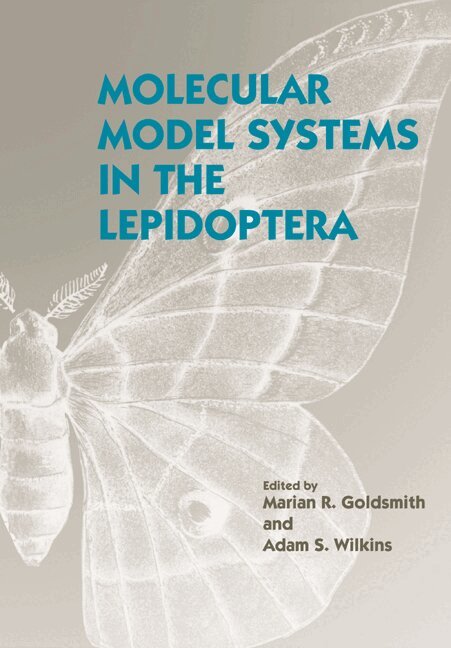
This book presents a diverse collection of chapters on basic research at the molecular level using Lepidoptera as model systems. This volume, however, is more than just a compendium of information about insect systems in general, or the Lepidoptera in particular. Each chapter is a self-contained treatment of a broad subject area, providing sufficient background information to give readers a sense of the guiding principles and central questions associated with each topic, in addition to major methodologies and findings. Comparisons with other major model systems are emphasized, with special attention given to the fruit fly, Drosophila melanogaster. Topics include: genetics, mobile elements, embryogenesis, silk gland and chorion gene regulation, hormone action, neurobiology, the immune response and engineered baculoviruses. Molecular and developmental biologists at graduate and researcher levels will find this book of great interest.
1 382 kr
Skickas inom 7-10 vardagar
This book presents a diverse collection of chapters on basic research at the molecular level using Lepidoptera as model systems. This volume, however, is more than just a compendium of information about insect systems in general, or the Lepidoptera in particular. Each chapter is a self-contained treatment of a broad subject area, providing sufficient background information to give readers a sense of the guiding principles and central questions associated with each topic, in addition to major methodologies and findings. Comparisons with other major model systems are emphasized, with special attention given to the fruit fly, Drosophila melanogaster. Topics include: genetics, mobile elements, embryogenesis, silk gland and chorion gene regulation, hormone action, neurobiology, the immune response and engineered baculoviruses. Molecular and developmental biologists at graduate and researcher levels will find this book of great interest.
438 kr
Skickas inom 5-8 vardagar
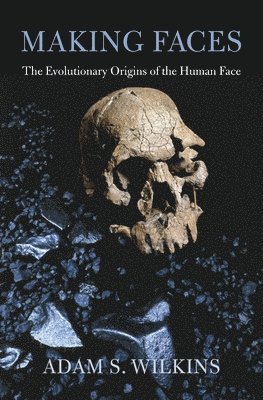
Humans possess the most expressive faces in the animal kingdom. Adam Wilkins presents evidence ranging from the fossil record to recent findings of genetics, molecular biology, and developmental biology to reconstruct the fascinating story of how the human face evolved. Beginning with the first vertebrate faces half a billion years ago and continuing to dramatic changes among our recent human ancestors, Making Faces illuminates how the unusual characteristics of the human face came about—both the physical shape of facial features and the critical role facial expression plays in human society.Offering more than an account of morphological changes over time and space, which rely on findings from paleontology and anthropology, Wilkins also draws on comparative studies of living nonhuman species. He examines the genetic foundations of the remarkable diversity in human faces, and also shows how the evolution of the face was intimately connected to the evolution of the brain. Brain structures capable of recognizing different individuals as well as “reading” and reacting to their facial expressions led to complex social exchanges. Furthermore, the neural and muscular mechanisms that created facial expressions also allowed the development of speech, which is unique to humans.In demonstrating how the physical evolution of the human face has been inextricably intertwined with our species’ growing social complexity, Wilkins argues that it was both the product and enabler of human sociality.