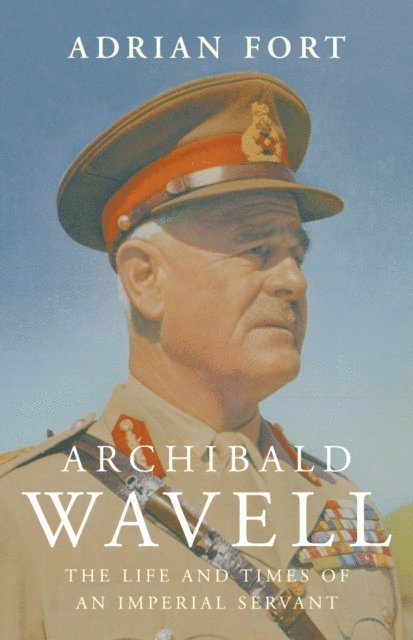
Archibald Wavell was born a few years before Queen Victoria's Golden Jubilee and died shortly after the end of the Second World War (1883-1950). During that time the country in which he was born and brought up in changed beyond recognition, undergoing a fundamental revision in the attitudes, expectations, prejudices and hopes of the British people. His life epitomises that of a generation of famous men whose education and upbringing equipped them for a future that was to prove an illusion.At seventeen, Archibald Wavell joined the army and as a young officer saw action in the Boer War and on the North West Frontier.In the Great War, he was often close to the greatest generals in the British Army; he fought in the trenches, was decorated for bravery and lost an eye. Between the wars his career included command of troops attempting to keep the peace in Palestine as revolt engulfed the country. His victorious campaigns early in the Second World War attracted a blaze of public admiration and renown; but he also tasted defeat and rejection, both in Africa and from 1941 as commander-in-chief of Allied forces in India, wilting before the Japanese onslaught in Burma and Singapore. In 1943 he was appointed Viceroy of India, where he took on the task of guiding that country's destiny as it crossed the brink of Empire into the turmoil of independence.
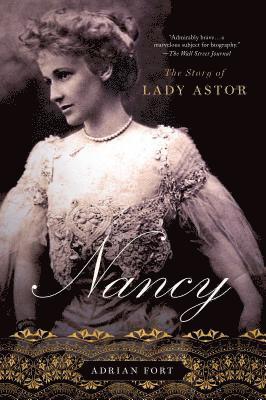
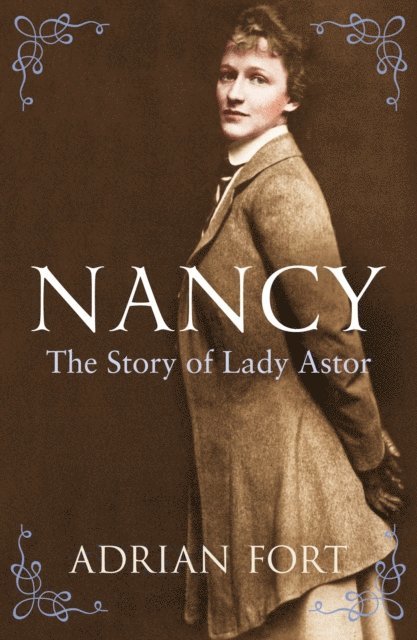
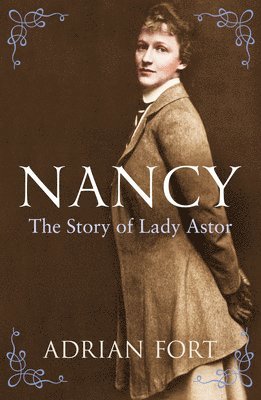
In 1919, Nancy Astor became the first woman to take a seat in parliament.She was not what had been expected. Far from a virago who had suffered for the cause of female suffrage, she was already near the centre of the ruling society that had for so long resisted the political upheavals of the early twentieth century, having married into the family of one of the richest men in the world. She was not even British. She would prove to be a trailblazer and beacon for the generations of women who would follow her into Parliament.This new biography charts Nancy Astor's incredible story, from penury in the American South, to a lifestyle of the most immense riches, from the luxury of Edwardian England, through the 'Jazz Age', and on towards the Second World War: a world of great country estates, lavish town houses and the most sumptuous entertainments, peopled by the most famous and powerful names of the age. But hers was not only the life of power, glamour and easy charm: it was also defined by principles and bravery, by war and sacrifice, by love and bitter disputes. With glorious, page-turning brio, Adrian Fort has brought to life this restless, controversial American dynamo, an unforgettable woman who left a deep and lasting imprint on the political life of our nation.
Environmentalist, zoologist and Whitehall mandarin, Solly Zuckerman became one of the Allied leaders' most influential advisors during the war, and later the British government's chief scientific advisor. He was among the first to warn against the nuclear arms race, and of the threat posed to the climate by population growth.Born in South Africa, Zuckerman published a bestseller on the social life of primates while a researcher at London Zoo. A friend of Barbara Hepworth, Henry Moore and many in the Bloomsbury Set, in New York he partied with Dorothy Parker, George Gerschwin and Tallulah Bankhead. At the peak of his influence in the 1960s and '70s, Zuckerman was secretary of London Zoo, professor of anatomy at Birmingham University and an all-powerful mandarin in Whitehall.Written with exclusive access to the subject's private papers, Adrian Fort's new biography portrays a remarkable polymath who sat at the heart of political life for over forty years.
In 1919, Nancy Astor became the first woman to take a seat in parliament.She was not what had been expected. Far from a virago who had suffered for the cause of female suffrage, she was already near the centre of the ruling society that had for so long resisted the political upheavals of the early twentieth century, having married into the family of one of the richest men in the world. She was not even British. She would prove to be a trailblazer and beacon for the generations of women who would follow her into Parliament.This new biography charts Nancy Astor's incredible story, from penury in the American South, to a lifestyle of the most immense riches, from the luxury of Edwardian England, through the 'Jazz Age', and on towards the Second World War: a world of great country estates, lavish town houses and the most sumptuous entertainments, peopled by the most famous and powerful names of the age. But hers was not only the life of power, glamour and easy charm: it was also defined by principles and bravery, by war and sacrifice, by love and bitter disputes. With glorious, page-turning brio, Adrian Fort has brought to life this restless, controversial American dynamo, an unforgettable woman who left a deep and lasting imprint on the political life of our nation.