Afaf Lutfi al-Sayyid Marsot - Böcker
Visar alla böcker från författaren Afaf Lutfi al-Sayyid Marsot. Handla med fri frakt och snabb leverans.
4 produkter
4 produkter
257 kr
Skickas inom 7-10 vardagar
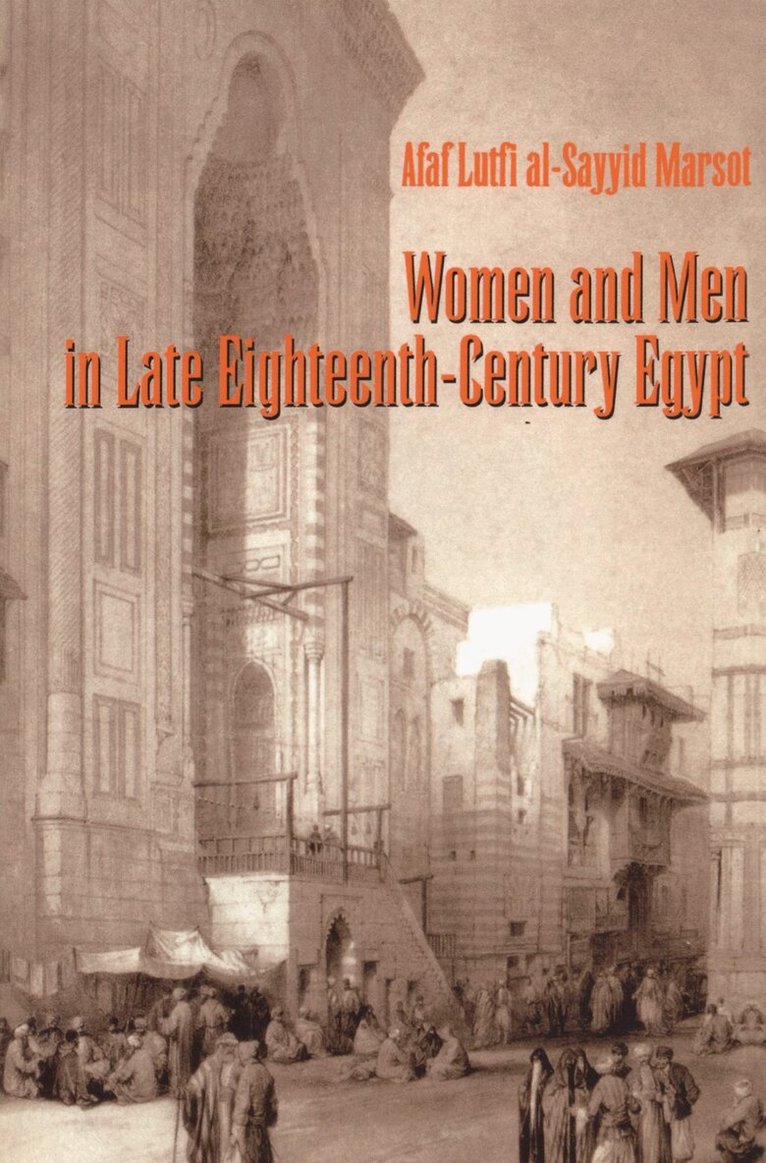
In the late eighteenth century, decentralized and chaotic government in Egypt allowed women a freedom of action that has not been equaled until recent times. Delving extensively into archival sources, Afaf Marsot presents the first comprehensive picture of women's status and opportunities in this period.Marsot makes important connections between forms of government, economic possibilities, and gender relations, showing how political instability allowed women to acquire property, independent of males, as a hedge against political uncertainty. She traces the linkages that women formed among themselves and with the ulama (non-Ottoman native elites) who aided and supported them. The book concludes with a comparison of women's status in the nineteenth century, when the introduction of European institutions that did not recognize their legal existence marginalized women, causing them to have to rely on men as major breadwinners. These important findings about the relationship between forms of government and the status of women will be of interest to a wide audience.
726 kr
Skickas inom 7-10 vardagar
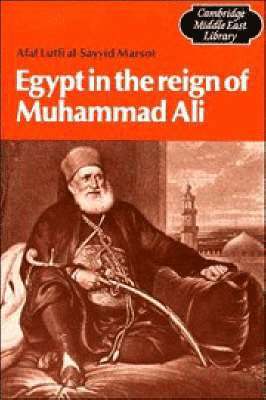
This account of Egyptian society in the reign of Muhammad Ali traces the beginnings of the nation state in Egypt. It considers Muhammad Ali as part of a social group whose economic interests led them in the direction of trade with Europe as a means of raising money for further investments. They attempted to increase agricultural exports and to use the profits to create industry; then, following the logic of imperialists, their next step was to seek to conquer the surrounding areas to find markets for their industries and sources of raw materials. These policies brought them into conflict with their suzerain, the Ottoman sultan, and with England, since England needed markets in the Middle East. England sought to destroy the new regime in Egypt as a means of exerting influence on the region. In carrying out these economic changes, the country underwent a series of internal developments that were to revolutionize the structure and shape of Egyptian society. The rules of landownership were altered and large estates were formed, Egyptian fallahin were drafted into the army, and the administration was Egyptianized, establishing the groundwork for a nation state.
357 kr
Skickas inom 7-10 vardagar
Egypt occupies a central position in the Arab world. Its borders between sand and sea have existed for millennia and yet, until 1952, the country was ruled by foreigners. Afaf al-Sayyid Marsot explores the paradoxes of Egypt's history in an updated edition of her successful A Short History of Modern Egypt. Charting the years from the Arab conquest, through the age of the Mamluks, Egypt's incorporation into the Ottoman Empire, the liberal experiment in constitutional government in the early twentieth century, followed by the Nasser and Sadat years, the new edition takes the story up to the present day. During the Mubarak era, Egyptians have seen major changes with the rise of globalization and its effects on their economy, the advent of new political parties, the entrenchment of Islamic fundamentalism and the consequent changing attitudes to women. This short history is ideal for students and travelers.
1 024 kr
Skickas inom 7-10 vardagar
Egypt occupies a central position in the Arab world. Its borders between sand and sea have existed for millennia and yet, until 1952, the country was ruled by foreigners. Afaf al-Sayyid Marsot explores the paradoxes of Egypt's history in an updated edition of her successful A Short History of Modern Egypt. Charting the years from the Arab conquest, through the age of the Mamluks, Egypt's incorporation into the Ottoman Empire, the liberal experiment in constitutional government in the early twentieth century, followed by the Nasser and Sadat years, the new edition takes the story up to the present day. During the Mubarak era, Egyptians have seen major changes with the rise of globalization and its effects on their economy, the advent of new political parties, the entrenchment of Islamic fundamentalism and the consequent changing attitudes to women. This short history is ideal for students and travelers.