
Afarli Tor A. Afarli – författare
Visar alla böcker från författaren . Handla med fri frakt och snabb leverans.
2 produkter
2 produkter
E-bok
PDF, Engelska, 20141 349 kr
Läs direkt efter köp
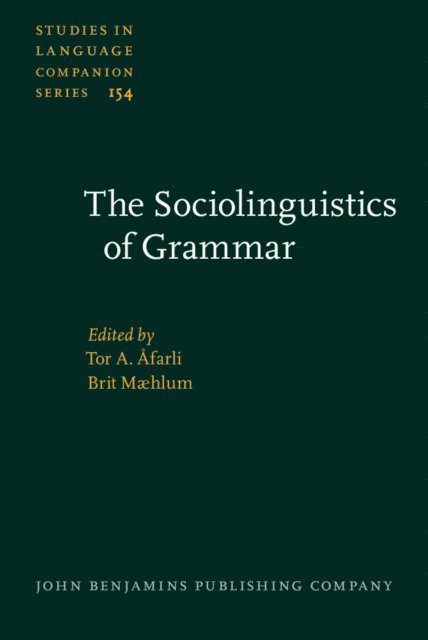
The aim of this book is to investigate and attain new insights on how and to what extent the wider sociolinguistic context of language use and contact impinges on formal grammatical structures. The papers contained in the book approach this important problem from various points of view by focusing on language evolution and change, on multilingualism, language mixing and dialect variation, on spoken language, and on creole languages. Given the theoretical perspectives, methodological focus, and analyses, the book will be of interest to theoretical linguists as well as sociolinguists, from undergraduate students to researchers.
E-bok
PDF, Engelska, 19921 353 kr
Läs direkt efter köp
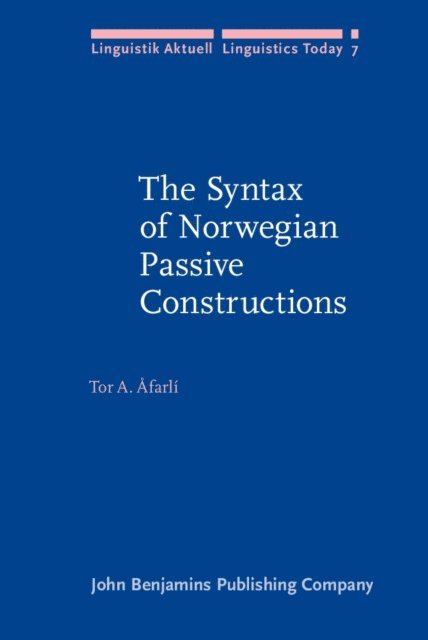
This book provides an analysis of the passive phenomenon in general and of Norwegian passive constructions in particular. Related topics such as English passive constructions and Norwegian ergative constructions are also examined. The analysis is carried out within a Government and Binding framework. Chapter 1 contains a very brief introduction to GB syntax and a description of the passive phenomenon and its manifestation in Norwegian. The “orthodox analysis” of the passive as proposed in Chomsky's Lectures on Government and Binding is contrasted with the “new analysis”, which claims that “the passive morpheme” is an argument of the verb. The book sets out to show that a version of this “new analysis” successfully explains the basic properties of Norwegian passives. Chapters 2 and 3 examine properties of Norwegian passives, notably properties related to Theta-role assignment and Case assignment. Chapter 4 compares the Norwegian with the English passive and proposes a unified analysis of the two. Chapter 5 discusses various cases of passivization failure in Norwegian , while Chapter 6 focuses on the scope of movement in passive and ergative constructions in Norwegian and proposes a syntactic level “beneath” D-structure.