Agnès Devictor – författare
Visar alla böcker från författaren Agnès Devictor. Handla med fri frakt och snabb leverans.
2 produkter
2 produkter
Inbunden, Engelska, 2025
1 280 kr
Skickas inom 5-8 vardagar
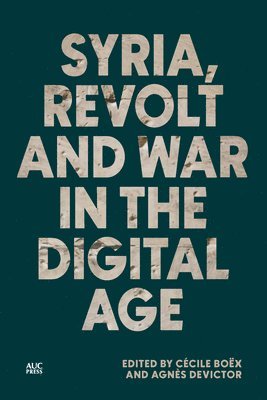
An intimate portrayal of protest through images during the Syrian warNever before in history has a conflict been so extensively filmed by its own warring parties, generating a wealth of sound and image. From the start of the Syrian revolt in 2011, several million videos were posted online by demonstrators, activists, and militant fighters. Their prime objective was to work around the media blackout imposed by the regime of Bashar al-Assad, as well as its calling into question the size and scope of activism and repression on the ground, by filming the demonstrations, the repression, and the funerals. Use of video quickly diversified to include protest action, testimonies, military defections, combat training, tributes to “martyrs,” and live combat.Syria, Revolt and War in the Digital Age explores this vast territory of images and sounds, offering a new approach to understanding the conflict in Syria and, more broadly, it analyzes the new use of images in contemporary conflicts. Based on both digital ethnography and interviews with video-takers on the ground, the contributors identify gestures, grammars, and textures specific to this audiovisual footage that has emerged from different spaces of the conflict rarely studied as a continuum. The contributors to this volume look at images from opposing camps from inside Syria and in the diaspora in order to delve into the specificities of each side’s audiovisual practices and cultures, the way these images relate to one another, and how they might render the Syrian revolt and conflict more intelligible.With the world awash in images from conflict zones, this book opens readers’ eyes to understanding heretofore neglected aspects of revolt and conflict and proposes new ways of thinking about them.Contributors:Hatem A., Independent worker, Malmo, SwedenEmma Aubin-Boltanski, National Center for Scientific Research (CNRS), Paris, FranceF.B., Independent worker, Strasbourg, FranceErminia Chiara Calabrese, French Institute in the Near East (Ifpo), Beirut, LebanonGiulia Galluccio, National Center for Scientific Research (CNRS) Paris, FranceLucile Irigoyen, Independent worker and filmmaker, Mauleon, FranceShahriar Khonsari, Independent photographer, Tehran, IranCédric Labrousse, The School of Advanced Studies in the Social Sciences (EHESS), Paris, FranceAnna Poujeau, National Center for Scientific Research (CNRS), Paris, FranceChamsy Sarkis, Independent worker, Paris, France
E-bok
PDF, Franska, 2015373 kr
Läs direkt efter köp
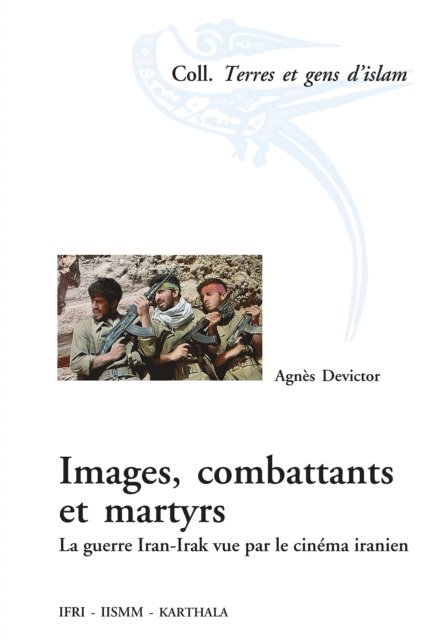
Dernier grand conflit « classique » du XXe siècle, la guerre Iran-Irak (1980-1988) évoque pour les observateurs européens une guerre conventionnelle opposant deux États. Mais c’est aussi celle d’une fantasmagorie de l’islam combattant. Dès lors qu’en Iran une nouvelle catégorie de soldats, les volontaires islamistes, revendique sa vocation au martyre, cette guerre convoque un imaginaire de sacrifice porté par des représentations, notamment cinématographiques, où le martyre à la fois renforce et défie les logiques de mobilisation.Pour comprendre les enjeux historiques, politiques et idéologiques de cette guerre, mais aussi comment elle a été menée et vécue au quotidien par les combattants et les citoyens iraniens, Agnès Devictor analyse l’étonnante production de films de guerre tournés en Iran durant le conflit. Si une partie d’entre eux reste très influencée par le cinéma hollywoodien, en dépit de la Révolution de 1979 et de la condamnation de l’Amérique comme « Grand Satan », une autre cherche à élaborer un genre spécifique à l’Iran, en cohérence avec l’idéologie de la jeune République islamique et avec l’imaginaire shi’ite du martyre. Ainsi, des réalisateurs ont recours à de nouveaux codes narratifs et esthétiques pour raconter le conflit en se référant à la mythologie de la Bataille de Karbalâ, affrontant alors un des tabous les plus forts du cinéma de guerre : montrer la mort de ses propres forces combattantes durant un conflit. Et c’est au sein du cinéma documentaire, dans les films réalisés par les équipes de Mortezâ Âvini et suivant une ligne hautement idéologique, que des propositions très singulières ont lieu, porteuses d’une modernité cinématographique inattendue.Partant des films et s’appuyant sur un travail d’entretiens réalisé en Iran pendant près de dix ans avec ceux qui ont tourné, mis en scène ou produit ces films durant la guerre, cet ouvrage dévoile un pan inconnu du cinéma iranien, celui où créateurs d’images, combattants et martyrs partagèrent sur les champs de bataille le destin de l’Iran.Maître de conférences HDR à l’Université Paris 1 Panthéon-Sorbonne, Agnès Devictor est spécialiste du cinéma iranien. Après avoir publié Politique du cinéma iranien (CNRS Éditions, 2004), dirigé des ouvrages collectifs et publié de nombreux articles sur le sujet, elle travaille désormais davantage sur le matériel historique que représentent les films, et poursuit ses recherches en Iran et en Afghanistan.