Agnieszka Staszczyk – författare
Visar alla böcker från författaren Agnieszka Staszczyk. Handla med fri frakt och snabb leverans.
3 produkter
3 produkter
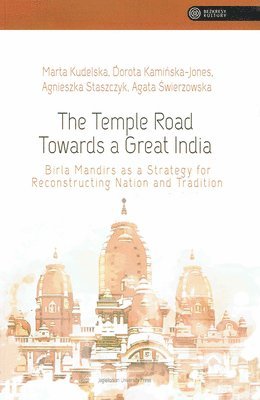
Temple Road Towards a Great India
Birla Mandirs as a Strategy for Reconstructing Nation and Tradition
Häftad, Engelska, 2021
549 kr
Skickas inom 5-8 vardagar
The book presents the results of research carried out in recent years on the temples founded by the Birla family in northern and central India. The material gathered by the authors and the preliminary analysis based on it led to the creation of the first publication of this type, not only in Polish literature on the subject but also internationally. This is a monograph based on first-hand material, presenting the whole of the Birlas' sacral foundations – referring both to their importance in the context of national art, as well as their functioning in the social or political discourse on identity in pre-independence India. This project run for decades by successive Birla generations constitutes a highly coherent enterprise. The guiding idea was defined as building foundations for the spiritual and political power of modern India through a new reading of Indian tradition, in line with the challenges of the twentieth century. The book is therefore addressed to readers interested in India, particularly in the interpretation and recreation of tradition using the medium of art. The data presented in this book – representing only a small fragment of what was gathered – and the subsequent discussion open up new, extremely promising directions of research.
E-bok
PDF, Engelska, 2024736 kr
Läs direkt efter köp
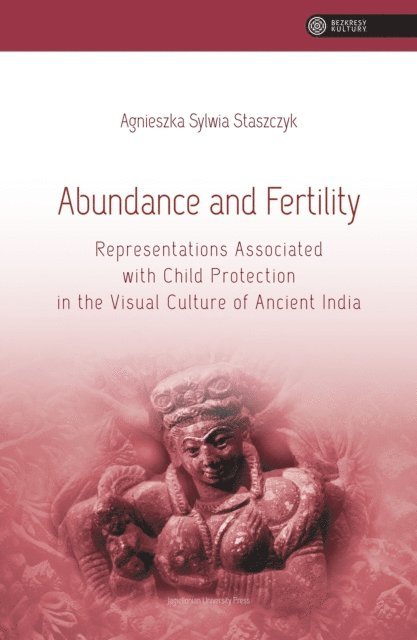
This work is a fascinating attempt to probe deep into the socio-cultural ramifications of the visual artefacts of ancient India, which has a rich heritage of iconographic treasures of varying sizes and styles. The art objects selected for analysis are mainly from the Mathura region of the Kushan era and belong to a period between 50–60 and 300 of the Common Era. This period is perceived as that of ‘multicultural environment’ enriched with different streams of tradition. According to the author they are directly related to the themes of abundance and fertility, its perceived cause. The author demonstrates how these distant fragments of visual imagery can yield rich insights of the world view of the communities which produced them. The work critically analyses the representation of ‘spiritual deities’ consisting of Ekanamsha, Hariti, Matrikas, Naigamesha, Shashthi, and Skanda who were associated with the function of child protection. Understandably, they were the products of a belief in supernatural powers which could offer psychological protection to women cutting across different socio-economic classes at the times of great psychological stress like pregnancy, childbirth, and puerperium. The artefacts are carved in stone. Sometimes they are projected as isolated individuals and at other times as belonging to multi-character panels. Depending on their size, they had different functions: bigger objects could be fixed at some places and smaller ones carried from place to place.
E-bok
Engelska, 2024763 kr
Läs direkt efter köp
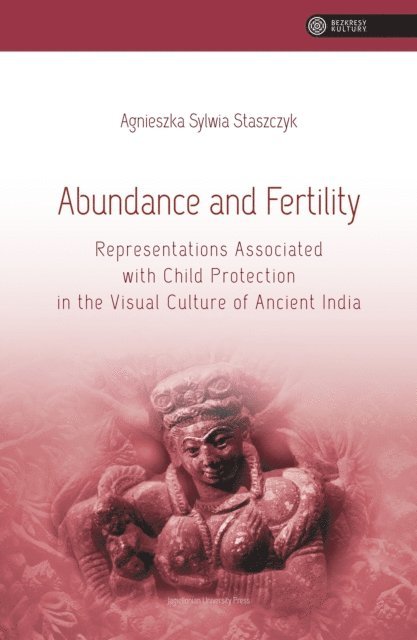
This work is a fascinating attempt to probe deep into the socio-cultural ramifications of the visual artefacts of ancient India, which has a rich heritage of iconographic treasures of varying sizes and styles. The art objects selected for analysis are mainly from the Mathura region of the Kushan era and belong to a period between 50–60 and 300 of the Common Era. This period is perceived as that of ‘multicultural environment’ enriched with different streams of tradition. According to the author they are directly related to the themes of abundance and fertility, its perceived cause. The author demonstrates how these distant fragments of visual imagery can yield rich insights of the world view of the communities which produced them. The work critically analyses the representation of ‘spiritual deities’ consisting of Ekanamsha, Hariti, Matrikas, Naigamesha, Shashthi, and Skanda who were associated with the function of child protection. Understandably, they were the products of a belief in supernatural powers which could offer psychological protection to women cutting across different socio-economic classes at the times of great psychological stress like pregnancy, childbirth, and puerperium. The artefacts are carved in stone. Sometimes they are projected as isolated individuals and at other times as belonging to multi-character panels. Depending on their size, they had different functions: bigger objects could be fixed at some places and smaller ones carried from place to place.