Ahmed Al-Rawahi – författare
Visar alla böcker från författaren Ahmed Al-Rawahi. Handla med fri frakt och snabb leverans.
5 produkter
5 produkter
Inbunden, Engelska, 2025
2 069 kr
Skickas
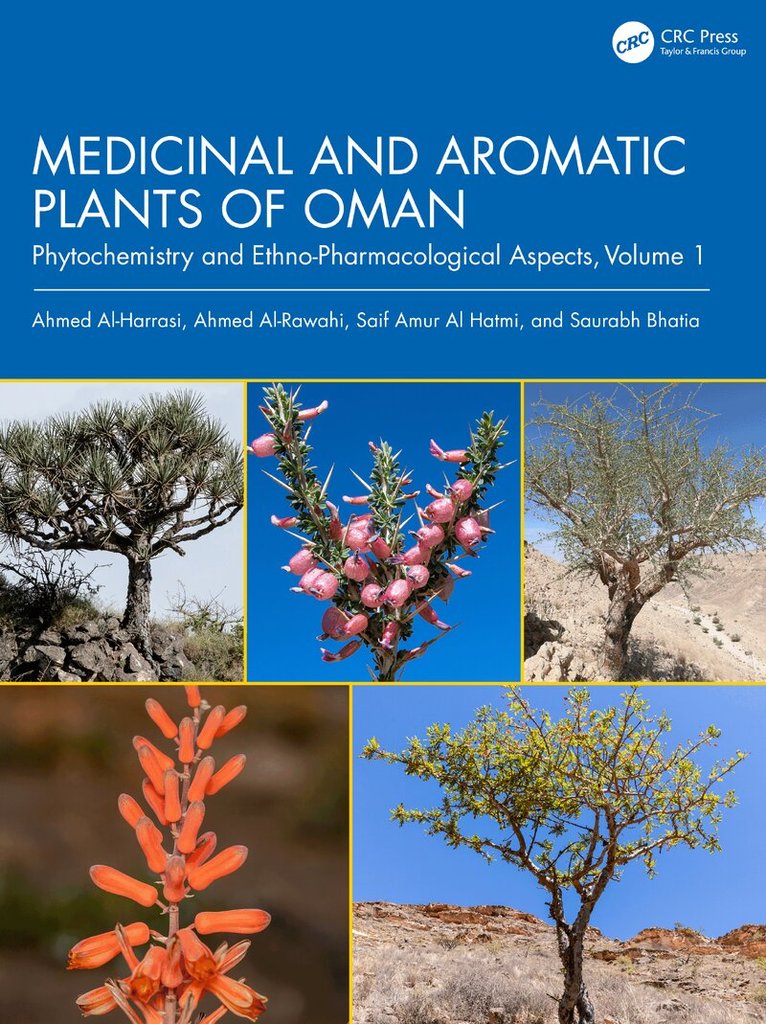
Medicinal plants have received an impetus recently due to the revival of attention to natural products in the form of herbal medicines, demanding convincing knowledge on their phytochemistry, status, cultivation, and utilization. Medicinal plants in the Sultanate of Oman have tremendous potential in terms of ethnomedicinal and food applications. However, these treasures of Oman have not been fully explored until recently. Several medicinal plants indigenous to Oman have been used for several centuries in the form of traditional medicine for the prevention and treatment of diseases. The first volume of this book covers information about sustainable use of selected medicinal plants, their phytochemistry, and efforts made to conserve them to ensure continued supply. This volume reveals systematic information about 104 to 151 promising medicinal plants in Oman with botanical names, common names, synonyms, local names, family, habitat and distribution, chemical constituents, pharmacological activity, uses (common uses, traditional uses and therapeutic uses), toxicity and clinical data, patents, and their marketed products or industrial application. Each of the 151 plants has a high-resolution color photograph (where available), plant description, and location. The chapters are written by well-experienced authors in the field. A uniform chapter structure throughout this book has been designed to maintain consistency. This book is especially valuable to academicians, phytochemists, pharmacologists, herbalists, agriculturists, biotechnologists, natural product researchers and industrialists involved in the production of herbal drugs. Salient features of this book are as follows:Ιt provides common uses, traditional uses, and therapeutic uses of 132 medicinal plantsIt covers the detailed phytochemistry of each medicinal plantIt offers systematic information about the geographical distribution of these plantsUpdated information about the pharmacology, mechanisms of action, and toxicity of these plants is covered in detailOverall, this book provides an overview of botanical description, geographical distribution, chemical composition and uses of the medicinal plants native to the Sultanate of Oman.Many of the plants listed in this book—particularly in Volume One—are endemic, near‑endemic, or regionally endemic medicinal and aromatic species of Oman, which remain largely unexplored and are supported by limited scientific literature. Due to this scarcity of information, the authors have included relevant data from closely related species within the same genus. This approach enables readers to better understand the chemistry, taxonomy, and potential uses of the respective species in the context of their taxonomic relatives.
E-bok
PDF, Engelska, 2025970 kr
Läs direkt efter köp
Medicinal plants have received an impetus recently due to the revival of attention to natural products in the form of herbal medicines, demanding convincing knowledge on their phytochemistry, status, cultivation, and utilization. Medicinal plants in the Sultanate of Oman have tremendous potential in terms of ethnomedicinal and food applications. However, these treasures of Oman have not been fully explored until recently. Several medicinal plants indigenous to Oman have been used for several centuries in the form of traditional medicine for the prevention and treatment of diseases. The first volume of this book covers information about sustainable use of selected medicinal plants, their phytochemistry, and efforts made to conserve them to ensure continued supply. This volume reveals systematic information about 104 to 151 promising medicinal plants in Oman with botanical names, common names, synonyms, local names, family, habitat and distribution, chemical constituents, pharmacological activity, uses (common uses, traditional uses and therapeutic uses), toxicity and clinical data, patents, and their marketed products or industrial application. Each of the 151 plants has a high-resolution color photograph (where available), plant description, and location. The chapters are written by well-experienced authors in the field. A uniform chapter structure throughout this book has been designed to maintain consistency. This book is especially valuable to academicians, phytochemists, pharmacologists, herbalists, agriculturists, biotechnologists, natural product researchers and industrialists involved in the production of herbal drugs. Salient features of this book are as follows: ?t provides common uses, traditional uses, and therapeutic uses of 132 medicinal plants It covers the detailed phytochemistry of each medicinal plant It offers systematic information about the geographical distribution of these plants Updated information about the pharmacology, mechanisms of action, and toxicity of these plants is covered in detail Overall, this book provides an overview of botanical description, geographical distribution, chemical composition and uses of the medicinal plants native to the Sultanate of Oman.Many of the plants listed in this book-particularly in Volume One-are endemic, near endemic, or regionally endemic medicinal and aromatic species of Oman, which remain largely unexplored and are supported by limited scientific literature. Due to this scarcity of information, the authors have included relevant data from closely related species within the same genus. This approach enables readers to better understand the chemistry, taxonomy, and potential uses of the respective species in the context of their taxonomic relatives.
E-bok
Engelska, 2025936 kr
Läs direkt efter köp
Medicinal plants have received an impetus recently due to the revival of attention to natural products in the form of herbal medicines, demanding convincing knowledge on their phytochemistry, status, cultivation, and utilization. Medicinal plants in the Sultanate of Oman have tremendous potential in terms of ethnomedicinal and food applications. However, these treasures of Oman have not been fully explored until recently. Several medicinal plants indigenous to Oman have been used for several centuries in the form of traditional medicine for the prevention and treatment of diseases. The first volume of this book covers information about sustainable use of selected medicinal plants, their phytochemistry, and efforts made to conserve them to ensure continued supply. This volume reveals systematic information about 104 to 151 promising medicinal plants in Oman with botanical names, common names, synonyms, local names, family, habitat and distribution, chemical constituents, pharmacological activity, uses (common uses, traditional uses and therapeutic uses), toxicity and clinical data, patents, and their marketed products or industrial application. Each of the 151 plants has a high-resolution color photograph (where available), plant description, and location. The chapters are written by well-experienced authors in the field. A uniform chapter structure throughout this book has been designed to maintain consistency. This book is especially valuable to academicians, phytochemists, pharmacologists, herbalists, agriculturists, biotechnologists, natural product researchers and industrialists involved in the production of herbal drugs. Salient features of this book are as follows: ?t provides common uses, traditional uses, and therapeutic uses of 132 medicinal plants It covers the detailed phytochemistry of each medicinal plant It offers systematic information about the geographical distribution of these plants Updated information about the pharmacology, mechanisms of action, and toxicity of these plants is covered in detail Overall, this book provides an overview of botanical description, geographical distribution, chemical composition and uses of the medicinal plants native to the Sultanate of Oman.Many of the plants listed in this book-particularly in Volume One-are endemic, near endemic, or regionally endemic medicinal and aromatic species of Oman, which remain largely unexplored and are supported by limited scientific literature. Due to this scarcity of information, the authors have included relevant data from closely related species within the same genus. This approach enables readers to better understand the chemistry, taxonomy, and potential uses of the respective species in the context of their taxonomic relatives.
Inbunden, Engelska, 2019
1 620 kr
Skickas inom 10-15 vardagar
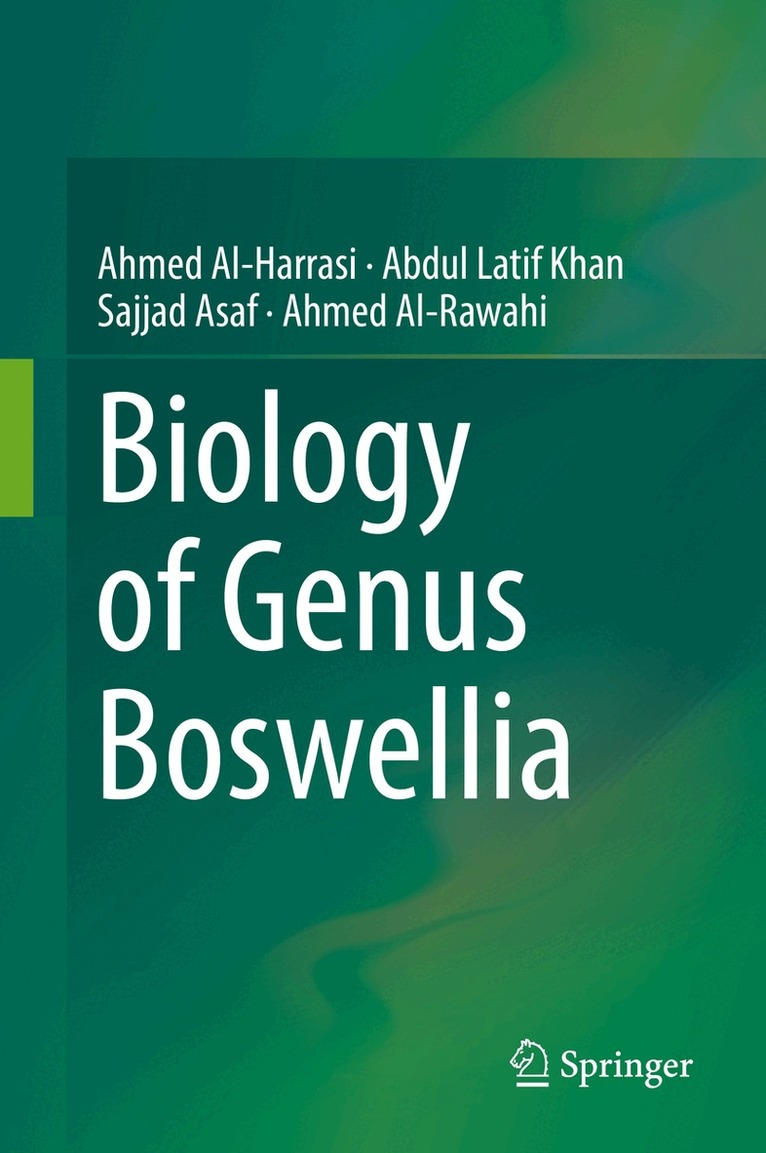
This book provides insight into the biology and genomics of the genus Boswellia (family Burseraceae), a natural resource used for the production of frankincense, an oleo-gum resin. The Boswellia species are ecologically, medicinally, commercially and culturally important. Significantly contributing to the paucity of comprehensive literature on this genus, this volume provides a detailed discussion on the genomics, physiology and ecology of Boswellia. The chapters cover a wide range of topics, including taxonomy, distribution, genetic diversity and microbiology. The production process of frankincense and its impact on the species are presented as well. In light of the recent decline of various Boswellia populations, species propagation and conservation are discussed. Plant scholars, ecologists and conservation biologists will find this book to be an important and informative reference.
E-bok
Engelska, 20192 049 kr
Läs direkt efter köp
This book provides insight into the biology and genomics of the genus Boswellia (family Burseraceae), a natural resource used for the production of frankincense, an oleo-gum resin. The Boswellia species are ecologically, medicinally, commercially and culturally important. Significantly contributing to the paucity of comprehensive literature on this genus, this volume provides a detailed discussion on the genomics, physiology and ecology of Boswellia. The chapters cover a wide range of topics, including taxonomy, distribution, genetic diversity and microbiology. The production process of frankincense and its impact on the species are presented as well. In light of the recent decline of various Boswellia populations, species propagation and conservation are discussed. Plant scholars, ecologists and conservation biologists will find this book to be an important and informative reference.