Ahmet Erdi Ozturk – författare
730 kr
Läs direkt efter köp
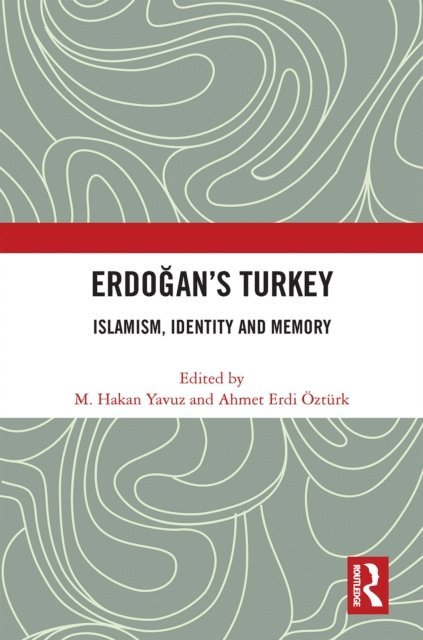
This book explores the role of religion in the transformation of Turkey under the reign of President Recep Tayyip Erdoğan and his Justice and Development Party (Adalet ve Kalkınma Partisi, AKP). It attempts to come to terms with the current political crisis in Turkey and the government’s move toward authoritarianism. The chapters included in this book examine various ideological, political and social factors that have driven the transformation of the AKP. The book seeks to answer questions about how and in what direction have the AKP’s objectives and strategies changed in the last two decades the party has been in power, and the divergence between professed ideals and practices. The book also focuses on the major repercussions that the 15 July 2016 coup d''état attempt has had on key Turkish state institutions and policies, and how it has also affected Turkish foreign policy toward regional and international powers. The book addresses the many gaps and omissions in earlier studies of the AKP, and posits that there have been a more complex set of circumstances impacting Turkish politics since 2002 and that it makes little sense to continue to view Turkish politics as just a clash between Islam and secularism.
Erdoğan’s Turkey is a significant new contribution to the study of Turkish politics and politics in general, and will be a great resource for academics, researchers and advanced students of Political Science, International Relations, History, Geography and Sociology.
The chapters in this book were originally published as a special issue of the journal Middle East Critique.
730 kr
Läs direkt efter köp
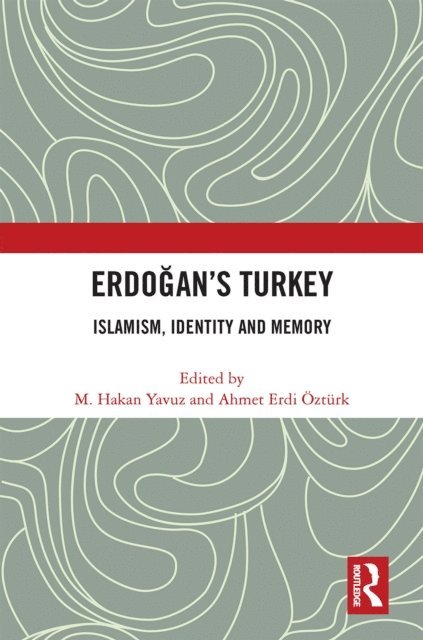
This book explores the role of religion in the transformation of Turkey under the reign of President Recep Tayyip Erdoğan and his Justice and Development Party (Adalet ve Kalkınma Partisi, AKP). It attempts to come to terms with the current political crisis in Turkey and the government’s move toward authoritarianism. The chapters included in this book examine various ideological, political and social factors that have driven the transformation of the AKP. The book seeks to answer questions about how and in what direction have the AKP’s objectives and strategies changed in the last two decades the party has been in power, and the divergence between professed ideals and practices. The book also focuses on the major repercussions that the 15 July 2016 coup d''état attempt has had on key Turkish state institutions and policies, and how it has also affected Turkish foreign policy toward regional and international powers. The book addresses the many gaps and omissions in earlier studies of the AKP, and posits that there have been a more complex set of circumstances impacting Turkish politics since 2002 and that it makes little sense to continue to view Turkish politics as just a clash between Islam and secularism.
Erdoğan’s Turkey is a significant new contribution to the study of Turkish politics and politics in general, and will be a great resource for academics, researchers and advanced students of Political Science, International Relations, History, Geography and Sociology.
The chapters in this book were originally published as a special issue of the journal Middle East Critique.
730 kr
Läs direkt efter köp
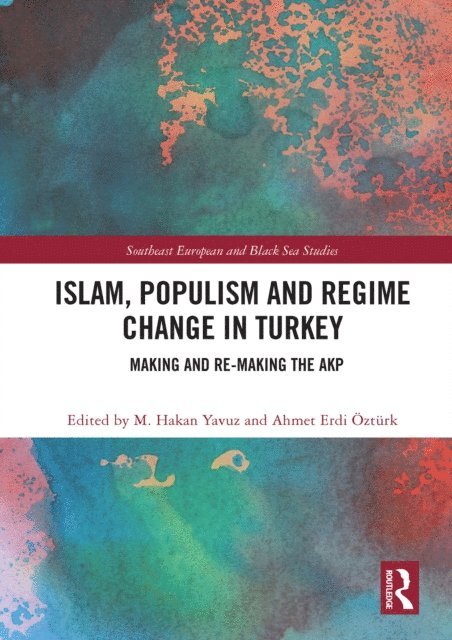
Islam, Populism and Regime Change in Turkey explores the role of religion (Sunni, Hanefi Islam) in the transformation of Turkey under the reign of President Recep Tayyip Erdoğan and his Justice and Development Party (Adalet ve Kalkınma Partisi, AKP).
The chapters argue that the Turkish understanding of secularism was also one of the building blocks and the constitutive elements of Turkey’s modernization until the rise of the AKP. Currently, however, it seems that religion has become a new or re-born element of the new Turkey and has been transforming many areas such as: the media, the Kurdish issue, implementation of the rule of law, foreign policy and gender issues. This book therefore aims to scrutinize the question: how does a religion-based transformation in Turkey influence the raison d’etat of the state, and effect in various ways different areas such as gender, foreign policy, economy and socio-political relations of various power groups within the society?
Islam, Populism and Regime Change in Turkey will be of great interest to scholars of Religion and Politics, and governance in Turkey. It was originally published as a special issue of Southeast European and Black Sea Studies.
737 kr
Läs direkt efter köp
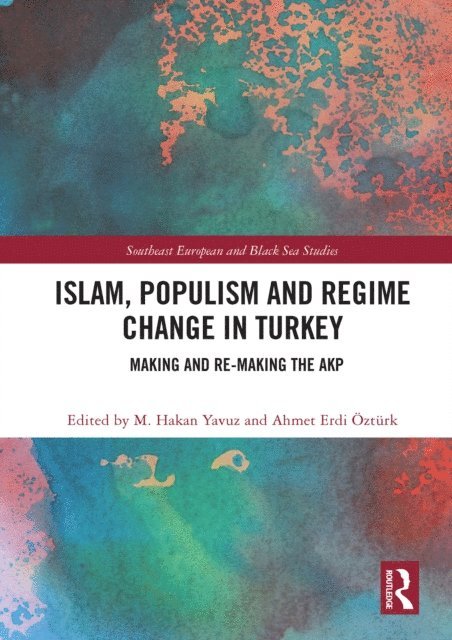
Islam, Populism and Regime Change in Turkey explores the role of religion (Sunni, Hanefi Islam) in the transformation of Turkey under the reign of President Recep Tayyip Erdoğan and his Justice and Development Party (Adalet ve Kalkınma Partisi, AKP).
The chapters argue that the Turkish understanding of secularism was also one of the building blocks and the constitutive elements of Turkey’s modernization until the rise of the AKP. Currently, however, it seems that religion has become a new or re-born element of the new Turkey and has been transforming many areas such as: the media, the Kurdish issue, implementation of the rule of law, foreign policy and gender issues. This book therefore aims to scrutinize the question: how does a religion-based transformation in Turkey influence the raison d’etat of the state, and effect in various ways different areas such as gender, foreign policy, economy and socio-political relations of various power groups within the society?
Islam, Populism and Regime Change in Turkey will be of great interest to scholars of Religion and Politics, and governance in Turkey. It was originally published as a special issue of Southeast European and Black Sea Studies.
682 kr
Läs direkt efter köp
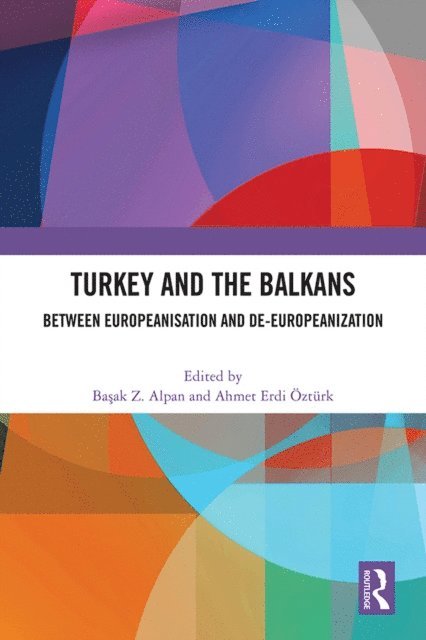
This book delves into Turkey’s increasing ethno-religious, pragmatic, and complicated involvement and activism in the Balkans since 2002, under the Justice and Development Party (Adalet ve Kalkınma Partisi – AKP). It primarily focusses on the intersectionality between domestic and foreign policy that has played an important role in Turkey’s recent relations with the Balkan countries as well as exploring how the Europeanisation process influences this relationality.
Broadly, the chapters in this volume posit that religion, ethnicity and kin politics are indispensable components of identity politics and have the capacity to transform Turkey’s foreign policy attitudes as well as the orientations of the Balkan countries. The book also asserts that the impact of the processes of Europeanisation and de-Europeanisation on the relationship between Turkey and the Balkans needs to be included into the analysis.
This book will be useful to students, researchers and academics interested in Politics, International Relations and Southeast European Studies. The chapters in this book were originally published as a special issue of Southeast European and Black Sea Studies.
682 kr
Läs direkt efter köp
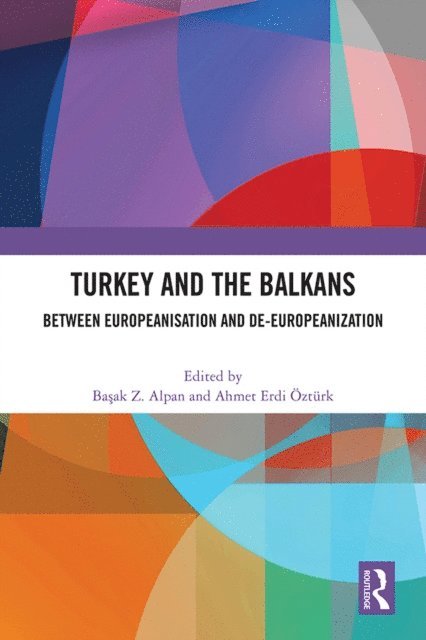
This book delves into Turkey’s increasing ethno-religious, pragmatic, and complicated involvement and activism in the Balkans since 2002, under the Justice and Development Party (Adalet ve Kalkınma Partisi – AKP). It primarily focusses on the intersectionality between domestic and foreign policy that has played an important role in Turkey’s recent relations with the Balkan countries as well as exploring how the Europeanisation process influences this relationality.
Broadly, the chapters in this volume posit that religion, ethnicity and kin politics are indispensable components of identity politics and have the capacity to transform Turkey’s foreign policy attitudes as well as the orientations of the Balkan countries. The book also asserts that the impact of the processes of Europeanisation and de-Europeanisation on the relationship between Turkey and the Balkans needs to be included into the analysis.
This book will be useful to students, researchers and academics interested in Politics, International Relations and Southeast European Studies. The chapters in this book were originally published as a special issue of Southeast European and Black Sea Studies.
909 kr
Läs direkt efter köp
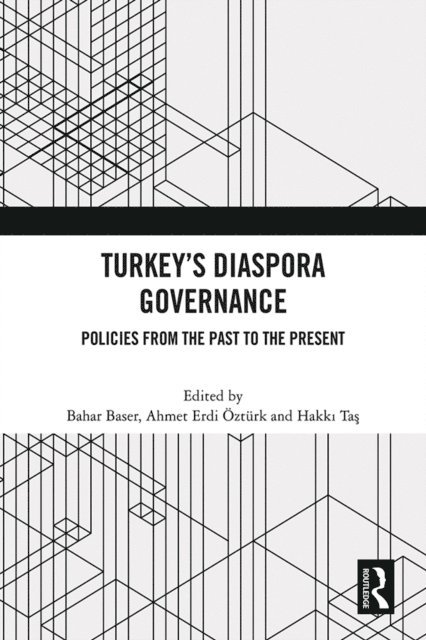
This book examines Turkey''s evolving diaspora policies, analysing how the state engages, controls, and mobilizes its overseas communities as tools of diplomacy and nation-building. Through an interdisciplinary lens, it highlights the political, ideological, and cultural motivations driving Turkey’s approach, particularly under the Justice and Development Party''s (AKP) influence.
In recent decades, Turkey’s approach to its diaspora has undergone a dramatic transformation. From viewing its emigrants as “guest workers” in the 1960s to deploying sophisticated diaspora engagement policies today, Turkey’s approach mirrors larger trends in international migration politics. This book explores Turkey''s unique and complex diaspora policies, illuminating how they blend diplomatic outreach with transnational control. With insights into the history and evolution of Turkish diaspora governance, the book analyses key questions:
What motivates Turkey’s outreach efforts? How have recent shifts under the President Recep Tayyip Erdogan’s AKP influenced its strategies? And what role do nationalism and identity play in shaping these policies?The book brings together pioneering studies on Turkey''s dynamic relationship with its emigrants, blending history, politics, and sociology to shed light on how diaspora governance has become a critical tool of statecraft. This compelling exploration is essential for understanding the impacts of state-led diaspora engagement on transnational identities and relations in a globalized world. It was originally published as a special issue of Middle East Critique.
909 kr
Läs direkt efter köp
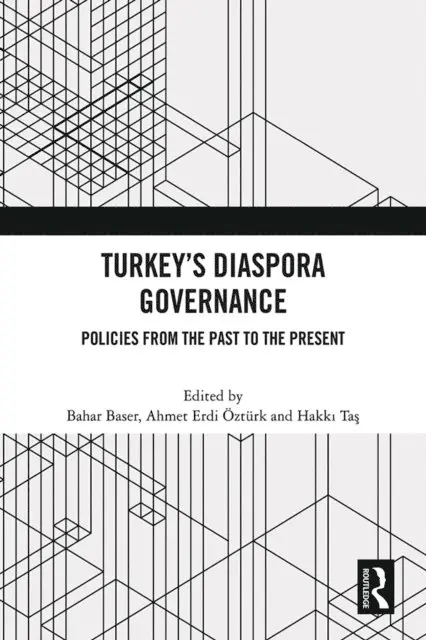
This book examines Turkey''s evolving diaspora policies, analysing how the state engages, controls, and mobilizes its overseas communities as tools of diplomacy and nation-building. Through an interdisciplinary lens, it highlights the political, ideological, and cultural motivations driving Turkey’s approach, particularly under the Justice and Development Party''s (AKP) influence.
In recent decades, Turkey’s approach to its diaspora has undergone a dramatic transformation. From viewing its emigrants as “guest workers” in the 1960s to deploying sophisticated diaspora engagement policies today, Turkey’s approach mirrors larger trends in international migration politics. This book explores Turkey''s unique and complex diaspora policies, illuminating how they blend diplomatic outreach with transnational control. With insights into the history and evolution of Turkish diaspora governance, the book analyses key questions:
What motivates Turkey’s outreach efforts? How have recent shifts under the President Recep Tayyip Erdogan’s AKP influenced its strategies? And what role do nationalism and identity play in shaping these policies?The book brings together pioneering studies on Turkey''s dynamic relationship with its emigrants, blending history, politics, and sociology to shed light on how diaspora governance has become a critical tool of statecraft. This compelling exploration is essential for understanding the impacts of state-led diaspora engagement on transnational identities and relations in a globalized world. It was originally published as a special issue of Middle East Critique.
746 kr
Läs direkt efter köp
746 kr
Läs direkt efter köp
525 kr
Skickas inom 3-6 vardagar
687 kr
Läs direkt efter köp
1 825 kr
Läs direkt efter köp