
Aileen Kilgore Henderson – författare
Visar alla böcker från författaren Aileen Kilgore Henderson. Handla med fri frakt och snabb leverans.
7 produkter
7 produkter
Inbunden, Engelska, 2022
298 kr
Skickas inom 5-8 vardagar
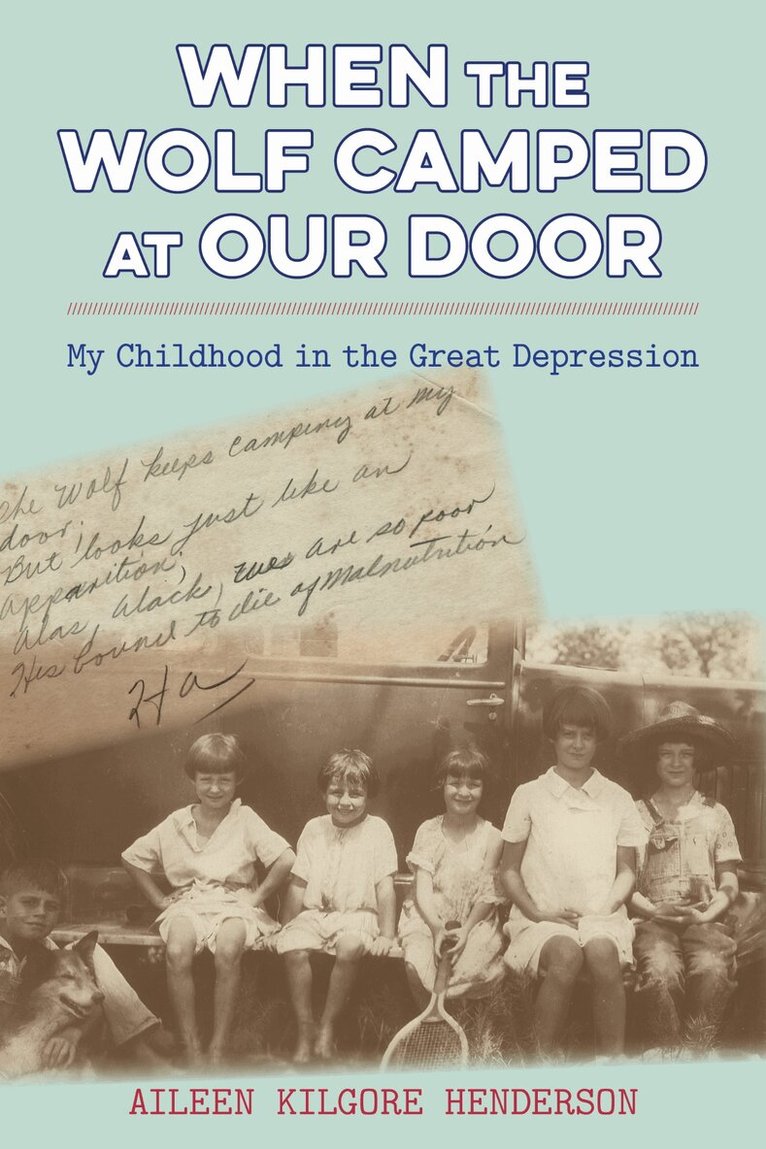
Recounts the difficulties and joys the Kilgore family and their neighbors experienced in a close-knit rural community during the Great Depression As the Great Depression tightened its grip on the world, there were six Henderson’s living in a cramped farmhouse in Brookwood, Alabama. Crops couldn’t grow well, food was scarce, shoes were in short supply, and the few clothes they had were all hand-me-downs. The family struggled to make ends meet, cobbling together odd jobs and working the land by hand. Despite all this, Aileen Kilgore Henderson, thought life was full of hope. She longed to hold onto it and scribbled down daily events on whatever odds and ends of paper she could find. She also drew pictures to illustrate their lives in a big book with blank pages that her Daddy got for her. When the Wolf Camped at Our Door creates a vivid portrait of what life was like for many living in the rural South during the Depression and provides context for their everyday lives. The book begins when young Aileen is ten years old and follows her into her teenage years over the course of twenty-seven episodic chapters. Drawing on her girlhood diaries and told through the charismatic voice of her younger self, Henderson’s nuanced storytelling sheds light on the common struggle for sustenance during a time when people were at their most vulnerable. Against the backdrop of a world where hard work and harsh conditions like hunger, privation, sickness, and early death were everyday realities, Henderson’s stories are nevertheless tinged with young Aileen’s lively sense of humor and optimistic faith in people and the promise of life despite trying circumstances. We follow her rambles in the woods, her visits with friends, a trip to a fortune teller, and search for the Howton Horror, a mysterious monster rumored to live deep in the Alabama backwoods.

E-bok
Engelska, 2020354 kr
Läs direkt efter köp
A coming-of-age memoir evoking farm, mining, and small-town life in Alabama’s Tuscaloosa County as the world transitions from the Great Depression to World War II In the 1930s, the rural South was in the throes of the Great Depression. Farm life was monotonous and hard, but a timid yet curious teenager thought it worth recording. Aileen Kilgore Henderson kept a chronicle of her family’s daily struggles in Tuscaloosa County alongside events in the wider world she gleaned from shortwave radio and the occasional newspaper. She wrote about Howard Hughes’s round-the-world flight and her horror at the rise to power in Germany of a bizarre politician named Adolf Hitler. Henderson longed to join the vast world beyond the farm, but feared leaving the refuge of her family and beloved animals. Yet, with her father’s encouragement, she did leave, becoming a clerk in the Kress dime store in downtown Tuscaloosa. Despite long workdays and a lengthy bus commute, she continued to record her observations and experiences in her diary, for every day at the dime store was interesting and exciting for an observant young woman who found herself considering new ideas and different points of view. Drawing on her diary entries from the 1930s and early 1940s, Henderson recollects a time of sweeping change for Tuscaloosa and the South. The World through the Dime Store Door is a personal and engaging account of a Southern town and its environs in transition told through the eyes of a poor young woman with only a high school education but gifted with a lively mind and an openness to life.
E-bok
Engelska, 2022354 kr
Läs direkt efter köp
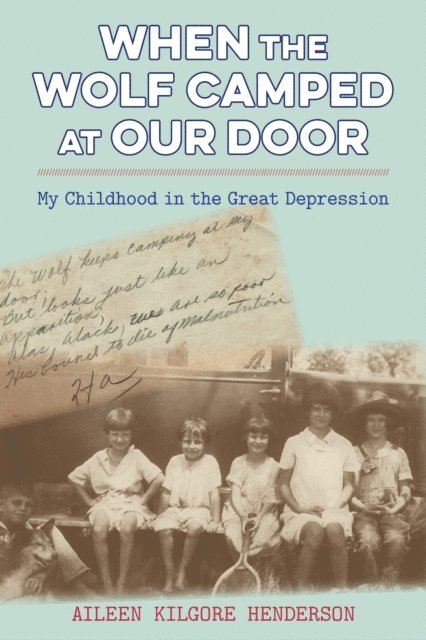
Recounts the hardships and joys the Kilgore family and their neighbors experienced in a close-knit southern rural community during the Great Depression As the Great Depression tightened its grip on the world, six members of the Kilgore family were living in a cramped farmhouse in Brookwood, Alabama. Crops didn’t grow well, food was scarce, shoes were in short supply, and the few clothes they had were all hand-me-downs. The Kilgores struggled to make ends meet, cobbling together odd jobs and working the land by hand. Despite all of this, young Aileen thought life was full of hope. She longed to hold on to it and scribbled down daily events on whatever odds and ends of paper she could find. In her new memoir, When the Wolf Camped at Our Door, Aileen Kilgore Henderson creates a vivid portrait of what life was like for so many living in the rural South during the Depression. The book begins when Aileen is ten years old and follows her into her teenage years over the course of twenty-seven episodic chapters. Drawing on her girlhood diaries and told through the charismatic voice of her younger self, Henderson’s nuanced storytelling sheds light on the common struggle for survival during a time when people were at their most vulnerable. Against the backdrop of a world where hard work and harsh conditions like hunger, privation, sickness, and early death were everyday realities, Henderson’s stories are nevertheless tinged with young Aileen’s lively sense of humor and optimistic faith in people and in the promise of life despite trying circumstances. We follow her rambles in the woods, her visits with friends, a trip to a fortune teller, and a search for the Howton Horror, a mysterious monster rumored to live deep in the Alabama backwoods.

E-bok
Engelska, 201657 kr
Läs direkt efter köp
Tillery Hubbs, a twelve-year-old wimp in 1960s San Diego, discovers a neglected horse in Lost Valley. Struggling against the horses wealthy ownerand his own familyTill succeeds in saving the horse. He gains the courage to fight flood and fire and protect the other horses of Lost Valley. But when a new danger threatens, Till may be powerless to stop it.
The Horses of Lost Valley recently won two Purple Dragonfly Awards for 2017.
First Place for Best CoverSecond Place for Best Middle-Grade Fiction Book
Häftad, Engelska, 2016
175 kr
Skickas inom 5-8 vardagar

Inbunden, Engelska, 2001
405 kr
Skickas inom 11-20 vardagar
I DON'T KNOW ANYBODY who has ever done such a daring thing as I have done,"" twenty-two-year-old Aileen Kilgore of Brookwood, Alabama, wrote in her diary in January 1944, after enlisting in the Women's Army Corps (WAC) during World War II. From basic training in Fort Oglethorpe, Georgia, to her discharge in late 1945, Kilgore served as one of more than 150,000 American women who joined the Women's Army Corps - the first group of women other than nurses to serve in the ranks of the United States Army. Aileen Kilgore Henderson has now collected and edited diary entries and personal letters that recount in an engaging narrative style her twenty-three months of experiences in the army. Recording the excitement and anxiety of enlisting, along with the camaraderie, challenges, and monotony of military life and labor, Henderson had a keen eye for the newness of her undertakings. She worked as one of only six female airplane mechanics at Ellington Air Force Base and as a photo lab technician, and she provides a detailed document of daily life in the service. Additionally, Henderson reveals the public scrutiny and criticism WAC members faced as they assumed nontraditional roles. A fascinating record of history in the making, Henderson's diary and letters offer a window into the lives of groundbreaking women and their lasting impact on the United States Armed Forces.

Inbunden, Engelska, 2011
426 kr
Skickas inom 3-6 vardagar
In 1871 when the University of Alabama reopened after its destruction by federal troops, Eugene Allen Smith returned to his alma mater as professor of geology and mineralogy. After persuading the legislature to appoint him state geologist in 1873, he spent his summers enduring chills, fevers, and verbal abuse as he searched for industrial raw materials that could bring about better lives for destitute Alabamians. What he accomplished became the catalyst that transformed Alabama from an aimless and poverty-stricken agricultural state to an industrial giant to be reckoned with. The story of “Little Doc,” as told in Eugene Allen Smith’s Alabama, is drawn from many sources: Smith’s transcribed field notes, countless numbers of letters he received and the carbon copies of his replies, his published reports over a period of fifty years, wills, genealogical records, histories of the state and of the University of Alabama, and contemporary newspapers.