AL DOUGLAS D EVANOFF ET - Böcker
Visar alla böcker från författaren AL DOUGLAS D EVANOFF ET. Handla med fri frakt och snabb leverans.
2 produkter
2 produkter
Del 2 - World Scientific Studies in International Economics
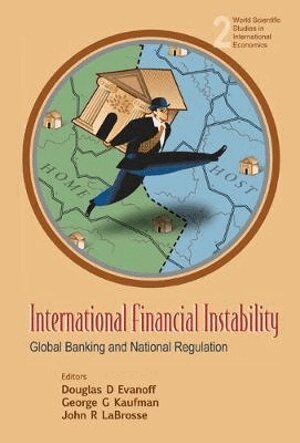
International Financial Instability: Global Banking And National Regulation
Inbunden, Engelska, 2007
2 659 kr
Skickas inom 5-8 vardagar
This book explores the potential and problems of bank safety and efficiency arising from the rapidly growing area of cross-border banking in the form of branches or subsidiaries with primarily only national prudential regulation. There are likely to be differences in the treatment of the same bank operating in different countries or of different banks from different home countries operating in the same country with respect to deposit insurance provisions, declaration of insolvency, resolution of insolvencies, and lender of last resort protection. The book identifies these protection problems and discusses possible solutions, such as greater cross-border cooperation, harmonization and organizations.The contributors to this book include experts from different countries and from a wide range of affiliations, including academia, regulators, practitioners, and international organizations.
Del 10 - World Scientific Studies in International Economics
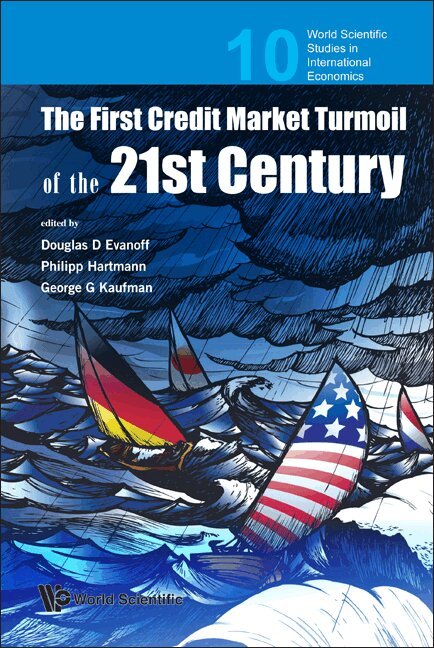
First Credit Market Turmoil Of The 21st Century, The: Implications For Public Policy
Inbunden, Engelska, 2009
2 121 kr
Skickas inom 5-8 vardagar
Since the summer of 2007, credit markets in almost all industrial countries have been in substantial turmoil and this has become the focus of intense policy debates. The papers in this volume are contributed by the world's leading financial experts and constitute a thorough examination of the first credit market turmoil of the 21st Century. They provide an overview of the main causes, transmission mechanisms and economic implications of what by now has become a major systemic financial crisis. They assess the most important policy considerations and conclude about how to stabilize financial systems, attenuate repercussions on the real economy and shape future regulatory structures. The analyses, conclusions, and recommendations can be expected to influence both public and private policies to mitigate, if not prevent, such crises in the future.