Alain Corbin - Böcker
Visar alla böcker från författaren Alain Corbin. Handla med fri frakt och snabb leverans.
15 produkter
15 produkter
334 kr
Skickas inom 7-10 vardagar
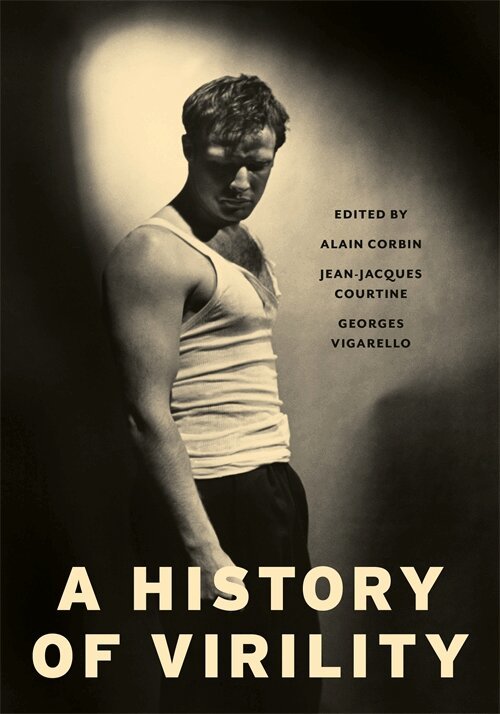
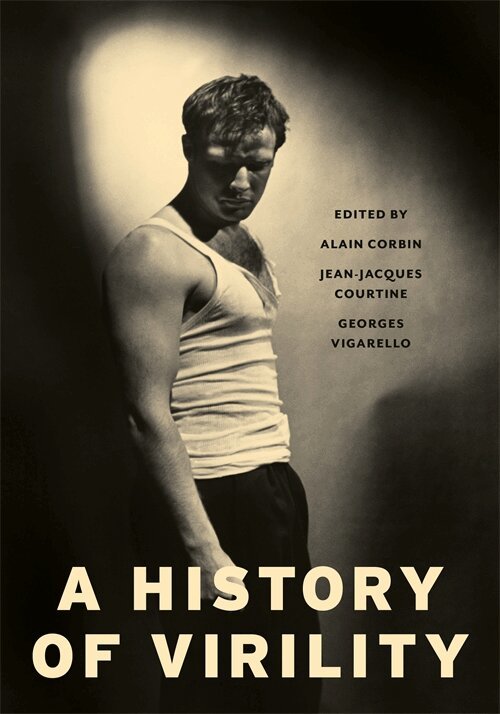
How has the meaning of manhood changed over time? A History of Virility proposes a series of answers to this question by describing a trajectory that begins with ancient conceptions of male domination and privilege and examining how it persisted, with significant alterations, for centuries. While the mainstream of virility was challenged during the Enlightenment, its preeminence was restored by social forms of male bonding in the nineteenth century. Pacifist, feminist, and gay rights movements chipped away at models and codes of virility during the next hundred years, leading to the twentieth century's disclosing of a "virility on edge," or virility as an unstable entity dispossessed of any automatic claim to power. These original essays, written by an international group of scholars including Arlette Farge, Jean-Paul Bertaud, Christelle Taraud, and Fabrice Virgili, add an intriguing sociohistorical dimension to our understanding of the evolution of virility.Unsettling received notions of political and cultural critique, these authors consider painting, sculpture, literature, film, and philosophy to expand our knowledge of fascism, nationalism, liberalism, classicism, and colonialism.
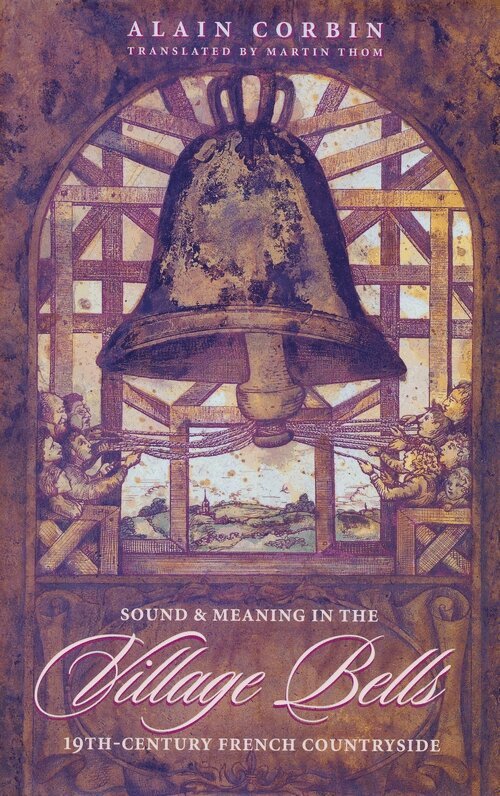
Village Bells
The Culture of the Senses in the Nineteenth-Century French Countryside
Inbunden, Engelska, 1998
1 664 kr
Skickas inom 3-6 vardagar
In the French canton of Brienne in November 1799, local authorities were scandalized when a crowd of girls broke through the doors of the church and rang the bells in order to mark the festival of St. Catherine. Religious use of the bells was forbidden by law, but the villagers boldly insisted on their right to celebrate with peals the feast of a beloved saint. So begins Village Bells, Alain Corbin's exploration of the "auditory landscape" of nineteenth-century France, a story of lost sensory experiences and forgotten passions. In the nineteenth century, these instruments were symbols of their towns and objects of both ecclesiastic and civic pride. Bell-ringing served practical purposes of communication, marking both religious and secular time, as well as calling citizens to pray, assemble, take arms, or beware of danger. As Corbin shows, the bells also reflected the social, political, and religious struggles of the time. To control the bells was to control the symbolic order, rhythm, and loyalties of French village and country life.Using church archives and local documents, Corbin forges a unique history of the role of bells from the aftermath of the Revolution to the dawn of the twentieth century. He charts how the First Republic (1792-1804) moved toward a more secular society, turning many bells into coins and cannonballs and seizing others as property of the state. A gradual return to the religious use of bells occurred in the nineteenth century, even as their new secular roles were maintained. Corbin describes the battles over the marking of religious versus secular time, as calls to prayer, the celebration of religious feasts, and the marking of rites of passage-baptism, marriage, and death-competed with tolls indicating the passing hours or marking assemblies, elections, or republican holidays. Thoroughly documented and recounted with intriguing narratives, Village Bells provides an original approach to nineteenth-century French cultural, social, and political history.As Corbin notes, the bells are no longer essential to our lives-their qualitative, sacred time and space replaced by the quantitative, secular measures of the clock-but by understanding their lost symbolic and practical importance we open a window onto the age in which they rang.
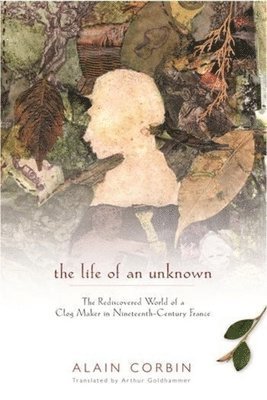
Life of an Unknown
The Rediscovered World of a Clog Maker in Nineteenth-Century France
Inbunden, Engelska, 2001
1 094 kr
Skickas inom 3-6 vardagar
"My task is piecing together a puzzle...I hope to reconstitute the existence of a person whose memory has been abolished...I want to re-create him, to give him a second chance...to become part of the memory of his century." With these words, Alain Corbin embarks on a journey that is part history and part metaphysics: recreating the life and world of a man about whom nothing is known except for his entries in the civil registries and historical knowledge about the times in which he lived. Risen from death and utter obscurity is Louis-Francois Pinagot, a forester and clog maker who lived during the heart of the nineteenth century-the age of Romanticism, of Hugo and Berlioz-from the Napoleonic Wars to the Third Republic. The result is a fascinating picture of the way people lived along the forest's edge during this tumultuous and eventful time in the history of France-and of the world. How did the residents of this unique community live and work together? How did life in the village differ from life in the forest? How did the church and various governments of France affect the everyday lives of these people, and of Pinagot in particular?With The Life of an Unknown, Alain Corbin presents a full record of a life, comprised of supposition, with room for each reader to insert his/her own imaginings onto the scene. Ambitious in its aims and exquisite in its execution, The Life of an Unknown is nothing short of a bold and successful attempt by a master to correct historians' all-too-common neglect of those relegated to oblivion with the passage of time.
1 315 kr
Skickas inom 7-10 vardagar
How has the meaning of manhood changed over time? A History of Virility proposes a series of answers to this question by describing a trajectory that begins with ancient conceptions of male domination and privilege and examining how it persisted, with significant alterations, for centuries. While the mainstream of virility was challenged during the Enlightenment, its preeminence was restored by social forms of male bonding in the nineteenth century. Pacifist, feminist, and gay rights movements chipped away at models and codes of virility during the next hundred years, leading to the twentieth century's disclosing of a "virility on edge," or virility as an unstable entity dispossessed of any automatic claim to power. These original essays, written by an international group of scholars including Arlette Farge, Jean-Paul Bertaud, Christelle Taraud, and Fabrice Virgili, add an intriguing sociohistorical dimension to our understanding of the evolution of virility.Unsettling received notions of political and cultural critique, these authors consider painting, sculpture, literature, film, and philosophy to expand our knowledge of fascism, nationalism, liberalism, classicism, and colonialism.
496 kr
Skickas inom 10-15 vardagar
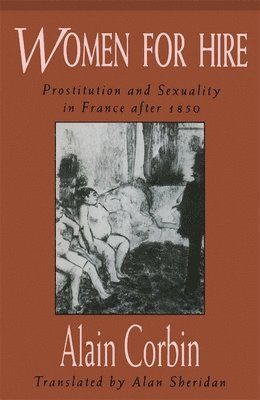
Dispelling the lurid stereotypes portrayed in fiction, Alain Corbin depicts prostitution in nineteenth-century France not as a vice, crime, or disease, but as a well-organized business. Corbin reveals how the brothel served the sex industry in the same way that the factory served manufacturing: it provided an institution for the efficient and profitable sale of services.
705 kr
Skickas inom 11-20 vardagar
In this book Alain Corbin argues that the 1860s were a crucial period for western civilization, characterized by radical changes in the way Europeans viewed themselves and their world. Corbin examines urban development, the new mobility of the population, prostitution and policing, personal hygiene and the social plagues of alcoholism, tuberculosis and venereal disease.
462 kr
Skickas inom 7-10 vardagar
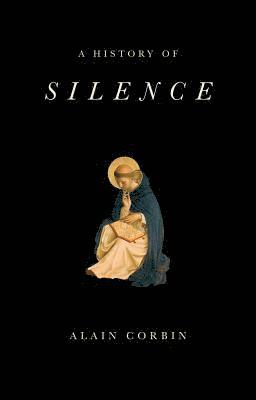
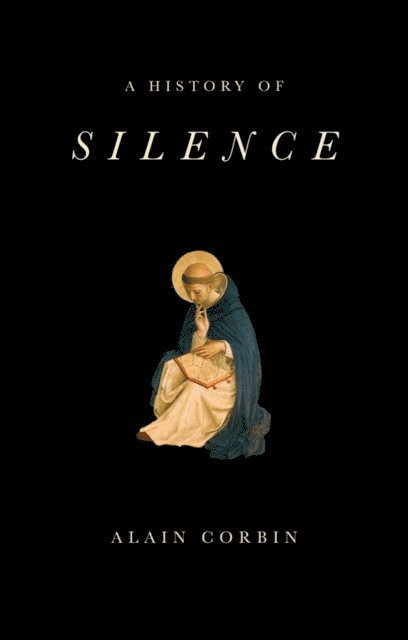
Silence is not simply the absence of noise. It is within us, in the inner citadel that great writers, thinkers, scholars and people of faith have cultivated over the centuries.It characterizes our most intimate and sacred spaces, from private bedrooms to grand cathedrals – those vast reservoirs of silence. Philosophers and novelists have long sought solitude and inspiration in mountains and forests. Yet despite the centrality of silence to some of our most intense experiences, the transformations of the twentieth century have gradually diminished its value. Today, raucous urban spaces and a continual bombardment from different media pressure us into constant activity. We are losing a sense of our inner selves, a process that is changing the very nature of the individual. This book rediscovers the wonder of silence and, with this, a richer experience of life. With his predilection for the elusive, Corbin calls us to listen to another history.
148 kr
Skickas inom 7-10 vardagar
Silence is not simply the absence of noise. It is within us, in the inner citadel that great writers, thinkers, scholars and people of faith have cultivated over the centuries.It characterizes our most intimate and sacred spaces, from private bedrooms to grand cathedrals – those vast reservoirs of silence. Philosophers and novelists have long sought solitude and inspiration in mountains and forests. Yet despite the centrality of silence to some of our most intense experiences, the transformations of the twentieth century have gradually diminished its value. Today, raucous urban spaces and a continual bombardment from different media pressure us into constant activity. We are losing a sense of our inner selves, a process that is changing the very nature of the individual. This book rediscovers the wonder of silence and, with this, a richer experience of life. With his predilection for the elusive, Corbin calls us to listen to another history.
715 kr
Skickas inom 7-10 vardagar
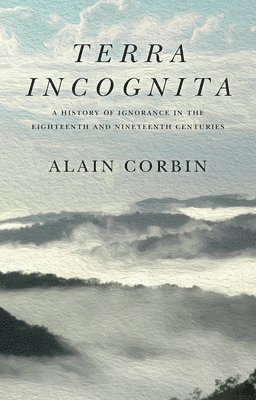
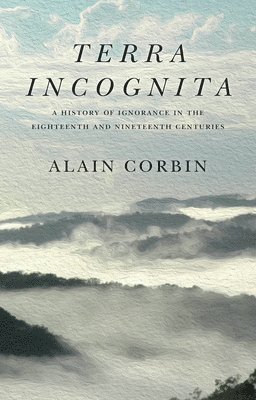
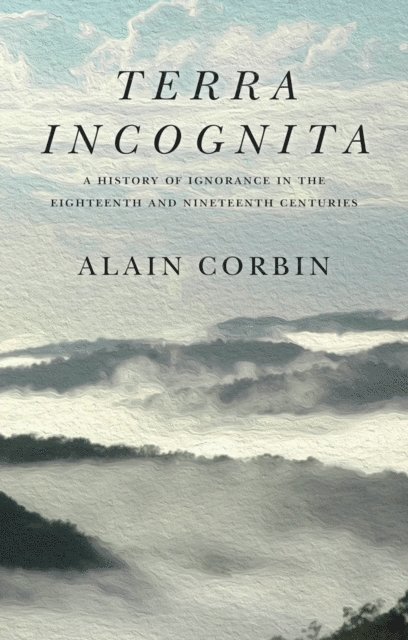
Identifying gaps in knowledge is the first duty of any historian who sets out to understand the past. It is impossible fully to understand our forebears without some idea of what they did not know: the history of ignorance is an indispensable part of history itself.Here Alain Corbin focuses on our planet, exploring its mysteries past and present, and the intensity and eventual decline of the modes of terror and wonder it aroused. For thousands of years, humans knew nearly nothing about the earth. Certain locations on the map simply read ‘Terra Incognita’. Corbin recounts the many errors and uncertainties that littered the paths we followed in the attempt to discover the secrets of our blue planet, with a particular focus on the eighteenth and nineteenth centuries when the mysteries of volcanoes, the polar regions, glaciers, the stratosphere and the oceans began to be uncovered. While ignorance stimulated our ancestors’ imagination, Corbin’s history of ignorance reawakens our thirst for knowledge and changes our view of the world.
251 kr
Skickas inom 7-10 vardagar
Identifying gaps in knowledge is the first duty of any historian who sets out to understand the past. It is impossible fully to understand our forebears without some idea of what they did not know: the history of ignorance is an indispensable part of history itself.Here Alain Corbin focuses on our planet, exploring its mysteries past and present, and the intensity and eventual decline of the modes of terror and wonder it aroused. For thousands of years, humans knew nearly nothing about the earth. Certain locations on the map simply read ‘Terra Incognita’. Corbin recounts the many errors and uncertainties that littered the paths we followed in the attempt to discover the secrets of our blue planet, with a particular focus on the eighteenth and nineteenth centuries when the mysteries of volcanoes, the polar regions, glaciers, the stratosphere and the oceans began to be uncovered. While ignorance stimulated our ancestors’ imagination, Corbin’s history of ignorance reawakens our thirst for knowledge and changes our view of the world.
109 kr
Skickas inom 7-10 vardagar
Everyone knows the wind’s touch, its presence, its force. Sometimes it roars and howls, at other times we hear its wistful sighs and feel its soothing caresses. Since antiquity, humans have borne witness to the wind and relied on it to navigate the seas. And yet, despite its presence at the heart of human experience, the wind has evaded scrutiny in our chronicles of the past.In this brilliantly original volume, Alain Corbin sets out to illuminate the wind’s storied history. He shows how, before the nineteenth century, the noisy emptiness of wind was experienced and described only according to the sensations it provoked. Imagery of the wind featured prominently in literature, from the ancient Greek epics through the Renaissance and romanticism to the modern era, but little was known about where the wind came from and where it went. It was only in the late eighteenth century, with the discovery of the composition of air, that scientists began to understand the nature of wind and its trajectories. From that point on, our understanding of the wind was shaped by meteorology, which mapped the flows of winds and currents around the globe. But while science has enabled us to understand the wind and, in some respects, to harness it, the wind has lost nothing of its mysterious force. It still has the power to destroy, and in the wind’s ethereal presence we can still feel its connection with creation and death.
462 kr
Skickas inom 7-10 vardagar
Rest occupies a space outside of sleep and alertness: it is a form of recuperation but also of preparation for what is to come, and is a need felt by human and animal alike. Through the centuries, different and conflicting definitions and forms of rest have blossomed, ranging from heavenly repose to what is prescribed for the modern affliction of burn-out. What has remained constant is its importance: long the subject of art and literature, everyone understands the need not to disturb the aimless, languishing, daydreaming Lotus-eater.Not viewed simply as an antidote for fatigue, for a long time rest was seen as the prelude to eternal life, until everything changed in the nineteenth century and society entered the great ‘age of rest’. At this point, the renowned French historian Alain Corbin explains, rest took on new therapeutic and leisurely qualities, embodied by the new types of human that emerged. The modern epicurean frolicked on beaches and soaked up the rays, while melancholics were rejuvenated in pristine sanatoria, the new temples of rest. Paid holidays and a widespread acceptance of the need to build up the strength sapped during work followed, while the 1950s became the decade of ‘sea, sex and sun’.This new book, as original as Corbin’s other histories of neglected aspects of human life, pans the long evolution of rest in a highly readable and engaging style.
129 kr
Skickas inom 7-10 vardagar
Rest occupies a space outside of sleep and alertness: it is a form of recuperation but also of preparation for what is to come, and is a need felt by human and animal alike. Through the centuries, different and conflicting definitions and forms of rest have blossomed, ranging from heavenly repose to what is prescribed for the modern affliction of burn-out. What has remained constant is its importance: long the subject of art and literature, everyone understands the need not to disturb the aimless, languishing, daydreaming Lotus-eater.Not viewed simply as an antidote for fatigue, for a long time rest was seen as the prelude to eternal life, until everything changed in the nineteenth century and society entered the great ‘age of rest’. At this point, the renowned French historian Alain Corbin explains, rest took on new therapeutic and leisurely qualities, embodied by the new types of human that emerged. The modern epicurean frolicked on beaches and soaked up the rays, while melancholics were rejuvenated in pristine sanatoria, the new temples of rest. Paid holidays and a widespread acceptance of the need to build up the strength sapped during work followed, while the 1950s became the decade of ‘sea, sex and sun’.This new book, as original as Corbin’s other histories of neglected aspects of human life, pans the long evolution of rest in a highly readable and engaging style.
430 kr
Skickas inom 7-10 vardagar
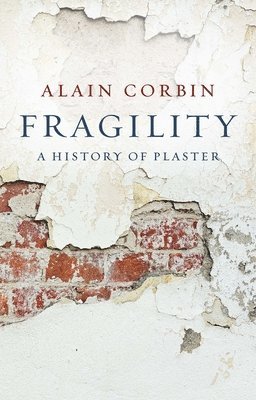
The distant past is commonly characterized in terms of dominant materials of the time – the Stone Age, the Bronze Age, the Iron Age, etc. Since the dawn of writing, however, characterizing eras in terms of materials has fallen by the wayside, and yet materials have continued to exert a powerful influence on our collective imagination.Viewed from this perspective, France in the period from 1815 to 1855 could be seen as the half-century of plaster. After the French Revolution, plaster was used for a great variety of things: building, moulding, sculpting, decorating. Cheap and easy to use, plaster was everywhere, from Napoleon’s death mask to household ornaments, from walls to elaborate mouldings. Plaster was king – but a fragile king that easily crumbled and fell apart. The age of plaster was also the reign of the ephemeral and the transient, the vulgar and the eclectic, and the men and women of the time struggled to maintain stability and continuity with the past. In the space of a few decades, no fewer than seven political regimes succeeded one another. Plaster – symbol of the ephemeral, the flaking and the vulgar – is the material which defines the first half of the nineteenth century.Written with his characteristic brilliance and eye for unconventional topics, Alain Corbin’s highly original exploration of the role of plaster in history will be of interest to a wide readership.
101 kr
Skickas inom 7-10 vardagar
The distant past is commonly characterized in terms of dominant materials of the time – the Stone Age, the Bronze Age, the Iron Age, etc. Since the dawn of writing, however, characterizing eras in terms of materials has fallen by the wayside, and yet materials have continued to exert a powerful influence on our collective imagination.Viewed from this perspective, France in the period from 1815 to 1855 could be seen as the half-century of plaster. After the French Revolution, plaster was used for a great variety of things: building, moulding, sculpting, decorating. Cheap and easy to use, plaster was everywhere, from Napoleon’s death mask to household ornaments, from walls to elaborate mouldings. Plaster was king – but a fragile king that easily crumbled and fell apart. The age of plaster was also the reign of the ephemeral and the transient, the vulgar and the eclectic, and the men and women of the time struggled to maintain stability and continuity with the past. In the space of a few decades, no fewer than seven political regimes succeeded one another. Plaster – symbol of the ephemeral, the flaking and the vulgar – is the material which defines the first half of the nineteenth century.Written with his characteristic brilliance and eye for unconventional topics, Alain Corbin’s highly original exploration of the role of plaster in history will be of interest to a wide readership.