Alain Ehrenberg – författare
Visar alla böcker från författaren Alain Ehrenberg. Handla med fri frakt och snabb leverans.
13 produkter
13 produkter
Inbunden, Engelska, 2020
456 kr
Skickas inom 5-8 vardagar
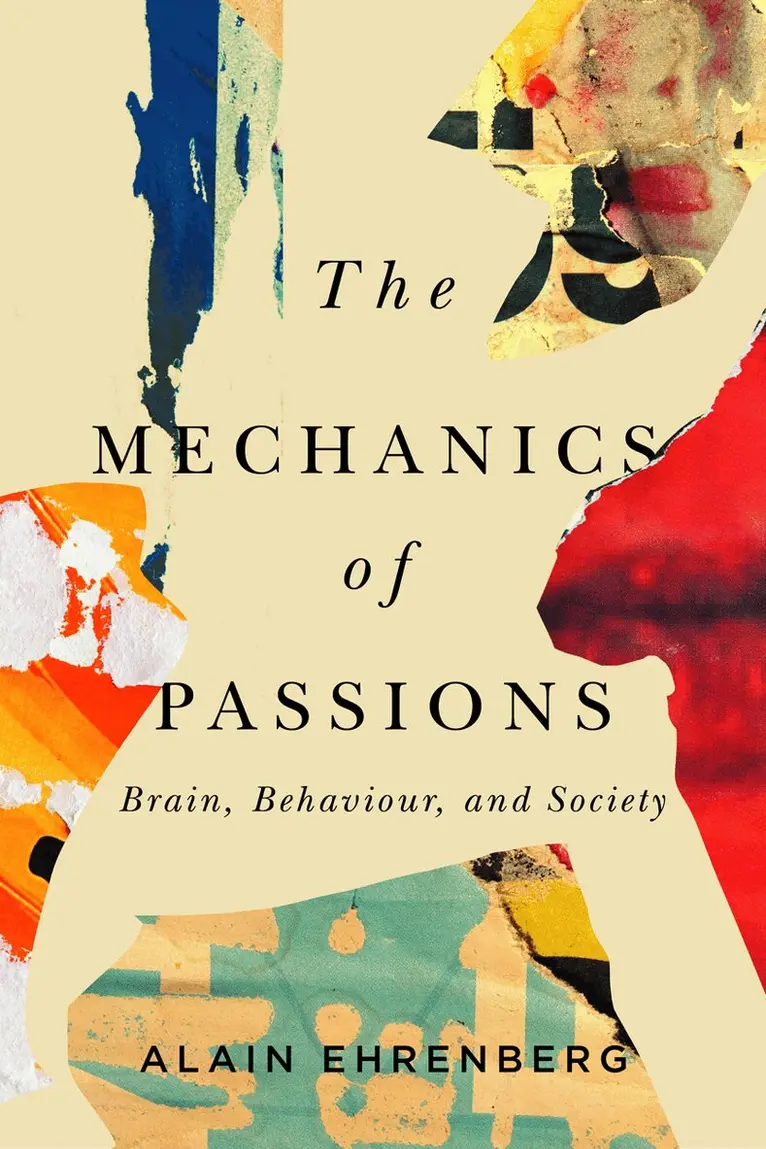
Cognitive neuroscience, once a specialized area of psychology and biology, has enjoyed increased worldwide legitimacy in the last thirty years not only in psychiatry and mental health, but also in fields as diverse as education, economics, marketing, and law. How can this surge in popularity be explained? Has the new science of human behaviour now become the barometer of our conduct and our lives, taking the place previously occupied by psychoanalysis? Rather than asking if neuronal man will replace social man or how to surmount the opposition between the biological and the social, The Mechanics of Passions uncovers hidden relationships between global social ideals and specialized concepts of neuroscience and cognitive science. Proposing a historical sociology situated in the dual contexts of the history of sciences and the history of self-representation, Alain Ehrenberg describes the conditions through which cognitive neuroscience has developed and acquired a strong moral authority in our individualistic society permeated by ideas, values, and norms of autonomy. Cognitive neuroscience offers the promise of turning personal limitations into assets by exploring an individual's "hidden potential." The Mechanics of Passions identifies this as the echo of social ideals of autonomy, affirming that the moral authority of cognitive neuroscience stems as much from cultural norms as from any results of scientific or medical experimentation.
E-bok
PDF, Engelska, 2020361 kr
Läs direkt efter köp
Cognitive neuroscience, once a specialized area of psychology and biology, has enjoyed increased worldwide legitimacy in the last thirty years not only in psychiatry and mental health, but also in fields as diverse as education, economics, marketing, and law. How can this surge in popularity be explained? Has the new science of human behaviour now become the barometer of our conduct and our lives, taking the place previously occupied by psychoanalysis? Rather than asking if neuronal man will replace social man or how to surmount the opposition between the biological and the social, The Mechanics of Passions uncovers hidden relationships between global social ideals and specialized concepts of neuroscience and cognitive science. Proposing a historical sociology situated in the dual contexts of the history of sciences and the history of self-representation, Alain Ehrenberg describes the conditions through which cognitive neuroscience has developed and acquired a strong moral authority in our individualistic society permeated by ideas, values, and norms of autonomy. Cognitive neuroscience offers the promise of turning personal limitations into assets by exploring an individual''s "hidden potential." The Mechanics of Passions identifies this as the echo of social ideals of autonomy, affirming that the moral authority of cognitive neuroscience stems as much from cultural norms as from any results of scientific or medical experimentation.
E-bok
Engelska, 2020361 kr
Läs direkt efter köp
Cognitive neuroscience, once a specialized area of psychology and biology, has enjoyed increased worldwide legitimacy in the last thirty years not only in psychiatry and mental health, but also in fields as diverse as education, economics, marketing, and law. How can this surge in popularity be explained? Has the new science of human behaviour now become the barometer of our conduct and our lives, taking the place previously occupied by psychoanalysis? Rather than asking if neuronal man will replace social man or how to surmount the opposition between the biological and the social, The Mechanics of Passions uncovers hidden relationships between global social ideals and specialized concepts of neuroscience and cognitive science. Proposing a historical sociology situated in the dual contexts of the history of sciences and the history of self-representation, Alain Ehrenberg describes the conditions through which cognitive neuroscience has developed and acquired a strong moral authority in our individualistic society permeated by ideas, values, and norms of autonomy. Cognitive neuroscience offers the promise of turning personal limitations into assets by exploring an individual''s "hidden potential." The Mechanics of Passions identifies this as the echo of social ideals of autonomy, affirming that the moral authority of cognitive neuroscience stems as much from cultural norms as from any results of scientific or medical experimentation.
E-bok
PDF, Engelska, 2010372 kr
Läs direkt efter köp
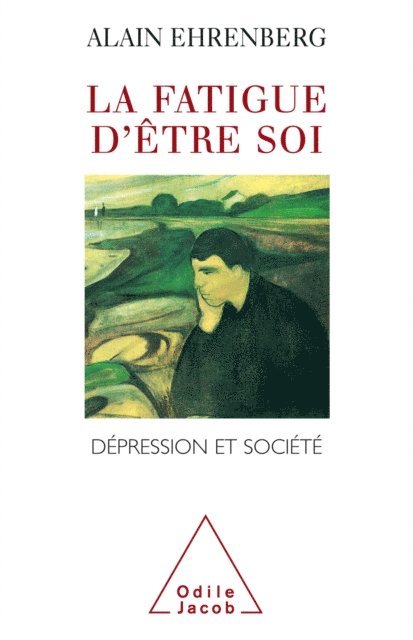
Depression, once a subfield of neurosis, has become the most diagnosed mental disorder in the world. Why and how has depression become such a topical illness and what does it tell us about changing ideas of the individual and society? Alain Ehrenberg investigates the history of depression and depressive symptoms across twentieth-century psychiatry, showing that identifying depression is far more difficult than a simple diagnostic distinction between normal and pathological sadness - the one constant in the history of depression is its changing definition. Drawing on the accumulated knowledge of a lifetime devoted to the study of the individual in modern democratic society, Ehrenberg shows that the phenomenon of modern depression is not a construction of the pharmaceutical industry but a pathology arising from inadequacy in a social context where success is attributed to, and expected of, the autonomous individual. In so doing, he provides both a novel and convincing description of the illness that clarifies the intertwining relationship between its diagnostic history and changes in social norms and values. The first book to offer both a global sociological view of contemporary depression and a detailed description of psychiatric reasoning and its transformation - from the invention of electroshock therapy to mass consumption of Prozac - The Weariness of the Self offers a compelling exploration of depression as social fact.
E-bok
Engelska, 2010372 kr
Läs direkt efter köp
Depression, once a subfield of neurosis, has become the most diagnosed mental disorder in the world. Why and how has depression become such a topical illness and what does it tell us about changing ideas of the individual and society? Alain Ehrenberg investigates the history of depression and depressive symptoms across twentieth-century psychiatry, showing that identifying depression is far more difficult than a simple diagnostic distinction between normal and pathological sadness - the one constant in the history of depression is its changing definition. Drawing on the accumulated knowledge of a lifetime devoted to the study of the individual in modern democratic society, Ehrenberg shows that the phenomenon of modern depression is not a construction of the pharmaceutical industry but a pathology arising from inadequacy in a social context where success is attributed to, and expected of, the autonomous individual. In so doing, he provides both a novel and convincing description of the illness that clarifies the intertwining relationship between its diagnostic history and changes in social norms and values. The first book to offer both a global sociological view of contemporary depression and a detailed description of psychiatric reasoning and its transformation - from the invention of electroshock therapy to mass consumption of Prozac - The Weariness of the Self offers a compelling exploration of depression as social fact.
Häftad, Franska, 1998
540 kr
Skickas inom 3-6 vardagar
Häftad, Franska, 2000
625 kr
Skickas inom 3-6 vardagar
Häftad, Franska, 2018
513 kr
Skickas inom 3-6 vardagar
E-bok
Franska, 2018145 kr
Läs direkt efter köp
De nouvelles sciences du comportement humain ne cessent de prendre de l’ampleur et de susciter l’engouement depuis le début des années 1990 : il s’agit des neurosciences cognitives. Leur ambition est de faire de l’exploration du cerveau le moyen de traiter les pathologies mentales (comme la dépression ou la schizophrénie) mais aussi de nombreux problèmes sociaux et éducatifs, comme l’apprentissage ou la maîtrise de ses émotions. Ces sciences sont-elles devenues le baromètre de nos conduites et de nos vies, prenant la place autrefois occupée par la psychanalyse ? L’homme « neuronal » est-il en passe de remplacer l’homme « social » ? Alain Ehrenberg montre que l’autorité morale acquise par les neurosciences cognitives tient autant à leurs résultats scientifiques ou médicaux qu’à leur inscription dans un idéal social majeur : celui d’un individu capable de convertir ses handicaps en atouts en exploitant son « potentiel caché ». Elles sont la chambre d’écho de nos idéaux d’autonomie. Alain Ehrenberg est sociologue, directeur de recherches émérite au CNRS (Cermes3). Il a créé, en 1994, un groupement de recherches du CNRS sur les drogues et les médicaments psychotropes et fondé, en 2001, le Centre de recherche Psychotropes, santé mentale, société (CNRS-Inserm-université Paris-Descartes). Il est notamment l’auteur de La Fatigue d’être soi et de La Société du malaise.
E-bok
Franska, 1998149 kr
Läs direkt efter köp
Fatigue, inhibition, insomnie, anxiété, indécision : la plupart des difficultés rencontrées dans la vie quotidienne sont aujourd''hui assimilées à de la dépression. Pourquoi ce "succès" de la dépression ? Croisant l''histoire de la psychiatrie et celle des modes de vie, Alain Ehrenberg suggère que cette "maladie" est inhérente à une société où la norme n''est plus fondée sur la culpabilité et la discipline, mais sur la responsabilité et l''initiative ; elle est la contrepartie de l''énergie que chacun doit mobiliser pour devenir soi-même. Et si la dépression était surtout le révélateur des mutations de l''individu ? Sociologue, Alain Ehrenberg dirige le groupement de recherche "Psychotropes, Politique, Société" du CNRS. La Fatigue d''être soi est le troisième volet d''une recherche qui, après Le Culte de la performance (1991) et L''Individu incertain (1995), s''attache à dessiner les figures de l''individu contemporain.
E-bok
Franska, 2010149 kr
Läs direkt efter köp
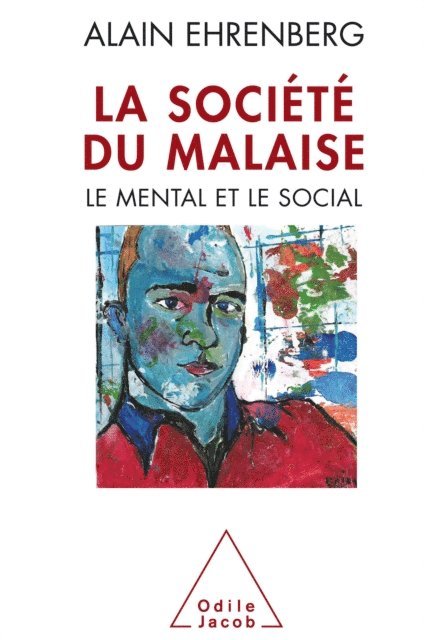
L’émancipation des mœurs, les transformations de l’entreprise et celles du capitalisme semblent affaiblir les liens sociaux ; l’individu doit de plus en plus compter sur sa « personnalité ». Il s’ensuit de nouvelles souffrances psychiques qui seraient liées à la difficulté à atteindre les idéaux qui nous sont fixés. Cette vision commune possède un défaut majeur : elle est franco-française. Comment rendre compte de la singularité française ? Et que signifie l’idée récente que la société crée des souffrances psychiques ?Croisant l’histoire de la psychanalyse et celle de l’individualisme, Alain Ehrenberg compare la façon dont les États-Unis et la France conçoivent les relations entre malheur personnel et mal commun, offrant ainsi une image plus claire et plus nuancée des inquiétudes logées dans le malaise français. Alain Ehrenberg est l’auteur de trois livres sur l’individualisme, Le Culte de la performance en 1991, L’Individu incertain en 1995 et La Fatigue d’être soi en 1998. Sociologue, directeur de recherche au CNRS, après avoir créé en 1994 un groupement de recherches sur les drogues et les médicaments psychotropes, il a fondé en 2001 le Cesames (Centre de recherche psychotropes, santé mentale, société), CNRS, Inserm, université Paris-Descartes.
Del 2058 - suhrkamp taschenbücher wissenschaft
Das Unbehagen in der Gesellschaft
Häftad, Tyska, 2012
265 kr
Skickas inom 3-6 vardagar
Häftad, Tyska, 2015
330 kr
Skickas inom 3-6 vardagar