Alan Brudner – författare
Visar alla böcker från författaren Alan Brudner. Handla med fri frakt och snabb leverans.
11 produkter
11 produkter
E-bok
PDF, Engelska, 2013320 kr
Läs direkt efter köp
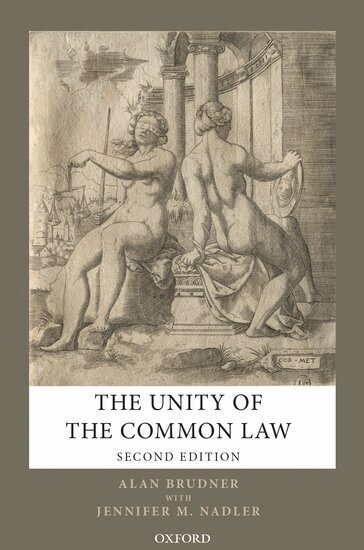
In this classic study, Alan Brudner investigates the basic structure of the common law of transactions. For decades, that structure has been the subject of intense debate between formalists, who say that transactional law is a private law for interacting parties, and functionalists, who say that it is a public law serving the collective ends of society. Against both camps, Brudner proposes a synthesis of formalism and functionalism in which private law is modified bya common good without being subservient to it. Drawing on Hegel''s legal philosophy, the author exhibits this synthesis in each of transactional law''s main divisions: property, contract, unjust enrichment, and tort. Each is a whole composed of private-law and public-law parts that complement eachother, and the idea connecting the parts to each other is also latently present in each. Moreover, Brudner argues, a single narrative thread connects the divisions of transactional law to each other. Not a row of disconnected fields, transactional law is rather a story about the realization in law of the agent''s claim to be a dignified end-master of its body, its acquisitions, and the shape of its life. Transactional law''s divisions are stages in the progress toward that goal, each generating apotential developed by the next. Thus, contract law fulfils what is incompletely realized in property law, negligence law what is germinal in contract law, public insurance what is seminal in negligence law, and transactional law as a whole what is underdeveloped in public insurance. The end pointis the limit of what a transactional law can contribute to a life sufficient for dignity.Reconfigured and expanded with a contribution by Jennifer Nadler, The Unity of the Common Law stands out among contemporary theories of private law in that it depicts private law as purposive without being instrumental and as autonomous without being emptily formal.
E-bok
Engelska, 2013442 kr
Läs direkt efter köp
In this classic study, Alan Brudner investigates the basic structure of the common law of transactions. For decades, that structure has been the subject of intense debate between formalists, who say that transactional law is a private law for interacting parties, and functionalists, who say that it is a public law serving the collective ends of society. Against both camps, Brudner proposes a synthesis of formalism and functionalism in which private law is modified bya common good without being subservient to it. Drawing on Hegel''s legal philosophy, the author exhibits this synthesis in each of transactional law''s main divisions: property, contract, unjust enrichment, and tort. Each is a whole composed of private-law and public-law parts that complement eachother, and the idea connecting the parts to each other is also latently present in each. Moreover, Brudner argues, a single narrative thread connects the divisions of transactional law to each other. Not a row of disconnected fields, transactional law is rather a story about the realization in law of the agent''s claim to be a dignified end-master of its body, its acquisitions, and the shape of its life. Transactional law''s divisions are stages in the progress toward that goal, each generating apotential developed by the next. Thus, contract law fulfils what is incompletely realized in property law, negligence law what is germinal in contract law, public insurance what is seminal in negligence law, and transactional law as a whole what is underdeveloped in public insurance. The end pointis the limit of what a transactional law can contribute to a life sufficient for dignity.Reconfigured and expanded with a contribution by Jennifer Nadler, The Unity of the Common Law stands out among contemporary theories of private law in that it depicts private law as purposive without being instrumental and as autonomous without being emptily formal.
E-bok
PDF, Engelska, 2012602 kr
Läs direkt efter köp
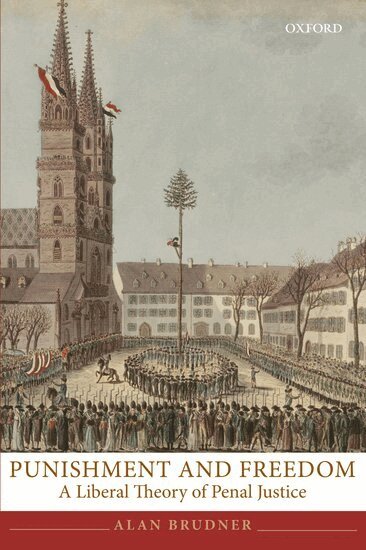
This book sets out a new understanding of the penal law of a liberal legal order. The prevalent view today is that the penal law is best understood from the standpoint of a moral theory concerning when it is fair to blame and censure an individual character for engaging in proscribed conduct. By contrast, this book argues that the penal law is best understood by a political and constitutional theory about when it is permissible for the state to restrain and confine a free agent. The book's thesis is that penal action by public officials is permissible force rather than wrongful violence only if it could be accepted by the agent as being consistent with its freedom. There are, however, different conceptions of freedom, and each informs a theoretical paradigm of penal justice generating distinctive constraints on state coercion. Although this plurality of paradigms creates an appearance of fragmentation and contradiction in the law, the author argues that the penal law forms a complex whole uniting the constraints on punishment flowing from each paradigm.
Häftad, Engelska, 2017
646 kr
Skickas
In this classic study, Alan Brudner investigates the basic structure of the common law of transactions. For decades, that structure has been the subject of intense debate between formalists, who say that transactional law is a private law for interacting parties, and functionalists, who say that it is a public law serving the collective ends of society. Against both camps, Brudner proposes a synthesis of formalism and functionalism in which private law is modified by a common good without being subservient to it. Drawing on Hegel's legal philosophy, the author exhibits this synthesis in each of transactional law's main divisions: property, contract, unjust enrichment, and tort. Each is a whole composed of private-law and public-law parts that complement each other, and the idea connecting the parts to each other is also latently present in each. Moreover, Brudner argues, a single narrative thread connects the divisions of transactional law to each other. Not a row of disconnected fields, transactional law is rather a story about the realization in law of the agent's claim to be a dignified end-master of its body, its acquisitions, and the shape of its life. Transactional law's divisions are stages in the progress toward that goal, each generating a potential developed by the next. Thus, contract law fulfils what is incompletely realized in property law, negligence law what is germinal in contract law, public insurance what is seminal in negligence law, and transactional law as a whole what is underdeveloped in public insurance. The end point is the limit of what a transactional law can contribute to a life sufficient for dignity.Reconfigured and expanded with a contribution by Jennifer Nadler, The Unity of the Common Law stands out among contemporary theories of private law in that it depicts private law as purposive without being instrumental and as autonomous without being emptily formal.
Häftad, Engelska, 2007
903 kr
Skickas inom 7-10 vardagar
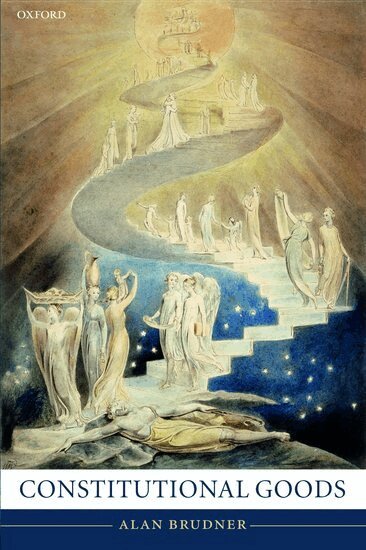
This book aims to distil the essentials of liberal constitutionalism from the jurisprudence and practice of contemporary liberal-democratic states. Most constitutional theorists have despaired of a liberal consensus on the fundamental goals of constitutional order. Instead they have contented themselves either with agreement on lower-level principles on which those who disagree on fundamentals may coincidentally converge, or, alternatively with a process for translating fundamental disgreement into acceptable laws.Alan Brudner suggests a conception of fundamental justice that liberals of competing philosophic schools may accept as fulfilling their own basic commitments. He argues that the model liberal-democratic constitution is best understood as a unity of three constitutional frameworks: libertarian, egalitarian, and communitarian. Each of these has a particular conception of public reason. Brudner criticizes each of these frameworks insofar as its organizing conception claims to be fundamental, and moves forward to suggest an Hegelian conception of public reason within which each framework is contained as a constituent element of a whole.When viewed in this light, the liberal constitution embodies a surprising synthesis. It reconciles a commitment to individual liberty and freedom of conscience with the perfectionist idea that the state ought to cultivate a type of personality whose fundamental ends are the goods essential to dignity. Such a reconciliation, the author suggests, may attract competing liberalisms to a consensus on an inclusive conception of public reason under which political authority is validated for those who share a confidence in the individual's inviolable worth.
Inbunden, Engelska, 2004
1 774 kr
Skickas inom 3-6 vardagar
This book aims to distil the essentials of liberal constitutionalism from the jurisprudence and practice of contemporary liberal-democratic states. Most constitutional theorists have despaired of a liberal consensus on the fundamental goals of constitutional order. Instead they have contented themselves either with agreement on lower-level principles on which those who disagree on fundamentals may coincidentally converge, or, alternatively with a process for translating fundamental disgreement into acceptable laws. Alan Brudner suggests a conception of fundamental justice that liberals of competing philosophic schools may accept as fulfilling their own basic commitments. He argues that the model liberal-democratic constitution is best understood as a unity of three constitutional frameworks: libertarian, egalitarian, and communitarian. Each of these has a particular conception of public reason. Brudner criticizes each of these frameworks insofar as its organizing conception claims to be fundamental, and moves forward to suggest an Hegelian conception of public reason within which each framework is contained as a constituent element of a whole. When viewed in this light, the liberal constitution embodies a surprising synthesis. It reconciles a commitment to individual liberty and freedom of conscience with the perfectionist idea that the state ought to cultivate a type of personality whose fundamental ends are the goods essential to dignity. Such a reconciliation, the author suggests, may attract competing liberalisms to a consensus on an inclusive conception of public reason under which political authority is validated for those who share a confidence in the individual's inviolable worth.
Inbunden, Engelska, 2013
1 790 kr
Skickas inom 7-10 vardagar
In this classic study, Alan Brudner investigates the basic structure of the common law of transactions. For decades, that structure has been the subject of intense debate between formalists, who say that transactional law is a private law for interacting parties, and functionalists, who say that it is a public law serving the collective ends of society. Against both camps, Brudner proposes a unity of formalism and functionalism in which private law is modified by a common good without being subservient to it. Drawing on Hegel's legal philosophy, the author exhibits this unity in each of transactional law's main divisions: property, contract, unjust enrichment, and tort. Each is a whole composed of private-law and public-law parts that complement each other, and the idea connecting the parts to each other is also latently present in each. Moreover, Brudner argues, a single narrative thread connects the divisions of transactional law to each other. Not a row of disconnected fields, transactional law is rather a story about the realization in law of the agent's claim to be a dignified end-master of its body, its acquisitions, and the shape of its life. Transactional law's divisions are stages in the progress toward that goal, each generating a potential developed by the next. Thus, contract law fulfils what is incompletely realized in property law, negligence law what is germinal in contract law, public insurance what is seminal in negligence law, and transactional law as a whole what is underdeveloped in public insurance. The end-point is the limit of what a transactional law can contribute to a life sufficient for dignity.Reconfigured and expanded with a contribution by Jennifer Nadler, The Unity of the Common Law stands out among contemporary theories of private law in that it depicts private law as purposive without being instrumental and as autonomous without being emptily formal.
Häftad, Engelska, 2012
795 kr
Skickas inom 7-10 vardagar
This book sets out a new understanding of the penal law of a liberal legal order. The prevalent view today is that the penal law is best understood from the standpoint of a moral theory concerning when it is fair to blame and censure an individual character for engaging in proscribed conduct. By contrast, this book argues that the penal law is best understood by a political and constitutional theory about when it is permissible for the state to restrain and confine a free agent. The book's thesis is that penal action by public officials is permissible force rather than wrongful violence only if it could be accepted by the agent as being consistent with its freedom. There are, however, different conceptions of freedom, and each informs a theoretical paradigm of penal justice generating distinctive constraints on state coercion. Although this plurality of paradigms creates an appearance of fragmentation and contradiction in the law, the author argues that the penal law forms a complex whole uniting the constraints on punishment flowing from each paradigm.
Inbunden, Engelska, 2017
1 648 kr
Skickas inom 7-10 vardagar
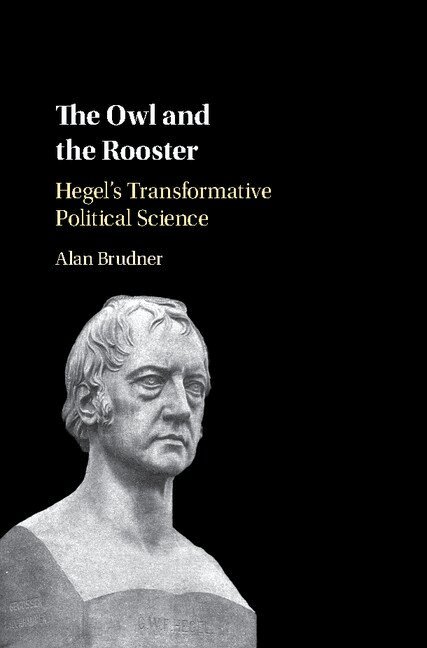
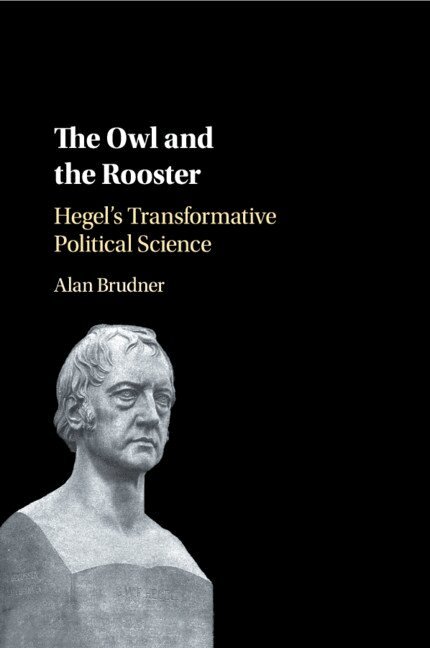
Since 1945, there have been two waves of Anglo-American writing on Hegel's political thought. The first defended it against works portraying Hegel as an apologist of Prussian reaction and a theorist of totalitarian nationalism. The second presented Hegel as a civic humanist critic of liberalism in the tradition of Rousseau. The first suppressed elements of Hegel's thought that challenge liberalism's individualistic premises; the second downplayed Hegel's theism. This book recovers what was lost in each wave. It restores aspects of Hegel's political thought unsettling to liberal beliefs, yet that lead to a state more liberal than Locke's and Kant's, which retain authoritarian elements. It also scrutinizes Hegel's claim to have justified theism to rational insight, hence to have made it conformable to Enlightenment standards of admissible public discourse. And it seeks to show how, for Hegel, the wholeness unique to divinity is realizable among humans without concession or compromise and what role philosophy must play in its final achievement. Lastly, we are shown what form Hegel's philosophy can take in a world not yet prepared for his science. Here is Hegel's political thought undistorted.
Häftad, Engelska, 2020
397 kr
Skickas inom 7-10 vardagar
Since 1945, there have been two waves of Anglo-American writing on Hegel's political thought. The first defended it against works portraying Hegel as an apologist of Prussian reaction and a theorist of totalitarian nationalism. The second presented Hegel as a civic humanist critic of liberalism in the tradition of Rousseau. The first suppressed elements of Hegel's thought that challenge liberalism's individualistic premises; the second downplayed Hegel's theism. This book recovers what was lost in each wave. It restores aspects of Hegel's political thought unsettling to liberal beliefs, yet that lead to a state more liberal than Locke's and Kant's, which retain authoritarian elements. It also scrutinizes Hegel's claim to have justified theism to rational insight, hence to have made it conformable to Enlightenment standards of admissible public discourse. And it seeks to show how, for Hegel, the wholeness unique to divinity is realizable among humans without concession or compromise and what role philosophy must play in its final achievement. Lastly, we are shown what form Hegel's philosophy can take in a world not yet prepared for his science. Here is Hegel's political thought undistorted.
Ljudbok
2003362 kr
Lyssna direkt efter köp
Cliff Lightman's computer whiz son, Sky, has disappeared after hacking into a police database to research an old unsolved murder case. Avery Kord, Sky's mentor and multi-billionaire boss, was implicated in the murder.