Alan C. Mitchell – författare
Visar alla böcker från författaren Alan C. Mitchell. Handla med fri frakt och snabb leverans.
2 produkter
2 produkter
369 kr
Skickas inom 3-6 vardagar
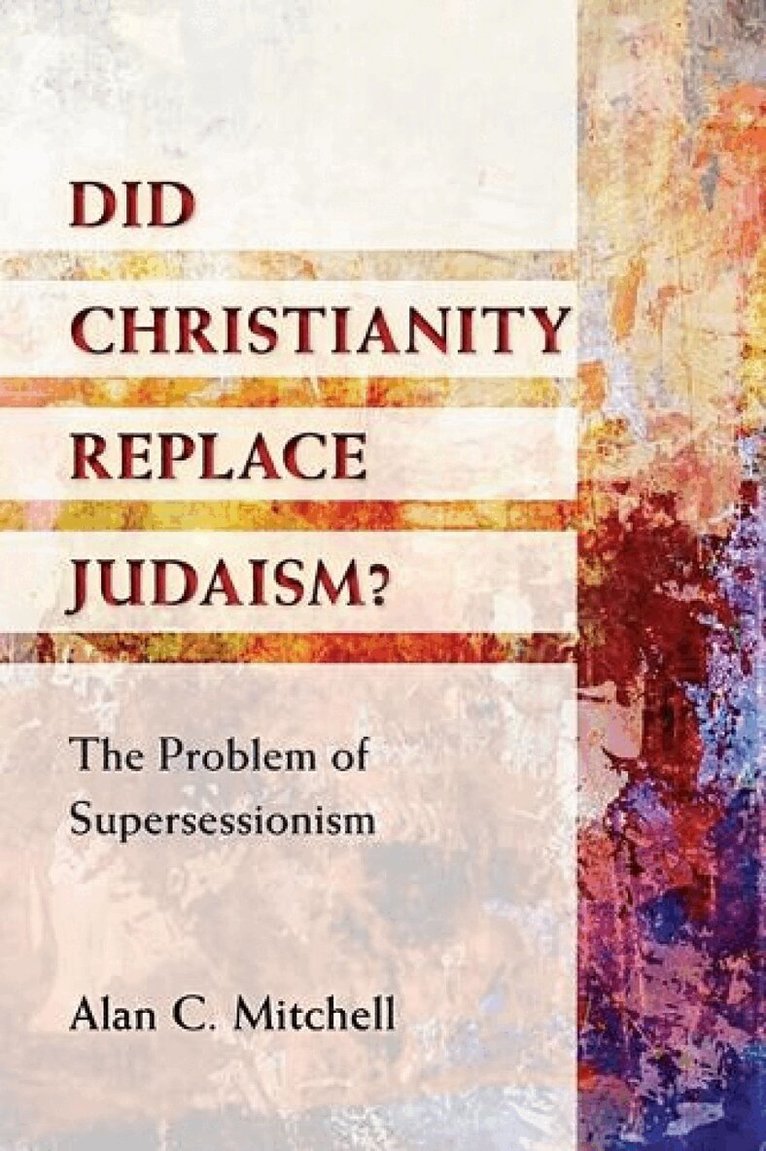
"Alan Mitchell here offers an excellent introduction to the meaning, history, and problems of supersessionism. He expertly explains why the texts of the New Testament do not espouse replacement theology. He also shows how contemporary Catholic teaching both repudiates the idea and invites renewed Jewish-Christian dialogue. Anyone wanting to explore these important issues will benefit from this brief and informative book."—David M. Moffitt, PhD, professor of New Testament and early Christianity, University of St Andrews"In a season when antisemitism is again gaining social acceptance among the cultured elite, Alan Mitchell’s brief but authoritative study of supersessionism—antisemitism’s Christian cousin—offers the sort of antidote that genuine historical analysis can provide. He shows how this theological distortion arose, not within Christianity's founding compositions, but in second-century polemics, and how it continued to flourish for ages on the basis of ignorance and bias, only finding partial rejection in more recent official Catholic pronouncements. This book should be required reading for every Christian, and above all, every pastor and preacher."—Luke Timothy Johnson, Robert W. Woodruff Distinguished Professor of New Testament and Christian Origins, Emeritus, Emory University"At a time when Jewish-Christian relations face multiple challenges, Alan Mitchell offers a wide-ranging and far-reaching critique of the traditional Christian practice of interpreting the Bible against the Jewish people. Based on a careful reading of the New Testament, he challenges the traditional claim that Christianity has displaced the Jewish tradition and offers renewed ways of interpreting scripture to support Jewish-Christian harmony and understanding. This timely contribution will appeal to a wide range of readers."—Leo D. Lefebure, Georgetown University"Impressively informed by both historical and exegetical insight, this study provides a persuasive assessment of what Alan Mitchell regards as the problematic application of supersessionist theology to specific writings of the New Testament. At the same time, Mitchell forthrightly engages with the early and regrettable emergence of supersessionist patterns of thinking beginning in the second century and the attendant rejection of formative Christianity's inseparable bond with its Jewish heritage brought in its wake. This scholarly study provides an excellent and accessible foundation for the continued ecumenical need both to discern the roots of supersessionist thinking in early Christianity and to highlight the tragic ways in which such thinking constitutes a betrayal of Jewish and Christian identity alike."—Kevin B McCruden, PhD, Professor, Religious Studies and Flannery Chair in Christian Theology, Gonzaga University"In this concise and accessible book, Alan Mitchell presents a wealth of texts charting changing Christian perspectives on Judaism from the New Testament to Vatican II and beyond. The book combines coherent narrative, clear exposition, and extensive citation, especially of harder-to-access texts. Invaluable for Roman Catholics—and all Christians and interested others—who seek a better understanding of this most pressing issue."—Nicholas J. Moore, St John's College, Durham University, UKAlan C Mitchell, who holds a PhD from Yale University, is associate professor of New Testament and Christian origins at Georgetown University and director of the Reverend Joseph A. Fitzmyer, SJ, Institute on Sacred Scripture at Georgetown University. He has published numerous articles on various New Testament topics and books such as 1 Corinthians, Luke, Acts of the Apostles, and Hebrews.†
535 kr
Skickas inom 3-6 vardagar
2008 Catholic Press Association Award Winner! Scarcely any book of the New Testament (with the possible exception of Revelation) is so perplexing as the Letter to the Hebrews. Not really a letter, but a sermon with some features of a letter added to it, not really by its putative author,Paul, but by an anonymous Christian who wrote some of the most elegant Greek in the Bible, not really addressed to the Hebrews, but to Christians, probably in Rome 'this is the work that Alan Mitchell explains in this commentary.Many scholars have written fine commentaries on Hebrews, and Mitchell stands on their shoulders, noting where he proposes alternate interpretations. Mitchell pays particular attention to the reliance of the author of Hebrews on the Greek Old Testament (the Septuagint). He also compares the language of Hebrews with similar usage and ideas of first-century Hellenistic Jewish authors, notably Flavius Josephus and Philo of Alexandria. Furthermore, he situates Hebrews against the background of the tradition of Hellenistic Moral Philosophy, where that is appropriate. Mitchell thus locates Hebrews in its proper thought-world, something that is essential for the modern reader in dealing with some of the thornier questions raised by this biblical book. Chief among these are the role of sacrificial atonement, the question of second repentance, and the spiritual and moral formation of the Roman Christians who were its recipients.Like all the volumes in the Sacra Pagina series, this work examines the text in detail, with careful attention to the words and phrasing, and then brings those individual insights together into a coherent summary. The bibliography and special lists appended teach chapter cover the best of recent scholarship on the Letter to the Hebrews.Alan C. Mitchell, PhD, is Associate Professor of New Testament Studies and Christian Origins at Georgetown University and is Director of the Annual Georgetown University Institute on Sacred Scripture. He is a member of the Society of Biblical Literature and Catholic Biblical Association.