Alberto Santa Maria – författare
3 285 kr
Läs direkt efter köp
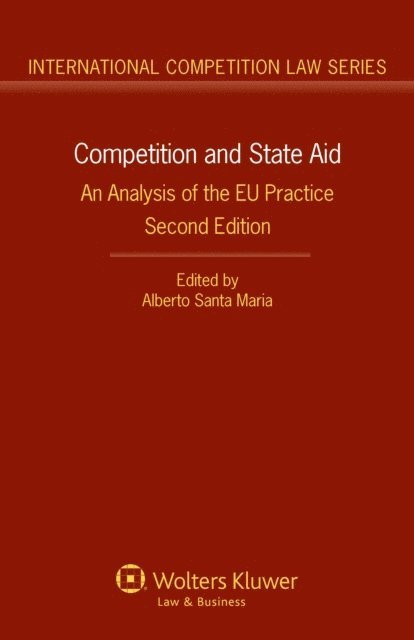
Since the appearance of this masterful book舗s first edition in 2007 it has established itself as the preeminent resource for practitioners who must interpret, on a case-by-case basis, the relation of State aid to EU inter-state competition. This second edition 舒 updated and revised by lawyers of the Santa Maria group, the most prominent law firm handling State aid cases before EU and Member State tribunals 舒 brilliantly captures the current state of this vexed relationship. Detailing numerous additional case profiles from the years since the first edition, the book combines deep familiarity with the relevant features of European Union law and the expertise that the firm has built in its everyday practice.
2 592 kr
Läs direkt efter köp
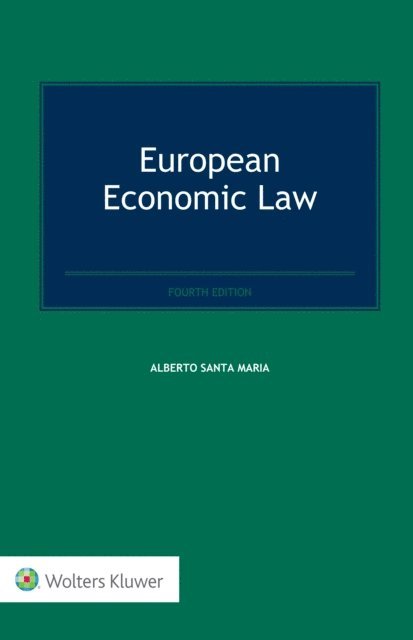
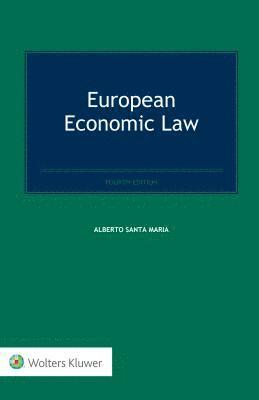
Since the last edition of this pre-eminent work five years ago, the European framework in the international setting has substantially changed. Numerous critical developments have highlighted shortcomings in the European structure that seems incapable, in its present complexity, of resolving the apparently intractable problems it confronts. This book''s highly respected author is uncompromising: either we have the courage to establish profound, constitutional reforms aimed at renewing the European Union in the collective imagination or we risk contenting ourselves with merely an economic community with a far-from-ideal single market where even the four basic freedoms guaranteeing all actors, individuals and enterprises, are put under discussion.
This revision follows the successful format of the previous editions. As before, the author''s intensive discussion brilliantly disentangles the complex interrelations among a vast array of economic factors. As a general update, the new edition takes into account such major developments as the mass immigration phenomenon, effects of Brexit on EU laws and policies, and the OECD''s project on base erosion and profit shifting (BEPS). Ongoing matters covered include the following:
• issues surrounding the euro''s sustainability, especially as revealed in ECJ case law;• lack of power of the ECB and other EU institutions in fixing the euro''s exchange rate;• the potential EU contribution to reform of the IMF''s organization and substantive rules;• ECJ case law on conflicts in the transfer of seat and cross-border mergers;• the role of the European Commission in the regulation of international trade;• limits to the advantages lawfully acquired by multinational enterprises;• transfer pricing in intragroup transactions;• EU supervision of banking groups and international banking cooperation;• corporate social responsibility'' and ''codes of conduct''; and• State aid between competition law and the non-discrimination principle.Emphasizing the complex legal regime affecting undertakings in Europe today, Professor Santa Maria presents a thoroughgoing legal analysis of the prominence of corporate and business enterprises in what many theorists see as the intrinsic ''internationality'' of social activity in the current era.
Previous editions have been applauded for their unremitting emphasis on rules introduced on the basis of multilateral agreements of an unprecedented reach, within which both States and undertakings are made to recognize and to deal with one another. In the new edition, this perspective, daunting in its scope and breadth, is maintained and expanded, providing a synthesizing and enlightening analysis that will be of immeasurable value to all parties with an interest — academic, juridical, or administrative — in this very important area of law.
2 501 kr
Läs direkt efter köp
Since the last edition of this pre-eminent work five years ago, the European framework in the international setting has substantially changed. Numerous critical developments have highlighted shortcomings in the European structure that seems incapable, in its present complexity, of resolving the apparently intractable problems it confronts. This book''s highly respected author is uncompromising: either we have the courage to establish profound, constitutional reforms aimed at renewing the European Union in the collective imagination or we risk contenting ourselves with merely an economic community with a far-from-ideal single market where even the four basic freedoms guaranteeing all actors, individuals and enterprises, are put under discussion.
This revision follows the successful format of the previous editions. As before, the author''s intensive discussion brilliantly disentangles the complex interrelations among a vast array of economic factors. As a general update, the new edition takes into account such major developments as the mass immigration phenomenon, effects of Brexit on EU laws and policies, and the OECD''s project on base erosion and profit shifting (BEPS). Ongoing matters covered include the following:
• issues surrounding the euro''s sustainability, especially as revealed in ECJ case law;• lack of power of the ECB and other EU institutions in fixing the euro''s exchange rate;• the potential EU contribution to reform of the IMF''s organization and substantive rules;• ECJ case law on conflicts in the transfer of seat and cross-border mergers;• the role of the European Commission in the regulation of international trade;• limits to the advantages lawfully acquired by multinational enterprises;• transfer pricing in intragroup transactions;• EU supervision of banking groups and international banking cooperation;• corporate social responsibility'' and ''codes of conduct''; and• State aid between competition law and the non-discrimination principle.Emphasizing the complex legal regime affecting undertakings in Europe today, Professor Santa Maria presents a thoroughgoing legal analysis of the prominence of corporate and business enterprises in what many theorists see as the intrinsic ''internationality'' of social activity in the current era.
Previous editions have been applauded for their unremitting emphasis on rules introduced on the basis of multilateral agreements of an unprecedented reach, within which both States and undertakings are made to recognize and to deal with one another. In the new edition, this perspective, daunting in its scope and breadth, is maintained and expanded, providing a synthesizing and enlightening analysis that will be of immeasurable value to all parties with an interest — academic, juridical, or administrative — in this very important area of law.
2 159 kr
Skickas inom 5-8 vardagar
1 836 kr
Läs direkt efter köp
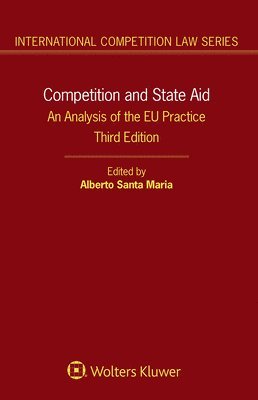
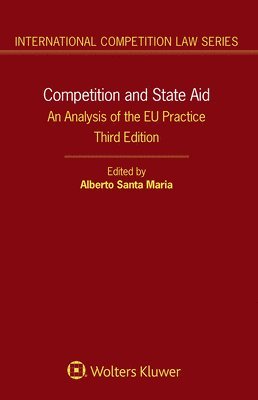
Since its first edition in 2007, this masterful book has established itself as the preeminent resource for practitioners who must interpret, on a case-by-case basis, the relation of State aid to EU inter-state competition. This third edition – updated and integrated by eminent professors, EU law practitioners and lawyers of Greenberg Traurig Santa Maria, a prominent law firm that for years has distinguished itself for handling State aid cases before EU and Member State courts – brilliantly captures the current state of this vexed relationship. Detailing numerous additional case profiles from the years since the first edition, the book combines deep familiarity with the relevant features of EU law and the expertise that the contributors have built in their everyday practice. Among the considerations connected with the ‘State aid phenomenon’ and the cases arising from it, the seventeen expert contributors explore and clarify such issues and topics as the following:
the Commission’s increasing policymaker role;
the importance of focusing on the actual elements that demonstrate the distortion (or the potential distortion) of competition and the existence of real prejudice to trade;
exceptions, General Block Exemption Regulation and the Temporary Frameworks;
State aid procedural rules;
the principles of legitimate expectations, legal certainty, and proportionality as the discriminating elements of recovery orders;
the relevance of internal tax procedures;
rights of defence of undertakings involved in State aid proceedings;
the locus standi of private parties (aid recipients and their competitors) before the EU courts;
cooperation and conflict between the Commission and national courts on State aid matters;
State aid and insolvency proceedings;
National Recovery and Resiliency Plans in the framework of State aid rules;
differences and interplay between State aid rules and the new Foreign Subsidies Regulation;
State aid in the United Kingdom following Brexit; and
State aid rules in specific sectors (e.g., agriculture and fishery, banking and finance, digital transition, environment and energy, sport and transport).
As in the previous editions, the approach throughout is eminently practical, with detailed attention to procedure before the Commission, EU courts, and national courts. Because of the contributors’ specialist know-how in handling a wide variety of relevant situations from many different points of view, the book’s authority can hardly be doubted. It is sure to be of great value to practitioners in all EU Member States, as well as to economists, policymakers, and jurists dealing with European law at all levels.

1 836 kr
Läs direkt efter köp
Since its first edition in 2007, this masterful book has established itself as the preeminent resource for practitioners who must interpret, on a case-by-case basis, the relation of State aid to EU inter-state competition. This third edition – updated and integrated by eminent professors, EU law practitioners and lawyers of Greenberg Traurig Santa Maria, a prominent law firm that for years has distinguished itself for handling State aid cases before EU and Member State courts – brilliantly captures the current state of this vexed relationship. Detailing numerous additional case profiles from the years since the first edition, the book combines deep familiarity with the relevant features of EU law and the expertise that the contributors have built in their everyday practice. Among the considerations connected with the ‘State aid phenomenon’ and the cases arising from it, the seventeen expert contributors explore and clarify such issues and topics as the following:
the Commission’s increasing policymaker role;
the importance of focusing on the actual elements that demonstrate the distortion (or the potential distortion) of competition and the existence of real prejudice to trade;
exceptions, General Block Exemption Regulation and the Temporary Frameworks;
State aid procedural rules;
the principles of legitimate expectations, legal certainty, and proportionality as the discriminating elements of recovery orders;
the relevance of internal tax procedures;
rights of defence of undertakings involved in State aid proceedings;
the locus standi of private parties (aid recipients and their competitors) before the EU courts;
cooperation and conflict between the Commission and national courts on State aid matters;
State aid and insolvency proceedings;
National Recovery and Resiliency Plans in the framework of State aid rules;
differences and interplay between State aid rules and the new Foreign Subsidies Regulation;
State aid in the United Kingdom following Brexit; and
State aid rules in specific sectors (e.g., agriculture and fishery, banking and finance, digital transition, environment and energy, sport and transport).
As in the previous editions, the approach throughout is eminently practical, with detailed attention to procedure before the Commission, EU courts, and national courts. Because of the contributors’ specialist know-how in handling a wide variety of relevant situations from many different points of view, the book’s authority can hardly be doubted. It is sure to be of great value to practitioners in all EU Member States, as well as to economists, policymakers, and jurists dealing with European law at all levels.
3 715 kr
Tillfälligt slut