Alejandra Bronfman - Böcker
Visar alla böcker från författaren Alejandra Bronfman. Handla med fri frakt och snabb leverans.
5 produkter
5 produkter
463 kr
Skickas inom 10-15 vardagar
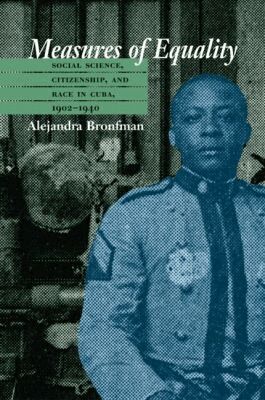
In the years following Cuba's independence, nationalists aimed to transcend racial categories in order to create a unified polity, yet racial and cultural heterogeneity posed continual challenges to these liberal notions of citizenship. Alejandra Bronfman traces the formation of Cuba's multiracial legal and political order in the early Republic by exploring the responses of social scientists, such as Fernando Ortiz and Israel Castellanos, and black and mulatto activists, including Gustavo Urrutia and Nicolas Guillen, to the paradoxes of modern nationhood. Law, science, and the social sciences - which, during this era, enjoyed growing status in Cuba as well as in many other countries - played central roles in producing knowledge and shaping social categories in postindependence Cuba. Anthropologists, criminologists, and eugenicists embarked on projects intended to employ the tools of science to rid Cuba of the last vestiges of a colonial past. Meanwhile, the legal arena created both new freedoms and new modes of repression. Black and mulatto intellectuals and activists, working to ensure that citizenship offered concrete advantages rather than empty promises, appropriated changing social scientific and legal categories and turned them to their own uses. In the midst of several decades of intermittent racial violence and expanding social and political mobilization by Cubans of African descent, debates among intellectuals and activists, state officials, and legislators transformed not only understandings of race, but also the terms of citizenship for all Cubans.
607 kr
Skickas inom 7-10 vardagar
Outside of music, the importance of sound and listening have been greatly overlooked in Latin American history. Visual media has dominated cultural studies, affording an incomplete record of the modern era. This edited volume presents an original analysis of the role of sound in Latin American and Caribbean societies, from the late nineteenth century to the present. The contributors examine the importance of sound in the purveyance of power, gender roles, race, community, religion, and populism. They also demonstrate how sound is essential to the formation of citizenship and nationalism.Sonic media, and radio in particular, have become primary tools for contesting political issues. In that vein, the contributors view the control of radio transmission and those who manipulate its content for political gain. Conversely, they show how, in neoliberal climates, radio programs have exposed corruption and provided a voice for activism.The essays address sonic production in a variety of media: radio; Internet; digital recordings; phonographs; speeches; carnival performances; fireworks festivals, and the reinterpretation of sound in literature. They examine the bodily experience of sound, and its importance to memory coding and identity formation.This volume looks to sonic media as an essential vehicle for transmitting ideologies, imagined communities, and culture. As the contributors discern, modern technology has made sound ubiquitous, and its study is therefore crucial to understanding the flow of information and influence in Latin America and globally.
369 kr
Skickas inom 10-15 vardagar
In this media history of the Caribbean, Alejandra Bronfman traces howtechnology, culture, and politics developed in a region that was “wired” earlierand more widely than many other parts of the Americas. Haiti, Cuba,and Jamaica acquired radio and broadcasting in the early stages of theglobal expansion of telecommunications technologies. Imperial historieshelped forge these material connections through which the United States,Great Britain, and the islands created a virtual laboratory for experiments inaudiopolitics and listening practices.As radio became an established medium worldwide, it burgeoned in theCaribbean because the region was a hub for intense foreign and domesticcommercial and military activities. Attending to everyday life, infrastructure,and sounded histories during the waxing of an American empire andthe waning of British influence in the Caribbean, Bronfman does not allowthe notion of empire to stand solely for domination. By the time of the ColdWar, broadcasting had become a ubiquitous phenomenon that renderedsound and voice central to political mobilisation in the Caribbean nationsthrowing off what remained of their imperial tethers.
1 066 kr
Skickas inom 10-15 vardagar
In this media history of the Caribbean, Alejandra Bronfman traces howtechnology, culture, and politics developed in a region that was “wired” earlierand more widely than many other parts of the Americas. Haiti, Cuba,and Jamaica acquired radio and broadcasting in the early stages of theglobal expansion of telecommunications technologies. Imperial historieshelped forge these material connections through which the United States,Great Britain, and the islands created a virtual laboratory for experiments inaudiopolitics and listening practices.As radio became an established medium worldwide, it burgeoned in theCaribbean because the region was a hub for intense foreign and domesticcommercial and military activities. Attending to everyday life, infrastructure,and sounded histories during the waxing of an American empire andthe waning of British influence in the Caribbean, Bronfman does not allowthe notion of empire to stand solely for domination. By the time of the ColdWar, broadcasting had become a ubiquitous phenomenon that renderedsound and voice central to political mobilisation in the Caribbean nationsthrowing off what remained of their imperial tethers.
502 kr
Skickas inom 10-15 vardagar
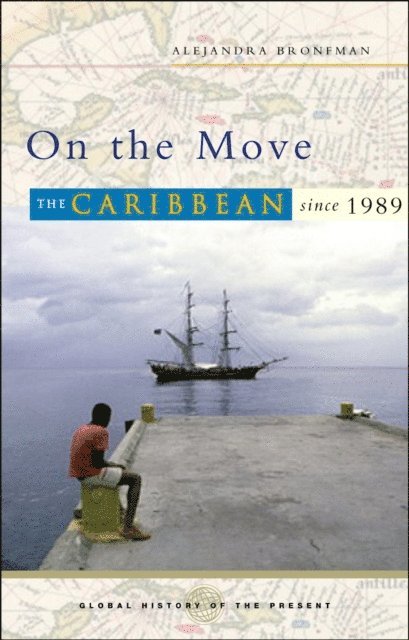
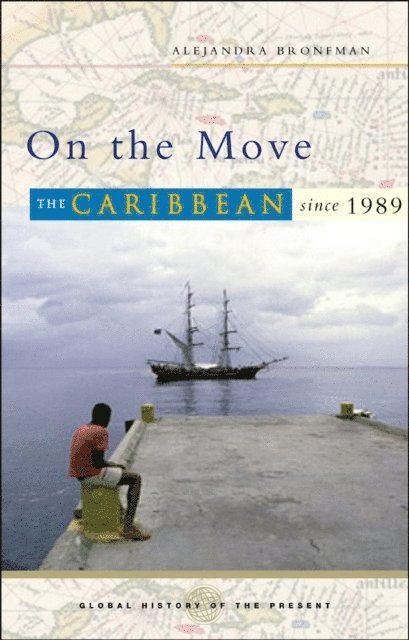
The Caribbean stands out in the popular imagination as a 'place without history', a place which has somehow eluded modernity. Haiti is envisioned as being trapped in an endless cycle of violence and instability, Cuba as a 1950s time warp, Jamaicans as ganja-smoking Rastafarians, while numerous pristine, anonymous islands are simply peaceful idylls. The notion of 'getting away from it all' lures countless visitors, offering the possibility of total disconnect for the world-weary.In On the Move Alejandra Bronfman argues that in fact the opposite is true; the Caribbean is, and has always been, deeply engaged with the wider world. From drugs and tourism to international political struggles, these islands form an integral part of world history and of the present, and are themselves in a constant state of economic and social flux in the face of global transformations.