Aleksandar Uskokov – författare
Visar alla böcker från författaren Aleksandar Uskokov. Handla med fri frakt och snabb leverans.
3 produkter
3 produkter
Inbunden, Engelska, 2027
1 223 kr
Kommande
Deciphering the Hidden Meaning presents a transformative history of one of the most significant ideas in Indian philosophy: liberation. Taking the great philosopher Śaṅkara as the focal point, Aleksandar Uskokov analyzes the relationship between liberation, language, and scripture. While modern portraits of Śaṅkara often cast him as a mystic or a religious reformer, the book paints a more complex portrait of the historical Śaṅkara. As a theologian of liberation, Śaṅkara was a maverick within the prevailing Brahmanical ideology of his time. In an intellectual landscape dominated by Mīmāṁsā ritualists and Vedāntic practitioners of meditation, Śaṅkara introduced a radical claim: that the paraṁ śreyas ("highest good") is attained not through action, ritual, or prolonged meditation, but through the immediate, intellectual understanding of the Upaniṣadic identity statements. Uskokov shows that the birth of the mahā-vākya or "great statement"--such as tat tvam asi ("You are That")--was not the work of Śaṅkara himself, but rather his tenth-century follower Sarvajñātman who used the structural logic of the Mīmāṁsā school. The book meticulously traces the evolution of this soteriological model, exploring how early Advaitins navigated complex debates over language, ritual causality, and the nature of the Self. In doing so, it argues that Śaṅkara's most significant contribution was his intervention against Vedic theologians who viewed scripture as a guide for action and meditation rather than primarily informative.An open access title available under the terms of a CC BY-NC-ND 4.0 licence.
Häftad, Engelska, 2022
248 kr
Skickas
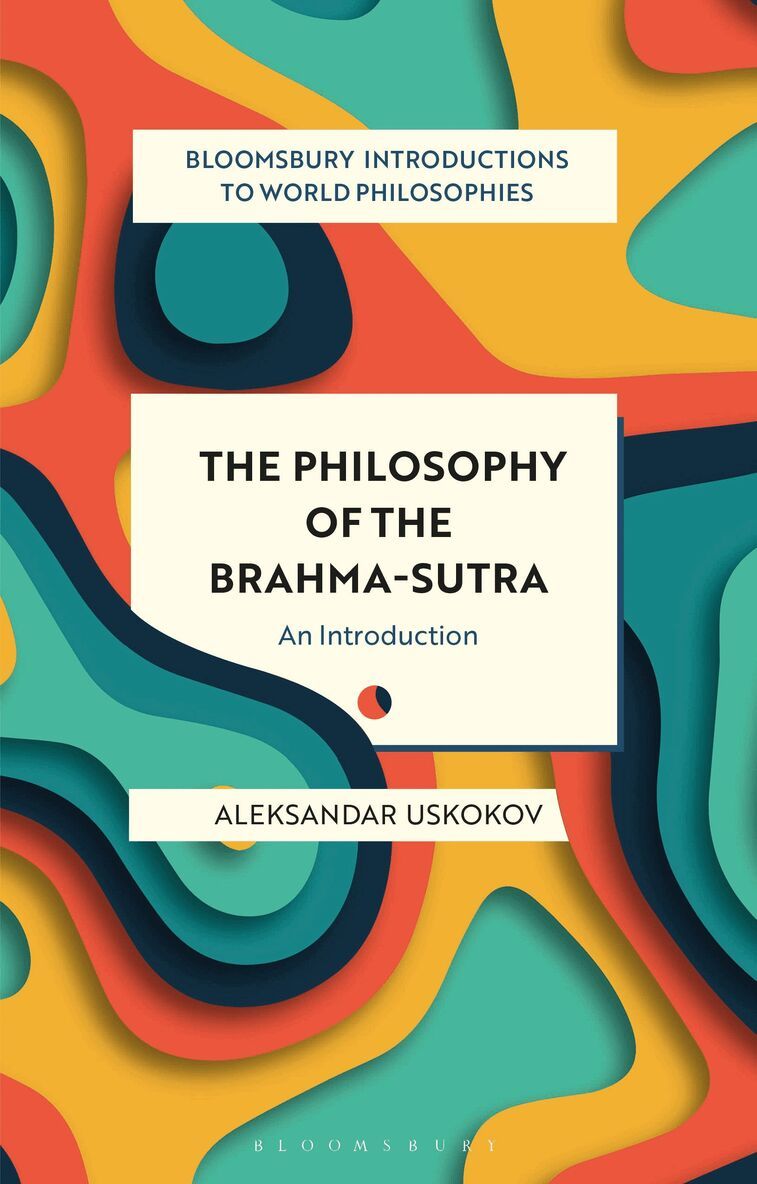
The Brahma-sutra, attributed to Badaraya (ca. 400 CE), is the canonical book of Vedanta, the philosophical tradition which became the doctrinal backbone of modern Hinduism. As an explanation of the Upanishads, it is principally concerned with the ideas of Brahman, the great ground of Being, and of the highest good. The Philosophy of the Brahma-sutra is the first introduction to concentrate on the text and its ideas, rather than its reception and interpretation in the different schools of Vedanta. Covering the epistemology, ontology, theory of causality and psychology of the Brahma-sutra, and its characteristic theodicy, it also:· Provides a comprehensive account of its doctrine of meditation· Elaborates on its nature and attainment, while carefully considering the wider religious context of Ancient India in which the work is situated· Draws the contours of Brahma-sutra’s intellectual biography and reception history. By contextualizing the Brahma-sutra’s teachings against the background of its main collocutors, it elucidates how the work gave rise to widely divergent ontologies and notions of practice. For both the undergraduate student and the specialist this is an illuminating and necessary introduction to one of Indian philosophy’s most important works.
Inbunden, Engelska, 2022
818 kr
Skickas inom 10-15 vardagar
The Brahma-sutra, attributed to Badaraya (ca. 400 CE), is the canonical book of Vedanta, the philosophical tradition which became the doctrinal backbone of modern Hinduism. As an explanation of the Upanishads, it is principally concerned with the ideas of Brahman, the great ground of Being, and of the highest good. The Philosophy of the Brahma-sutra is the first introduction to concentrate on the text and its ideas, rather than its reception and interpretation in the different schools of Vedanta. Covering the epistemology, ontology, theory of causality and psychology of the Brahma-sutra, and its characteristic theodicy, it also:· Provides a comprehensive account of its doctrine of meditation· Elaborates on its nature and attainment, while carefully considering the wider religious context of Ancient India in which the work is situated· Draws the contours of Brahma-sutra’s intellectual biography and reception history. By contextualizing the Brahma-sutra’s teachings against the background of its main collocutors, it elucidates how the work gave rise to widely divergent ontologies and notions of practice. For both the undergraduate student and the specialist this is an illuminating and necessary introduction to one of Indian philosophy’s most important works.