Alessandro Mantelero - Böcker
Visar alla böcker från författaren Alessandro Mantelero. Handla med fri frakt och snabb leverans.
4 produkter
4 produkter
1 294 kr
Kommande
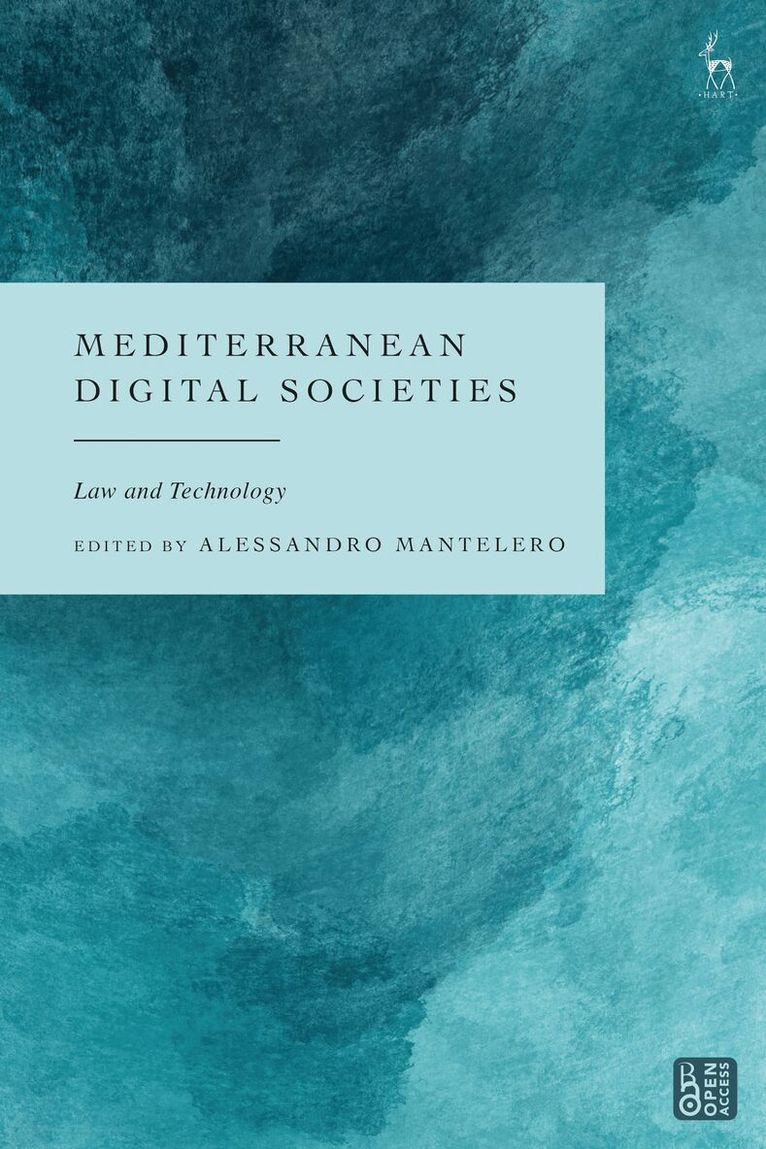
This open access book provides a Mediterranean perspective on digital societies, focusing on core issues such as cultural heritage, tourism, smart city development, migration, humanitarian action management, maritime security, health data sharing, and the Mediterranean data space. The Mediterranean Sea is not just a geographical place; it is a crossroads of cultures, economies, and political trends which are now intertwined with data-driven technologies. Neither a national nor an EU versus non-EU perspective can fully grasp the variety and complexity of the resulting space and legal issues. This book takes a multidisciplinary approach to Mediterranean digital societies by analysing the legal, societal, and technical dimensions of the Mediterranean digital environment, with contributions by scholars and experts in this area. The book is a key resource for scholars who want to better understand these under-explored topics and do so from a Mediterranean, rather than an EU-centric perspective. It also supports policy makers designing their digital strategies — both sectoral and general — in the Mediterranean region, and considering the impact of data-driven technologies on society and their geo-political dimension.The ebook editions of this book are available open access under a CC BY-NC-ND 4.0 licence on bloomsburycollections.com.

2 612 kr
Kommande
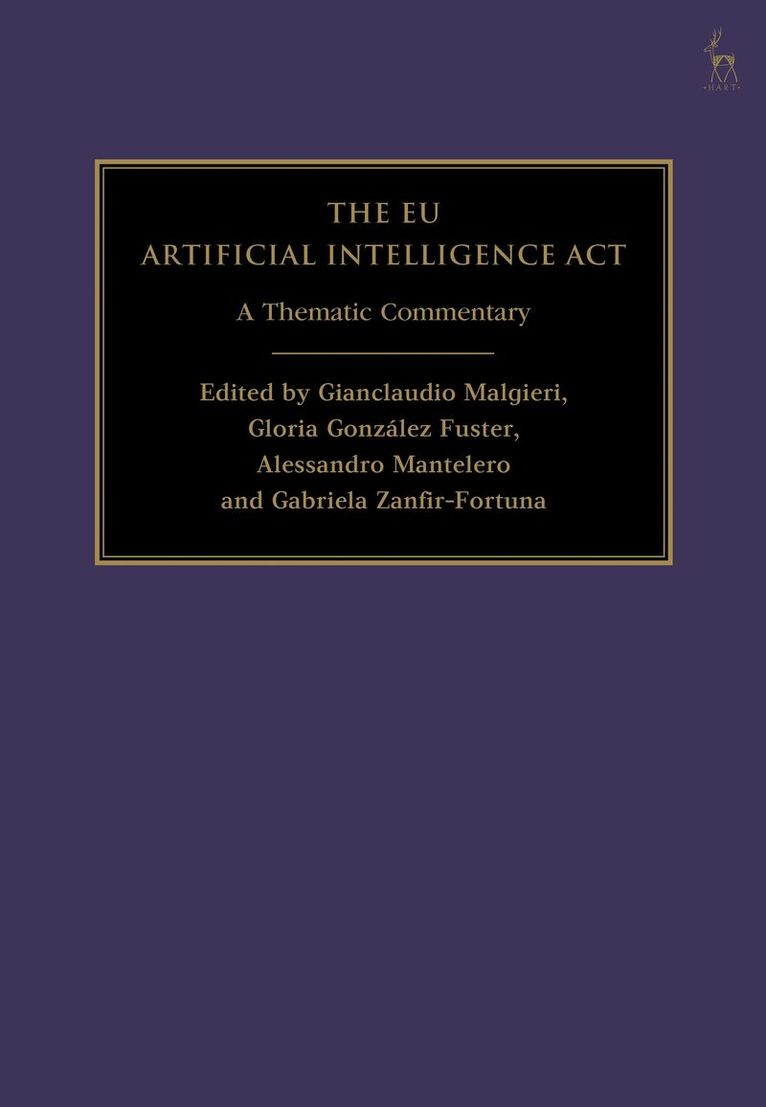
This thematic commentary analyses the core provisions and overarching themes of the EU Artificial Intelligence Act to provide readers with the information needed to understand, situate and implement this new piece of legislation in their practice.The book offers a rich variety of views on one of the most challenging legal innovations of EU law. It analyses individual provisions exhaustively, where their relevance and complexity require specific analysis to guide their implementation, and thematically, where beneficial for a broader view of some of the strategic axes of the Act. Importantly, the chapters unpack connections both within the various components of the EU AI Act itself, as well as with other key instruments such as the Digital Services Act (DSA), the Digital Markets Act (DMA) and the General Data Protection Regulation (GDPR).The Thematic Commentary thus provides in-depth coverage of key aspects of the EU AI Act, including detailed reviews of rules on prohibited practices, high-risk AI systems, governance structures, measures to support innovation such as regulatory sandboxes, or codes of conduct.A companion website (bloomsbury.pub/eu-artificial-intelligence-act) provides updates and supplementary resources, including essential policy developments (such as the EU Digital Omnibus AI and related implementing measures), to help readers keep the Commentary aligned with the evolving EU AI governance framework. Written by a curated selection of authors that include renowned academics, global practitioners, and institutional experts involved in the drafting process, this Commentary is a key authoritative source bringing together many different voices. Whether for legal practitioners seeking insights into the practical implementation of the EU AI Act, scholars, regulators and policymakers who need to understand the theoretical and policy implications of the Act, or students looking for an advanced analysis of the EU AI Act in context, this Thematic Commentary is the guiding reference on AI regulation in the EU.
493 kr
Skickas inom 10-15 vardagar
This open access book focuses on the impact of Artificial Intelligence (AI) on individuals and society from a legal perspective, providing a comprehensive risk-based methodological framework to address it. Building on the limitations of data protection in dealing with the challenges of AI, the author proposes an integrated approach to risk assessment that focuses on human rights and encompasses contextual social and ethical values.The core of the analysis concerns the assessment methodology and the role of experts in steering the design of AI products and services by business and public bodies in the direction of human rights and societal values.Taking into account the ongoing debate on AI regulation, the proposed assessment model also bridges the gap between risk-based provisions and their real-world implementation.The central focus of the book on human rights and societal values in AI and the proposed solutions will make it of interestto legal scholars, AI developers and providers, policy makers and regulators.Alessandro Mantelero is Associate Professor of Private Law and Law & Technology in the Department of Management and Production Engineering at the Politecnico di Torino in Turin, Italy.
Del 36 - Information Technology and Law Series
Beyond Data
Human Rights, Ethical and Social Impact Assessment in AI
Häftad, Engelska, 2022
396 kr
Skickas inom 10-15 vardagar
This open access book focuses on the impact of Artificial Intelligence (AI) on individuals and society from a legal perspective, providing a comprehensive risk-based methodological framework to address it. Building on the limitations of data protection in dealing with the challenges of AI, the author proposes an integrated approach to risk assessment that focuses on human rights and encompasses contextual social and ethical values.The core of the analysis concerns the assessment methodology and the role of experts in steering the design of AI products and services by business and public bodies in the direction of human rights and societal values.Taking into account the ongoing debate on AI regulation, the proposed assessment model also bridges the gap between risk-based provisions and their real-world implementation.The central focus of the book on human rights and societal values in AI and the proposed solutions will make it of interestto legal scholars, AI developers and providers, policy makers and regulators.Alessandro Mantelero is Associate Professor of Private Law and Law & Technology in the Department of Management and Production Engineering at the Politecnico di Torino in Turin, Italy.