Alex Bayliss – författare
Visar alla böcker från författaren Alex Bayliss. Handla med fri frakt och snabb leverans.
11 produkter
11 produkter
Häftad, Engelska, 2019
691 kr
Skickas inom 10-15 vardagar
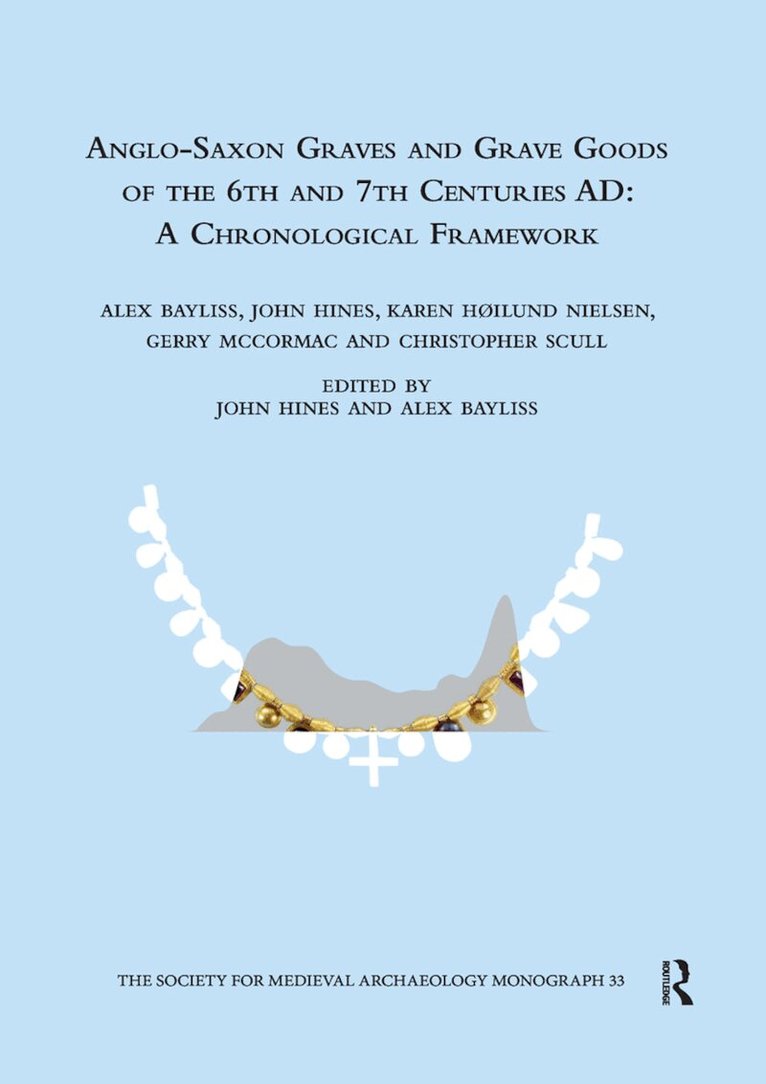
The Early Anglo-Saxon Period is characterized archaeologically by the regular deposition of artefacts in human graves in England. The scope for dating these objects and graves has long been studied, but it has typically proved easier to identify and enumerate the chronological problems of the material than to solve them. Studying the evidence anew using a co-ordinated suite of dating techniques, both traditional and new, Anglo-Saxon Graves and Grave Goods of the 6th and 7th Centuries AD seeks to address many of these issues.
E-bok
Engelska, 2017802 kr
Läs direkt efter köp
The Early Anglo-Saxon Period is characterized archaeologically by the regular deposition of artefacts in human graves in England. The scope for dating these objects and graves has long been studied, but it has typically proved easier to identify and enumerate the chronological problems of the material than to solve them. Prior to the work of the project reported on here, therefore, there was no comprehensive chronological framework for Early Anglo-Saxon Archaeology, and the level of detail and precision in dates that could be suggested was low. The evidence has now been studied afresh using a co-ordinated suite of dating techniques, both traditional and new: a review and revision of artefact-typology; seriation of grave-assemblages using correspondence analysis; high-precision radiocarbon dating of selected bone samples; and Bayesian modelling using the results of all of these. These were focussed primarily on the later part of the Early Anglo-Saxon Period, starting in the 6th century. This research has produced a new chronological framework, consisting of sequences of phases that are separate for male and female burials but nevertheless mutually consistent and coordinated. These will allow archaeologists to assign grave-assemblages and a wide range of individual artefact-types to defined phases that are associated with calendrical date-ranges whose limits are expressed to a specific degree of probability. Important unresolved issues include a precise adjustment for dietary effects on radiocarbon dates from human skeletal material. Nonetheless the results of this project suggest the cessation of regular burial with grave goods in Anglo-Saxon England two decades or even more before the end of the seventh century. That creates a limited but important discrepancy with the current numismatic chronology of early English sceattas. The wider implications of the results for key topics in Anglo-Saxon archaeology and social, economic and religious history are discussed to conclude the report.
E-bok
PDF, Engelska, 2017802 kr
Läs direkt efter köp
The Early Anglo-Saxon Period is characterized archaeologically by the regular deposition of artefacts in human graves in England. The scope for dating these objects and graves has long been studied, but it has typically proved easier to identify and enumerate the chronological problems of the material than to solve them. Prior to the work of the project reported on here, therefore, there was no comprehensive chronological framework for Early Anglo-Saxon Archaeology, and the level of detail and precision in dates that could be suggested was low. The evidence has now been studied afresh using a co-ordinated suite of dating techniques, both traditional and new: a review and revision of artefact-typology; seriation of grave-assemblages using correspondence analysis; high-precision radiocarbon dating of selected bone samples; and Bayesian modelling using the results of all of these. These were focussed primarily on the later part of the Early Anglo-Saxon Period, starting in the 6th century. This research has produced a new chronological framework, consisting of sequences of phases that are separate for male and female burials but nevertheless mutually consistent and coordinated. These will allow archaeologists to assign grave-assemblages and a wide range of individual artefact-types to defined phases that are associated with calendrical date-ranges whose limits are expressed to a specific degree of probability. Important unresolved issues include a precise adjustment for dietary effects on radiocarbon dates from human skeletal material. Nonetheless the results of this project suggest the cessation of regular burial with grave goods in Anglo-Saxon England two decades or even more before the end of the seventh century. That creates a limited but important discrepancy with the current numismatic chronology of early English sceattas. The wider implications of the results for key topics in Anglo-Saxon archaeology and social, economic and religious history are discussed to conclude the report.
Häftad, Engelska, 2022
305 kr
Skickas inom 5-8 vardagar
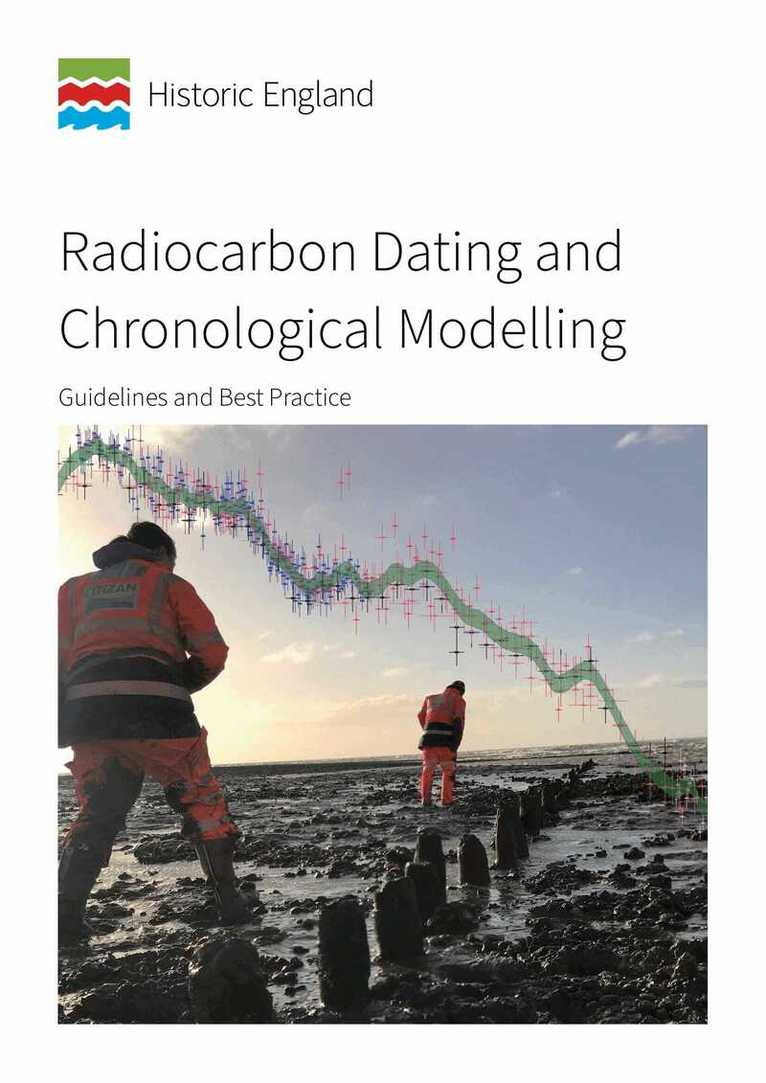
Part of the Historic England series of Advice and Guidance on using scientific techniques for understanding the Historic Environment, this document provides guidelines for good practice in the use of radiocarbon dating and chronological modelling in archaeology. It gives practical advice on the application of these methods within archaeological projects. It should be used in conjunction with advice given by radiocarbon laboratories and modelling specialists on specific projects. It contains an introduction to the fundamental principles of radiocarbon dating, methods of measurement, and the results produced by laboratories. It then explains radiocarbon calibration, reservoir effects, and provides guidance on the citation of radiocarbon dates. The need for Bayesian Chronological Modelling in the interpretation of radiocarbon dates is then explained, with the components of models identified and methods of model calculation, validation and comparison outlined.A step-by-step guide is then provided to the Bayesian process for employing radiocarbon dating and chronological modelling in archaeology and guidance is then provided in the reporting and citation of radiocarbon dates and Bayesian chronological models. Finally, a range of case studies of varying complexity illustrate the Bayesian process in practice on different kinds of site, from standing buildings, to prehistoric settlements, to geoarchaeological investigations.
Häftad, Engelska, 2023
826 kr
Skickas inom 5-8 vardagar
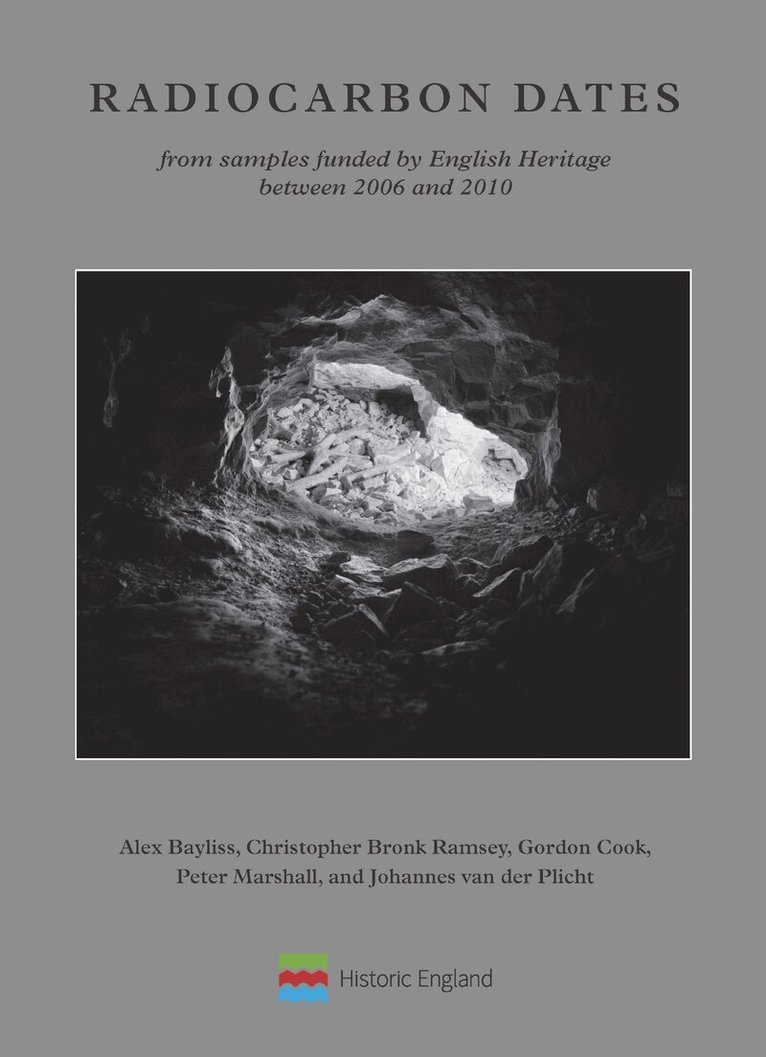
This volume holds a datelist of 1202 radiocarbon measurements carried out between 2006 and 2010 on behalf of the Research Department of English Heritage (including 125 undertaken in support of research funded by the Aggregates Levy Sustainability Fund (ALSF) between April 2007 and March 2010). It contains supporting information about the samples and the sites producing them, a comprehensive bibliography, and two indexes for reference and analysis. An introduction provides discussion of the character and taphonomy of the dated samples and information about the methods used for the analyses reported and their calibration. The datelist has been collated from information provided by the submitters of the samples and the dating laboratories. Many of the sites and projects from which dates have been obtained are now published, although further chronological modelling and synthesis may be undertaken on the basis of these data. The purpose of this volume is to provide easy access to the raw scientific and contextual data which may be used in further research.
Gathering Time
Dating the Early Neolithic Enclosures of Southern Britain and Ireland, Volumes 1 and 2
E-bok
PDF, 2011402 kr
Läs direkt efter köp
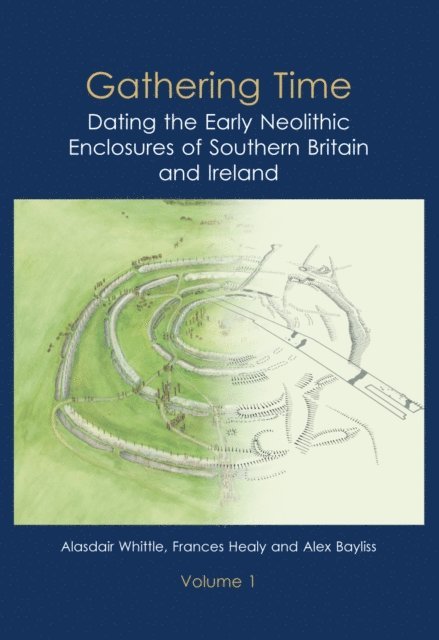
Gathering Time presents the results of a major dating programme that re-writes the early Neolithic of Britain by more accurately dating enclosures, a phenomenon that first appeared in the early Neolithic: places of construction, labour, assembly, ritual and deposition. The project has combined hundreds of new radiocarbon dates with hundreds of existing dates, using a Bayesian statistical framework. Such formal chronological modelling is essential if significantly more precise and robust date estimates are to be achieved than those currently available from informal inspection of calibrated radiocarbon dates. The resulting dating project included over 35 enclosures - the largest study so far attempted in a Bayesian framework. This establishes a new chronology for causewayed and related enclosures in southern Britain, which appeared in the final decades of the 38th century cal BC, increased in number dramatically in the 37th century cal BC, and began no longer to be built by the end of the 36th century cal BC. Several enclosures were of short duration - in some cases probably in use for less than a generation - though some examples do conform to the conventional assumption of a long primary use-life. In Ireland, enclosures of this kind are much scarcer. The project helped to date two of these: Donegore, Co. Antrim and Magheraboy, Co. Sligo. As well as establishing a new chronology for enclosures, Gathering Time also places these results into their wider context, by considering the chronology of the early Neolithic as a whole. Well over a thousand other radiocarbon dates have been critically assessed and modelled in a Bayesian framework - for settlement, monument building and other activity, region by region across southern Britain and across Ireland as a whole (a brief comparative study of Scotland as far north as the Great Glen is also included). Generally in southern Britain other Neolithic activity can be dated before the beginnings of monument building and, among the monuments, long barrows, long cairns, and related forms clearly preceded the earliest causewayed enclosures. The first Neolithic things and practices probably appeared in south-east England in the 41st century cal BC, arguably by some kind of small-scale colonisation from the adjacent continent, and spread at a variable pace across the rest of Britain and Ireland over the next two and a half centuries or more, a process involving acculturation of local people as well as immigrants. Enclosures may have been adapted as a social strategy of harnessing the power of the distant and the exotic, and perhaps old ancestral ties to the European continent, in a dynamic and rapidly changing social milieu. Close attention is given to themes of deposition, material culture and different kinds of social interaction, from networks of exchange to episodes of violence. A high tempo of change continued, as very different constructions came to be built from the 36th century cal BC onwards: the linear and more arcane cursus monuments. The study of Irish Neolithic chronology reveals significant patterning, including a short currency for rectangular timber houses in the 37th century cal BC, but also highlights the challenge of establishing more reliable chronologies, for monuments in particular. Alternative scenarios for the date and nature of the beginning of the Neolithic in Ireland are modelled. Gathering Time ends with reflections on the nature and pace of change in prehistory. If generational timescales are now within our grasp routinely, more subtle and individualised kinds of (pre)history can and must be written, and the conventional frame of the long-term must shift from being familiar and comfortable to problematic.
Häftad, Engelska, 2012
484 kr
Skickas inom 5-8 vardagar
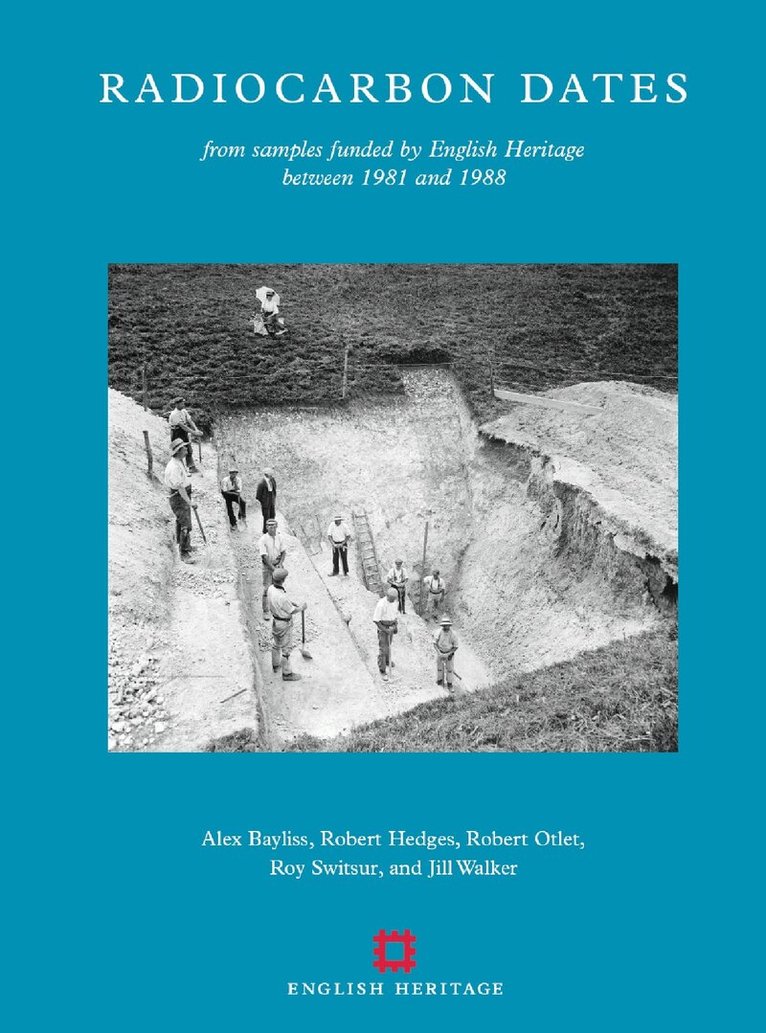
This volume holds a datelist of 1285 radiocarbon determinations carried out between 1981 and 1988 on behalf of the Ancient Monuments Laboratory of English Heritage. It contains supporting information about the samples and the sites producing them, a comprehensive bibliography, and two indexes for reference and analysis. An introduction provides discussion of the character and taphonomy of the dated samples and information about the methods used for the analyses reported and their calibration.The datelist has been collated from information provided by the submitters of the samples and the dating laboratories. Many of the sites and projects from which dates have been obtained are published, although, when many of these measurements were produced, high-precision calibration was not possible. At this time, there was also only a limited range of statistical techniques available for the analysis of radiocarbon dates. Methodological developments since these measurements were made may allow revised archaeological interpretations to be constructed on the basis of these dates, and so the purpose of this volume is to provide easy access to the raw scientific and contextual data which may be used in further research.
Häftad, Engelska, 2013
484 kr
Skickas inom 5-8 vardagar
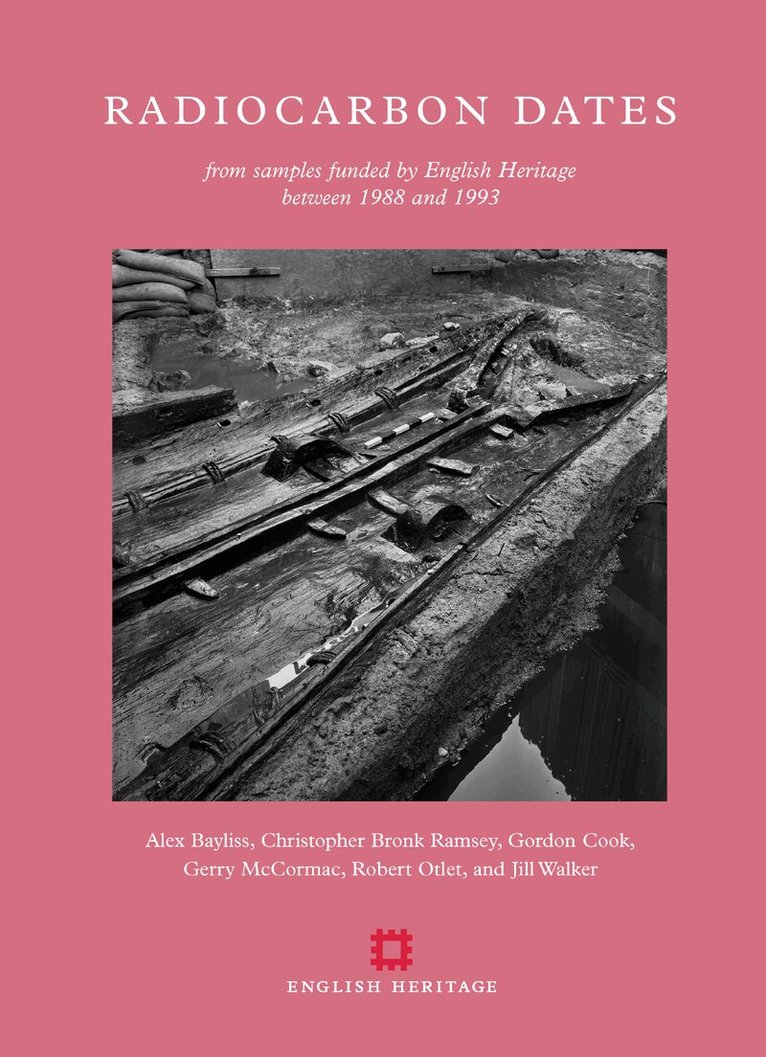
This volume holds a datelist of 882 radiocarbon determinations carried out between 1988 and 1993 on behalf of the Ancient Monuments Laboratory of English Heritage. It contains supporting information about the samples and the sites producing them, a comprehensive bibliography, and two indexes for reference and analysis. An introduction provides discussion of the character and taphonomy of the dated samples and information about the methods used for the analyses reported and their calibration.The datelist has been collated from information provided by the submitters of the samples and the dating laboratories. Many of the sites and projects from which dates have been obtained are published, although, when some of these measurements were produced, high-precision calibration was not possible for much of the radiocarbon timescale. At this time, there was also only a limited range of statistical techniques available for the analysis of radiocarbon dates. Methodological developments since these measurements were made may allow revised archaeological interpretations to be constructed on the basis of these dates, and so the purpose of this volume is to provide easy access to the raw scientific and contextual data which may be used in further research.
Häftad, Engelska, 2024
826 kr
Skickas inom 5-8 vardagar
This volume holds a datelist of 1100 radiocarbon determinations carried out between 2003 and 2006 on behalf of the Centre for Archaeology of English Heritage. It contains supporting information about the samples and the sites producing them, a comprehensive bibliography, and two indexes for reference and analysis. An introduction provides discussion of the character and taphonomy of the dated samples and information about the methods used for the analyses reported and their calibration. The datelist has been collated from information provided by the submitters of the samples and the dating laboratories. Many of the sites and projects from which dates have been obtained are now published, although developments in statistical methodologies for the interpretation of radiocarbon dates since these measurements were made may allow revised chronological models to be constructed on the basis of these dates. The purpose of this volume is to provide easy access to the raw scientific and contextual data which may be used in further research.
Häftad, Engelska, 2007
510 kr
Skickas inom 11-20 vardagar
This volume holds a datelist of 476 radiocarbon determinations carried out between 2002 and 2004 in support of research funded by English Heritage through the Aggregates Levy Sustainability Fund. It contains supporting information about the samples and the sites producing them, a comprehensive bibliography, and two indexes for reference and analysis. An introduction provides information about the scientific dating undertaken, and methods used for the analyses reported. Details of technical reports available for programmes of luminescence dating and amino-acid racemization funded under this scheme are also provided.The datelist has been collated from information provided by the submitters of samples and the dating laboratories, in order to provide easy access to raw scientific and contextual data which may be used in further research. Many of the sites and projects from which dates have been obtained are published, or are in the process of publication. Full references are given to these reports for those requiring further detail.
Inbunden, Engelska, 2013
2 215 kr
Skickas inom 10-15 vardagar
The Early Anglo-Saxon Period is characterized archaeologically by the regular deposition of artefacts in human graves in England. The scope for dating these objects and graves has long been studied, but it has typically proved easier to identify and enumerate the chronological problems of the material than to solve them. Studying the evidence anew using a co-ordinated suite of dating techniques, both traditional and new, Anglo-Saxon Graves and Grave Goods of the 6th and 7th Centuries AD seeks to address many of these issues.