Alex M. Nading - Böcker
Visar alla böcker från författaren Alex M. Nading. Handla med fri frakt och snabb leverans.
4 produkter
4 produkter
1 513 kr
Skickas inom 3-6 vardagar
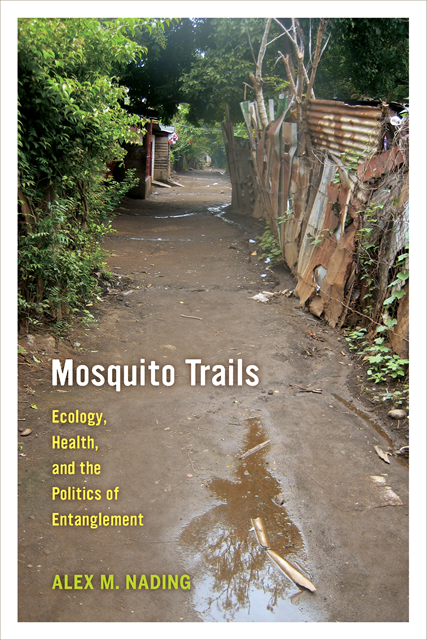
Dengue fever is the world's most prevalent mosquito-borne illness, but Alex Nading argues that people in dengue-endemic communities do not always view humans and mosquitoes as mortal enemies. Drawing on two years of ethnographic research in urban Nicaragua and challenging current global health approaches to animal-borne illness, Mosquito Trails tells the story of a group of community health workers who struggle to come to terms with dengue epidemics amid poverty, political change, and economic upheaval. Blending theory from medical anthropology, political ecology, and science and technology studies, Nading develops the concept of "the politics of entanglement" to describe how Nicaraguans strive to remain alive to the world around them despite global health strategies that seek to insulate them from their environments. This innovative ethnography illustrates the continued significance of local environmental histories, politics, and household dynamics to the making and unmaking of a global pandemic.
250 kr
Skickas inom 7-10 vardagar
Dengue fever is the world's most prevalent mosquito-borne illness, but Alex Nading argues that people in dengue-endemic communities do not always view humans and mosquitoes as mortal enemies. Drawing on two years of ethnographic research in urban Nicaragua and challenging current global health approaches to animal-borne illness, Mosquito Trails tells the story of a group of community health workers who struggle to come to terms with dengue epidemics amid poverty, political change, and economic upheaval. Blending theory from medical anthropology, political ecology, and science and technology studies, Nading develops the concept of "the politics of entanglement" to describe how Nicaraguans strive to remain alive to the world around them despite global health strategies that seek to insulate them from their environments. This innovative ethnography illustrates the continued significance of local environmental histories, politics, and household dynamics to the making and unmaking of a global pandemic.
1 083 kr
Skickas inom 7-10 vardagar
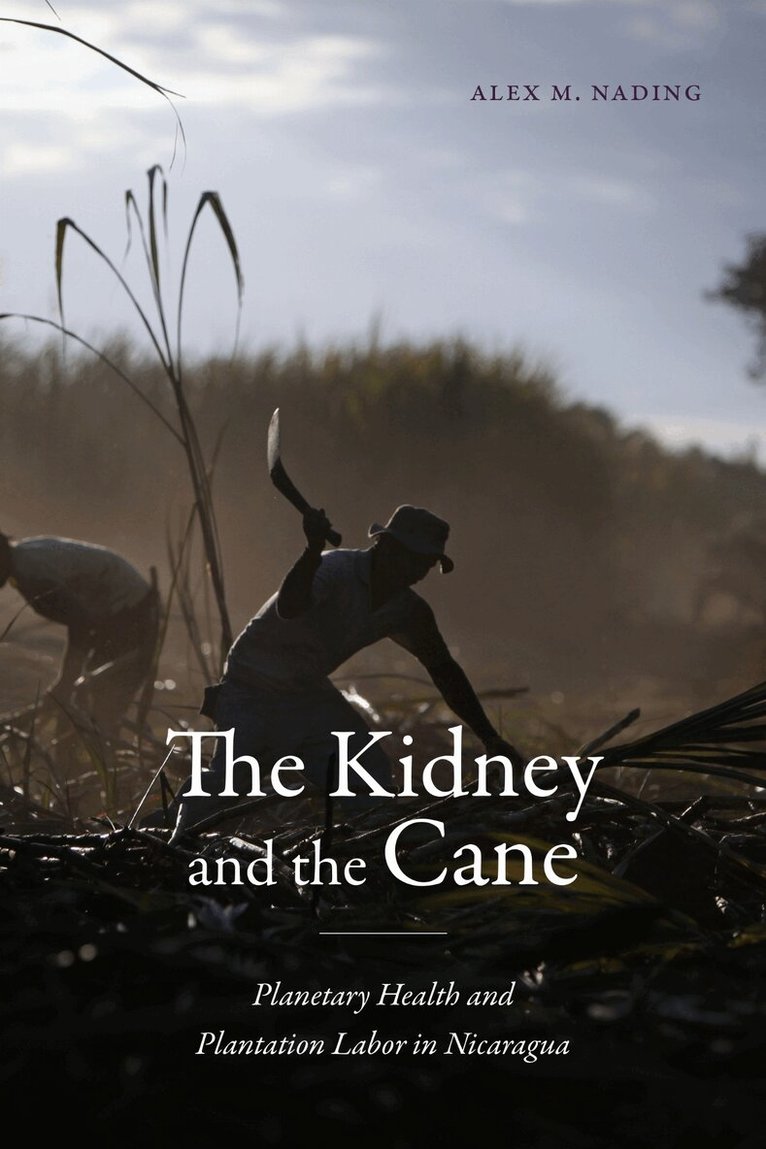
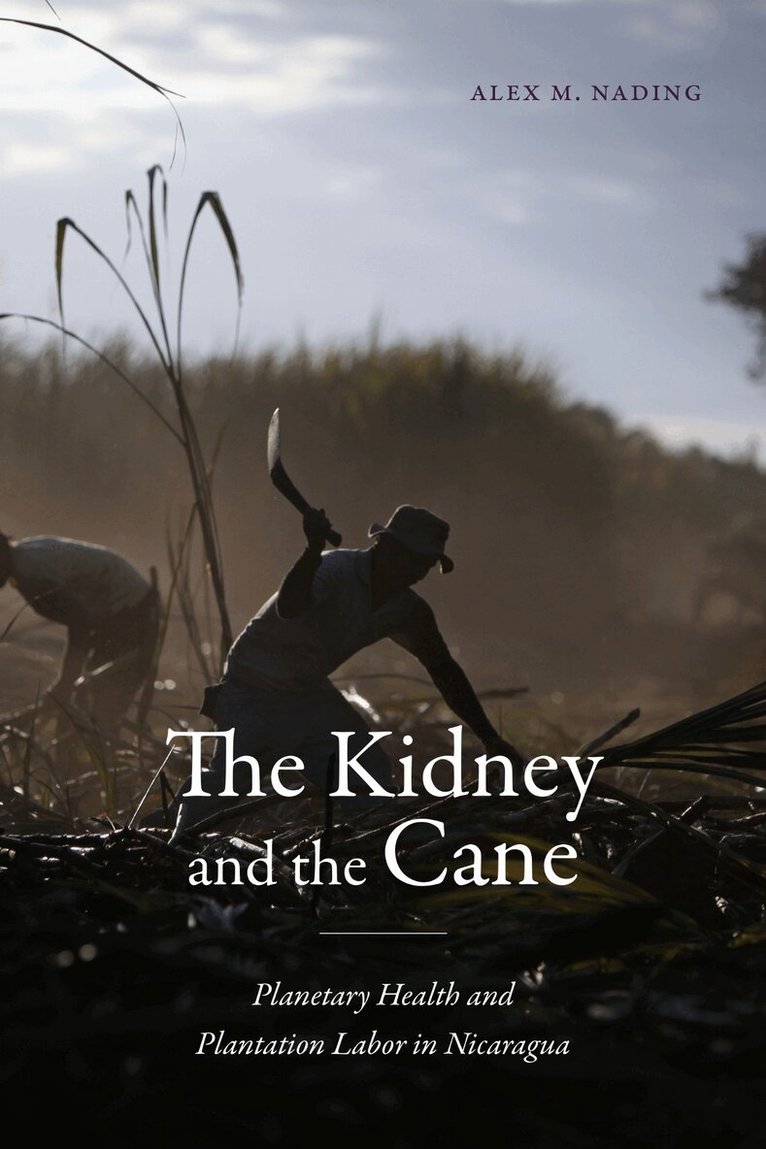
The recent unprecedented growth of Nicaragua’s sugarcane industry has brought promises of more jobs, better health care, and cleaner energy. But these promises have been overshadowed by an epidemic of chronic kidney disease of nontraditional causes (CKDnt). Unknown before the late 1990s, this disease has sickened and killed thousands of sugarcane plantation workers. Scientific studies link the disease to rises in mean average annual temperatures, chronic water scarcity, and the overuse of toxic agrochemicals. CKDnt is now understood as a consequence of global climate change. In The Kidney and the Cane, Alex M. Nading situates this epidemic within a deeper history of sugarcane plantation violence, arguing that CKDnt is not a result of climate change: it is climate change. Outlining a place-based approach to planetary health, Nading follows activists, scientists, and residents in the sugarcane zone wrestling with the consequences of plantation life. Along the way, he raises critical questions about the capacity of corporations and states to care for people and ecosystems; the ability of citizens and experts to regulate toxic substances; and the future of work on a warming planet.
269 kr
Skickas inom 7-10 vardagar
The recent unprecedented growth of Nicaragua’s sugarcane industry has brought promises of more jobs, better health care, and cleaner energy. But these promises have been overshadowed by an epidemic of chronic kidney disease of nontraditional causes (CKDnt). Unknown before the late 1990s, this disease has sickened and killed thousands of sugarcane plantation workers. Scientific studies link the disease to rises in mean average annual temperatures, chronic water scarcity, and the overuse of toxic agrochemicals. CKDnt is now understood as a consequence of global climate change. In The Kidney and the Cane, Alex M. Nading situates this epidemic within a deeper history of sugarcane plantation violence, arguing that CKDnt is not a result of climate change: it is climate change. Outlining a place-based approach to planetary health, Nading follows activists, scientists, and residents in the sugarcane zone wrestling with the consequences of plantation life. Along the way, he raises critical questions about the capacity of corporations and states to care for people and ecosystems; the ability of citizens and experts to regulate toxic substances; and the future of work on a warming planet.