Alex Revell – författare
Visar alla böcker från författaren Alex Revell. Handla med fri frakt och snabb leverans.
3 produkter
3 produkter
127 kr
Läs direkt efter köp
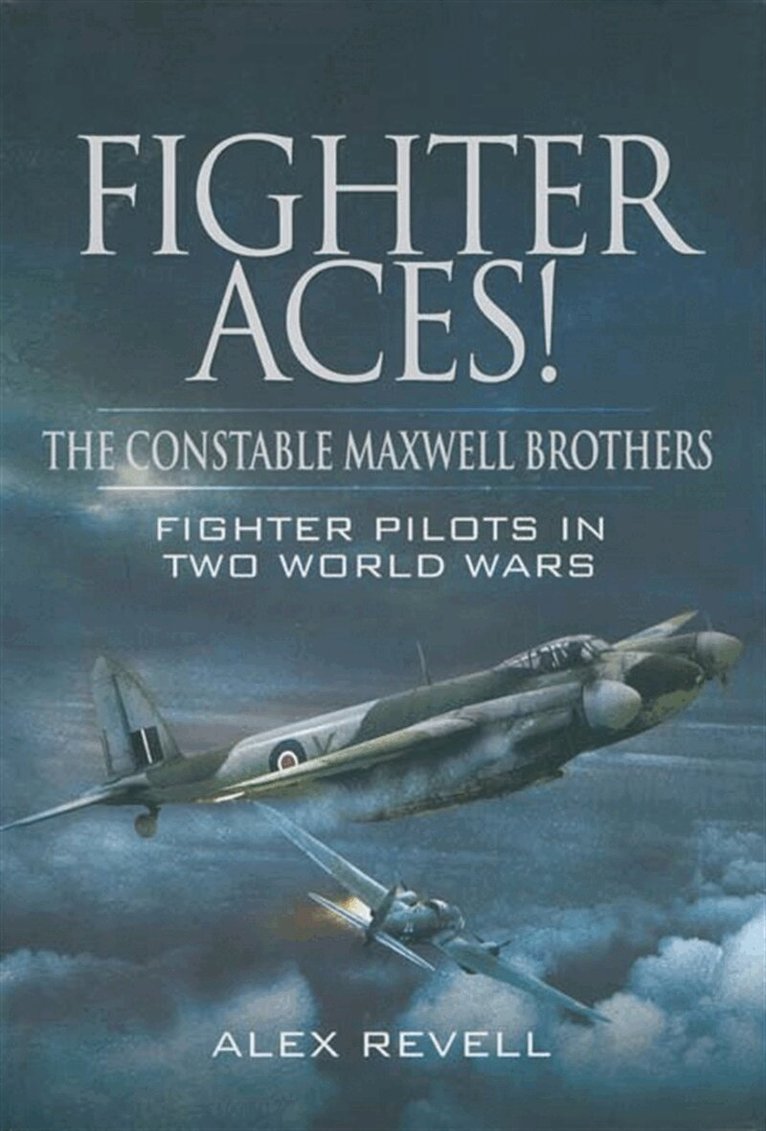
When Gerald Constable Maxwell was flying as a fighter pilot in World War I, his brother Michael was born. Both went on to have distinguished flying careers in World War II. This is the story of both men and how their paths crossed during the second conflict.Gerald served with distinction with 56 Squadron, one of the crack fighter units of WWI in France. Upon his return to England he became Chief Flying Instructor of No. 1 Fighter and Gunnery School at Turnberry. In World War II he served as Station Commander at RAF Ford, a night Fighter station near Arundel, one of the most efficient and happy stations in 11 Group.Michael followed in his brother’s footsteps and joined 56 Squadron in April 1940 to fly the Hawker Hurricane. During May the squadron was moved to France to assist the fast retreating British and French forces as the Germans rapidly advanced. On 27 May, he was shot down whilst attacking ten Heinkel 111s on their way to bomb Dunkirk. Fortunately his first contacts upon landing by parachute were French and he managed to find his way to Ostend where he boarded a trawler and crossed the Channel back to Deal.56 Squadron had by now returned to their English base at North Weald from where they were flying patrols over the French coast and escorting RAF bombers raiding the German positions. On 8 June, whilst trying to reach returning Blenheims over Le Treport, the Hurricanes were bounced by Bf 109s and again Michael was hit, wounding him in the leg and foot, fortunately he eventually managed a crash landing back at North Weald. During the height of the Battle of Britain Michael was again forced to make a crash landing near Herne Bay which he was lucky to survive as his Hurricane had disintegrated around him.In the autumn of 1941 Michael was posted to 604 Nightfighter Squadron, led by the legendary ‘Cat’s Eyes’ Cunningham flying Beaufighters and eventually Mosquitos. He was eventually to Command the squadron whose tally of enemy aircraft shot down when he left it had reached 100. This remarkable story includes first-hand combat accounts from both Michael and Gerald and the author has had access to the Constable Maxwell’s family records.
E-bok
Engelska, 2021120 kr
Läs direkt efter köp
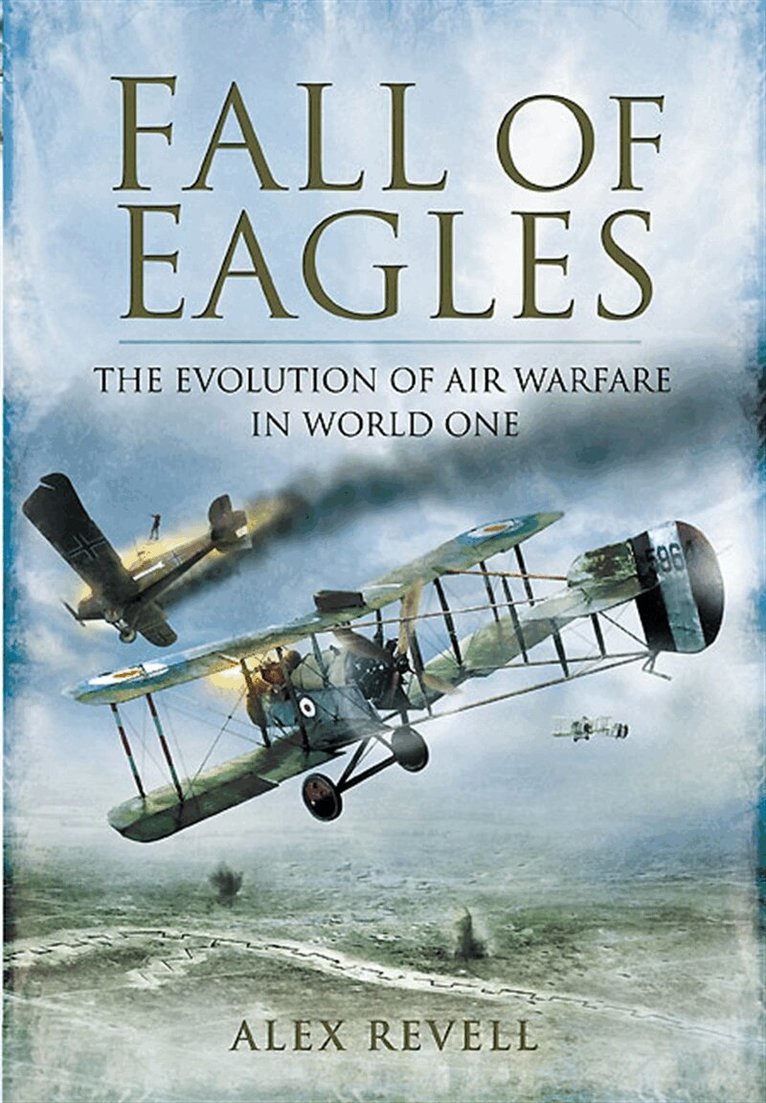
The Great War of 1914-1918 saw the rapid development of the airplane as a weapon of war. Initially its role was seen as that of reconnaissance, an extension of the cavalry, but as the war stagnated into static trench warfare, with each side facing each other across No Man’s Land, the use of artillery, both in shelling enemy positions and counter-shelling his artillery, also became of prime importance. With the early development of radio communication between ground and air, airplanes also undertook the task of ‘spotting’ for the artillery, and it soon became apparent that these airplanes – both the reconnaissance machines and those working for the artillery – could not be allowed to work unmolested, and fast fighter airplanes - both single and two seat – began to make their appearance over the Western Front. Technical development was rapid. The mostly unarmed reconnaissance airplanes, and the early fighters of 1915 and 1916, armed with a single machine gun, had given way to fighters carrying two guns, flying at altitudes of over 16,000 feet and at treble the speed of the predecessors of 1914. With these developments a new type of soldier had evolved: the fighter pilot. Capable of fighting in the air, in three dimensions and at great speed, individual pilots began to emerge whose singular talents and temperament brought them to the forefront of their respective air forces. They became the ‘aces’, pilots who had brought down five or more of the enemy. Despite their expertise, few of these ‘aces’ survived the war. The last combats of some are known and well documented, others are obscure. Some of the pilots in these pages are well-known, others less so, but all shared the common experience of fighting in the air during the war of 1914-1918: the conflict which saw the airplane evolve from a relatively fragile, unarmed reconnaissance machine, to a deadly weapon that changed the face of war for ever.
Del 33 - Aviation Elite Units
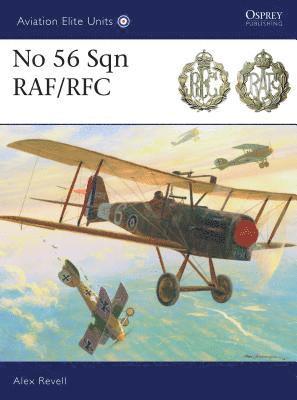
No 56 Sqn RAF/RFC
Häftad, Engelska, 2009
198 kr
Skickas inom 10-15 vardagar
By the autumn of 1916, with the formation of the new Jagdstaffeln, the pendulum of aerial supremacy had once again swung in favour of the German Air Force.The battle of the Somme in 1916 saw the RFC suffer losses of nearly 400 aircrew between September and November, and British casualties were to reach a zenith in the 'Bloody April' of 1917 when 319 aircrew were lost, killed or taken prisoner of war. This was the situation when No 56 Squadron arrived in France at the end of April 1917. Equipped with the superb new SE 5, it was the first fighter squadron of the RFC to be able to meet the Albatros and Halberstadt fighters of the Jagdstaffeln on equal terms.The squadron's pilots won an incredible tally of decorations, and by the end of the hostilities many famous fighter pilots had passed through its ranks Albert Ball VC, Canadian Hank Burden and American Robert Caldwell to name but a few.In this study, Alex Revell uncovers the early days and development of No 56 Squadron, its victories and losses, and the birth of a proud tradition.