Alexander Hillisch – författare
Visar alla böcker från författaren Alexander Hillisch. Handla med fri frakt och snabb leverans.
6 produkter
6 produkter
E-bok
PDF, Engelska, 20122 036 kr
Läs direkt efter köp
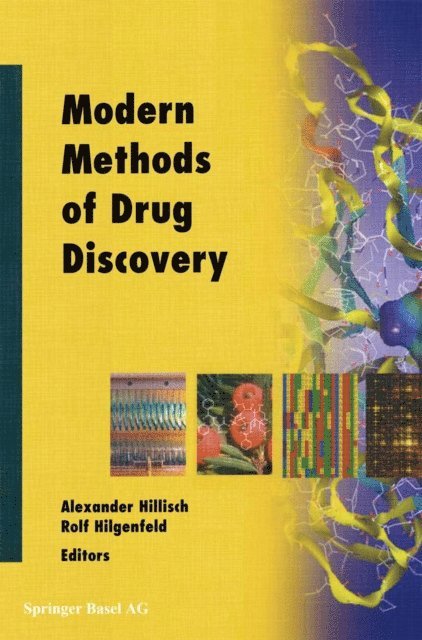
Research in the pharmaceutical industry today is in many respects quite different from what it used to be only fifteen years ago. There have been dramatic changes in approaches for identifying new chemical entities with a desired biological activity. While chemical modification of existing leads was the most important approach in the 1970s and 1980s, high-throughput screening and structure-based design are now major players among a multitude of methods used in drug discov ery. Quite often, companies favor one of these relatively new approaches over the other, e.g., screening over rational design, or vice versa, but we believe that an intelligent and concerted use of several or all methods currently available to drug discovery will be more successful in the medium term. What has changed most significantly in the past few years is the time available for identifying new chemical entities. Because of the high costs of drug discovery projects, pressure for maximum success in the shortest possible time is higher than ever. In addition, the multidisciplinary character of the field is much more pronounced today than it used to be. As a consequence, researchers and project managers in the pharmaceutical industry should have a solid knowledge of the more important methods available to drug discovery, because it is the rapidly and intelligently combined use of these which will determine the success or failure of preclinical projects.
Del 93 - Experientia Supplementum
Modern Methods of Drug Discovery
Häftad, Engelska, 2012
1 680 kr
Skickas inom 10-15 vardagar
Research in the pharmaceutical industry today is in many respects quite different from what it used to be only fifteen years ago. There have been dramatic changes in approaches for identifying new chemical entities with a desired biological activity. While chemical modification of existing leads was the most important approach in the 1970s and 1980s, high-throughput screening and structure-based design are now major players among a multitude of methods used in drug discov ery. Quite often, companies favor one of these relatively new approaches over the other, e.g., screening over rational design, or vice versa, but we believe that an intelligent and concerted use of several or all methods currently available to drug discovery will be more successful in the medium term. What has changed most significantly in the past few years is the time available for identifying new chemical entities. Because of the high costs of drug discovery projects, pressure for maximum success in the shortest possible time is higher than ever. In addition, the multidisciplinary character of the field is much more pronounced today than it used to be. As a consequence, researchers and project managers in the pharmaceutical industry should have a solid knowledge of the more important methods available to drug discovery, because it is the rapidly and intelligently combined use of these which will determine the success or failure of preclinical projects.
E-bok
PDF, Engelska, 20131 408 kr
Läs direkt efter köp
From our current knowledge, it is obvious that estrogen action in volves more than reproduction and fertility. Rather, estrogens affect and influence a number of other organ systems such as the immune, cardiovascular and central nervous system as well as the gastrointes tinal tract, urinary tract and skeleton. The importance of estrogens and estrogen receptor activity is appreciated from the spectrum of significant physiological dysfunctions that occur when there is a loss The participants of the workshop VI Preface of the hormone or the receptor activity. Loss of estrogen, however (for instance during menopause), occurs with time and results in a variety of clinical conditions. We know that the developmental loss of estrogen, as seen in clinical cases of aromatase gene mutations and experimental models, has dramatic effects in both men and women alike. The evidence that these effects are mediated through the estrogen receptor(s) is based on similar but not always identical phenotypes as observed in experimental animal models of estrogen receptor mutations as well as the single clinical case of an estrogen receptor alpha mutant patient. Developing an understanding of the spectrum of estrogen in a variety of tissues related to the condition of estrogen loss is a major and highly active clinical as well as basic scientific research area. Following the discovery of a second estrogen receptor and possible receptor ligand-independent activity as well as the genomic and non genomic actions of estrogen, it is clear that the mechanisms of the effects of estrogen are multifaceted.
Engelska, 2012
650 kr
Skickas inom 5-8 vardagar
Del 46 - Ernst Schering Foundation Symposium Proceedings
New Molecular Mechanisms of Estrogen Action and Their Impact on Future Perspectives in Estrogen Therapy
Häftad, Engelska, 2012
1 122 kr
Skickas inom 10-15 vardagar
From our current knowledge, it is obvious that estrogen action in volves more than reproduction and fertility. Rather, estrogens affect and influence a number of other organ systems such as the immune, cardiovascular and central nervous system as well as the gastrointes tinal tract, urinary tract and skeleton. The importance of estrogens and estrogen receptor activity is appreciated from the spectrum of significant physiological dysfunctions that occur when there is a loss The participants of the workshop VI Preface of the hormone or the receptor activity. Loss of estrogen, however (for instance during menopause), occurs with time and results in a variety of clinical conditions. We know that the developmental loss of estrogen, as seen in clinical cases of aromatase gene mutations and experimental models, has dramatic effects in both men and women alike. The evidence that these effects are mediated through the estrogen receptor(s) is based on similar but not always identical phenotypes as observed in experimental animal models of estrogen receptor mutations as well as the single clinical case of an estrogen receptor alpha mutant patient. Developing an understanding of the spectrum of estrogen in a variety of tissues related to the condition of estrogen loss is a major and highly active clinical as well as basic scientific research area. Following the discovery of a second estrogen receptor and possible receptor ligand-independent activity as well as the genomic and non genomic actions of estrogen, it is clear that the mechanisms of the effects of estrogen are multifaceted.
Del 93 - Experientia Supplementum
Modern Methods of Drug Discovery
Inbunden, Engelska, 2002
1 680 kr
Skickas inom 10-15 vardagar
Research in the pharmaceutical industry today is in many respects quite different from what it used to be only fifteen years ago. There have been dramatic changes in approaches for identifying new chemical entities with a desired biological activity. While chemical modification of existing leads was the most important approach in the 1970s and 1980s, high-throughput screening and structure-based design are now major players among a multitude of methods used in drug discov ery. Quite often, companies favor one of these relatively new approaches over the other, e.g., screening over rational design, or vice versa, but we believe that an intelligent and concerted use of several or all methods currently available to drug discovery will be more successful in the medium term. What has changed most significantly in the past few years is the time available for identifying new chemical entities. Because of the high costs of drug discovery projects, pressure for maximum success in the shortest possible time is higher than ever. In addition, the multidisciplinary character of the field is much more pronounced today than it used to be. As a consequence, researchers and project managers in the pharmaceutical industry should have a solid knowledge of the more important methods available to drug discovery, because it is the rapidly and intelligently combined use of these which will determine the success or failure of preclinical projects.