Alexander S. Dawson – författare
Visar alla böcker från författaren Alexander S. Dawson. Handla med fri frakt och snabb leverans.
5 produkter
5 produkter
Inbunden, Engelska, 2018
694 kr
Skickas
The hallucinogenic and medicinal effects of peyote have a storied history that begins well before Europeans arrived in the Americas. While some have attempted to explain the cultural and religious significance of this cactus and drug, Alexander S. Dawson offers a completely new way of understanding the place of peyote in history. In this provocative new book, Dawson argues that peyote has marked the boundary between the Indian and the West since the Spanish Inquisition outlawed it in 1620. For nearly four centuries ecclesiastical, legal, scientific, and scholarly authorities have tried (unsuccessfully) to police that boundary to ensure that, while indigenous subjects might consume peyote, others could not. Moving back and forth across the U.S.–Mexico border, The Peyote Effect explores how battles over who might enjoy a right to consume peyote have unfolded in both countries, and how these conflicts have produced the racially exclusionary systems that characterizes modern drug regimes. Through this approach we see a surprising history of the racial thinking that binds these two countries more closely than we might otherwise imagine.
Häftad, Engelska, 2018
253 kr
Skickas inom 5-8 vardagar
The hallucinogenic and medicinal effects of peyote have a storied history that begins well before Europeans arrived in the Americas. While some have attempted to explain the cultural and religious significance of this cactus and drug, Alexander S. Dawson offers a completely new way of understanding the place of peyote in history. In this provocative new book, Dawson argues that peyote has marked the boundary between the Indian and the West since the Spanish Inquisition outlawed it in 1620. For nearly four centuries ecclesiastical, legal, scientific, and scholarly authorities have tried (unsuccessfully) to police that boundary to ensure that, while indigenous subjects might consume peyote, others could not. Moving back and forth across the U.S.–Mexico border, The Peyote Effect explores how battles over who might enjoy a right to consume peyote have unfolded in both countries, and how these conflicts have produced the racially exclusionary systems that characterizes modern drug regimes. Through this approach we see a surprising history of the racial thinking that binds these two countries more closely than we might otherwise imagine.
Häftad, Engelska, 2027
380 kr
Kommande
Bike lanes are aspirational projects—that is, they speak to a series of dreams about what North American cities could be, especially in and around an environmentalist and Europhilic vision (the latter having a very long history in the Americas). But the creation of bike lanes maps onto preexisting modes of transport and forms of racial and spatial inequality. Bike lane advocacy in North American cities has in many ways replicated the weak social ties that characterize these spaces.Amsterdam’s oft-cited bike lanes are integrated within a system of regional trains, buses, and subways, allowing riders to park their bikes and engage in multimodal commuting. However, in American settings, these projects have been slow to launch, in part because of the aversion that middle-class and wealthy North Americans have toward public transport. This aversion is uneven, but public transport remains much more the preserve of working people and people of color in these cities.Recent controversial bike lane initiatives in Mexico City and Vancouver show how such projects not only create uproar among monied urbanites but may actually displace entire modes of transportation used primarily by marginalized residents (especially in the case of Mexico City), when the wish to imitate European models defeats efforts to see a North American city for what it is. In comparing Mexico City and Vancouver, Bike Lanes Are the End of Us traces how bike lane politics collide with distinct racial, spatial, and infrastructural realities to produce “green” reforms that can reinforce existing inequalities just as readily as they promise greater mobility.
Inbunden, Engelska, 2027
931 kr
Kommande
Bike lanes are aspirational projects—that is, they speak to a series of dreams about what North American cities could be, especially in and around an environmentalist and Europhilic vision (the latter having a very long history in the Americas). But the creation of bike lanes maps onto preexisting modes of transport and forms of racial and spatial inequality. Bike lane advocacy in North American cities has in many ways replicated the weak social ties that characterize these spaces.Amsterdam’s oft-cited bike lanes are integrated within a system of regional trains, buses, and subways, allowing riders to park their bikes and engage in multimodal commuting. However, in American settings, these projects have been slow to launch, in part because of the aversion that middle-class and wealthy North Americans have toward public transport. This aversion is uneven, but public transport remains much more the preserve of working people and people of color in these cities.Recent controversial bike lane initiatives in Mexico City and Vancouver show how such projects not only create uproar among monied urbanites but may actually displace entire modes of transportation used primarily by marginalized residents (especially in the case of Mexico City), when the wish to imitate European models defeats efforts to see a North American city for what it is. In comparing Mexico City and Vancouver, Bike Lanes Are the End of Us traces how bike lane politics collide with distinct racial, spatial, and infrastructural realities to produce “green” reforms that can reinforce existing inequalities just as readily as they promise greater mobility.
Häftad, Engelska, 2006
512 kr
Skickas inom 10-15 vardagar
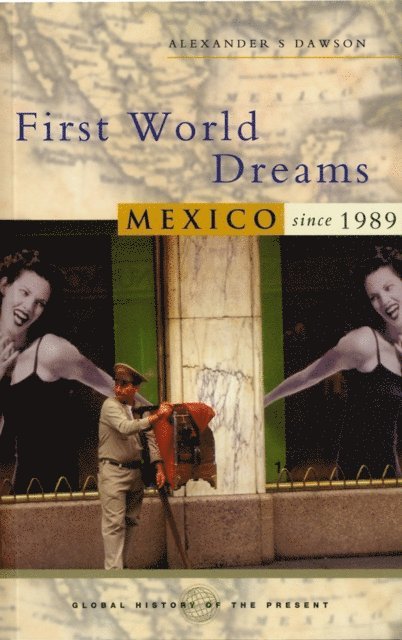
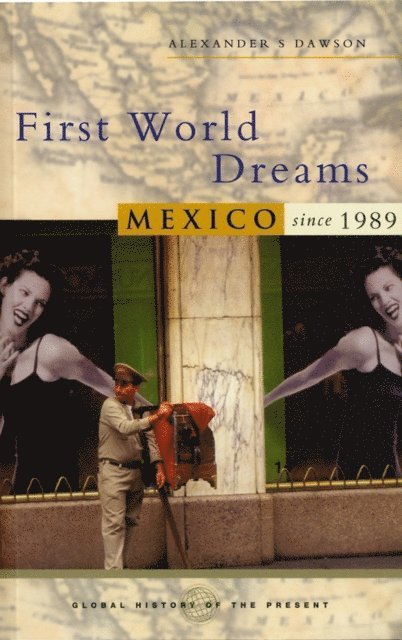
Mexicans have long dreamt of the First World, and in recent times it has landed with a thud. Under the guise of globalization, Mexico opened its borders, reformed its political system, and transformed its economy. The impacts have been paradoxical.In First World Dreams Alexander Dawson explores the contradictions and challenges which Mexico has experienced in embracing the market so wholeheartedly. A vibrant civil society is marred by human rights abuses and violent rebellion. Market reforms have produced a stable economy, economic growth and great fortunes, while devastating much of the countryside and crippling domestic producers. Mexico is today one of the world's largest exporting nations, yet has a perpetually negative trade balance. It is in a constant state of becoming a democracy, a nation where human rights are respected, a modern industrial nation, and a more violent, fragmented place where the chasms of wealth and poverty threaten to undo the dreams of modernity.