Alexandra F. Morris – författare
Visar alla böcker från författaren Alexandra F. Morris. Handla med fri frakt och snabb leverans.
11 produkter
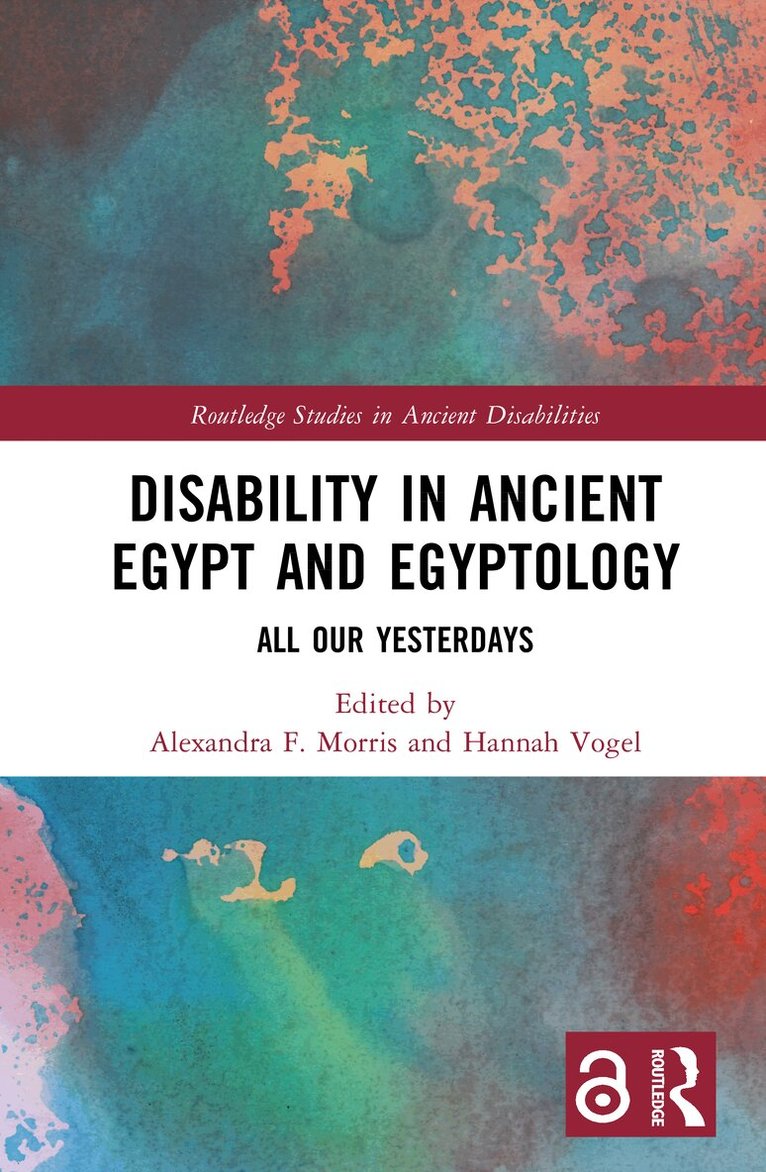
Disability in Ancient Egypt and Egyptology
All Our Yesterdays
Av Alexandra F. Morris, Hannah Vogel
Inbunden, 2024
2586 kr
Lägg i varukorg
This book explores disability across time and space—from ‘ancient Egypt’ as a culture to Egyptology as a contemporary field—to go beyond simply identifying disability, encouraging readers to thoughtfully consider the history of disabled people in ancient Egypt and Egyptology.Through a critical …
Disability in Ancient Egypt and Egyptology
All Our Yesterdays
Av Alexandra F. Morris, Hannah Vogel
Häftad, 2026
727 kr
Lägg i varukorg
This book explores disability across time and space—from ‘ancient Egypt’ as a culture to Egyptology as a contemporary field—to go beyond simply identifying disability, encouraging readers to thoughtfully consider the history of disabled people in ancient Egypt and Egyptology.Through a critical …
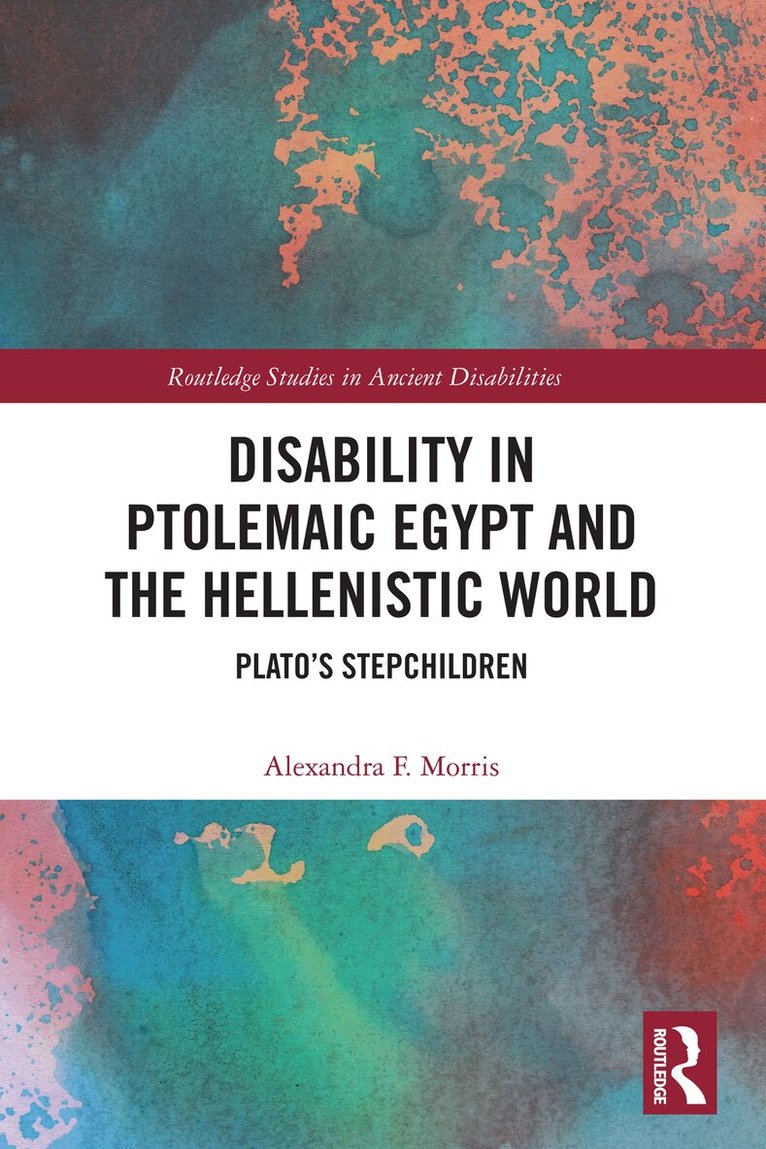
Disability in Ptolemaic Egypt and the Hellenistic World
Plato’s Stepchildren
Häftad, 2026
727 kr
Lägg i varukorg
This is one of the first single-authored books to utilise Critical Disability Studies and the lens of embodiment to comprehensively unveil, explore, and celebrate disability in Ptolemaic Egypt and the Hellenistic world through a critical examination of art, artefacts, texts, and human …
Disability in Ptolemaic Egypt and the Hellenistic World
Plato’s Stepchildren
Inbunden, 2024
2586 kr
Lägg i varukorg
This is one of the first single-authored books to utilise Critical Disability Studies and the lens of embodiment to comprehensively unveil, explore, and celebrate disability in Ptolemaic Egypt and the Hellenistic world through a critical examination of art, artefacts, texts, and human …
Disability in Ancient Egypt and Egyptology
All Our Yesterdays
Av Hannah Vogel, Alexandra F. Morris
E-bok, 2024
856 kr
Lägg i varukorg
This book explores disability across time and space—from ‘ancient Egypt’ as a culture to Egyptology as a contemporary field—to go beyond simply identifying disability, encouraging readers to thoughtfully consider the history of disabled people in ancient Egypt and Egyptology. Through a …
Disability in Ancient Egypt and Egyptology
All Our Yesterdays
Av Hannah Vogel, Alexandra F. Morris
E-bok, 2024
856 kr
Lägg i varukorg
This book explores disability across time and space—from ‘ancient Egypt’ as a culture to Egyptology as a contemporary field—to go beyond simply identifying disability, encouraging readers to thoughtfully consider the history of disabled people in ancient Egypt and Egyptology. Through a …
Disability in Ptolemaic Egypt and the Hellenistic World
Plato’s Stepchildren
E-bok, 2024
838 kr
Lägg i varukorg
This is one of the first single-authored books to utilise Critical Disability Studies and the lens of embodiment to comprehensively unveil, explore, and celebrate disability in Ptolemaic Egypt and the Hellenistic world through a critical examination of art, artefacts, texts, and human remains. …
Disability in Ptolemaic Egypt and the Hellenistic World
Plato’s Stepchildren
E-bok, 2024
831 kr
Lägg i varukorg
This is one of the first single-authored books to utilise Critical Disability Studies and the lens of embodiment to comprehensively unveil, explore, and celebrate disability in Ptolemaic Egypt and the Hellenistic world through a critical examination of art, artefacts, texts, and human remains. …
Disability Activism in and out of the Academy
Classical Studies, Pedagogy and Practice
Av Alexandra F. Morris, Karl Mercer m. fl.
E-bok, 2026
993 kr
Lägg i varukorg
This book explores how ancient disability and its reception in Classics, Ancient Mediterranean Studies (AMS), and related disciplines are relevant to disabled people today.Written by disabled and neurodivergent scholars, this book outlines the multifaceted contributions studies of the ancient world …
Disability Activism in and out of the Academy
Classical Studies, Pedagogy and Practice
Av Alexandra F. Morris, Karl Mercer m. fl.
E-bok, 2026
972 kr
Lägg i varukorg
This book explores how ancient disability and its reception in Classics, Ancient Mediterranean Studies (AMS), and related disciplines are relevant to disabled people today.Written by disabled and neurodivergent scholars, this book outlines the multifaceted contributions studies of the ancient world …
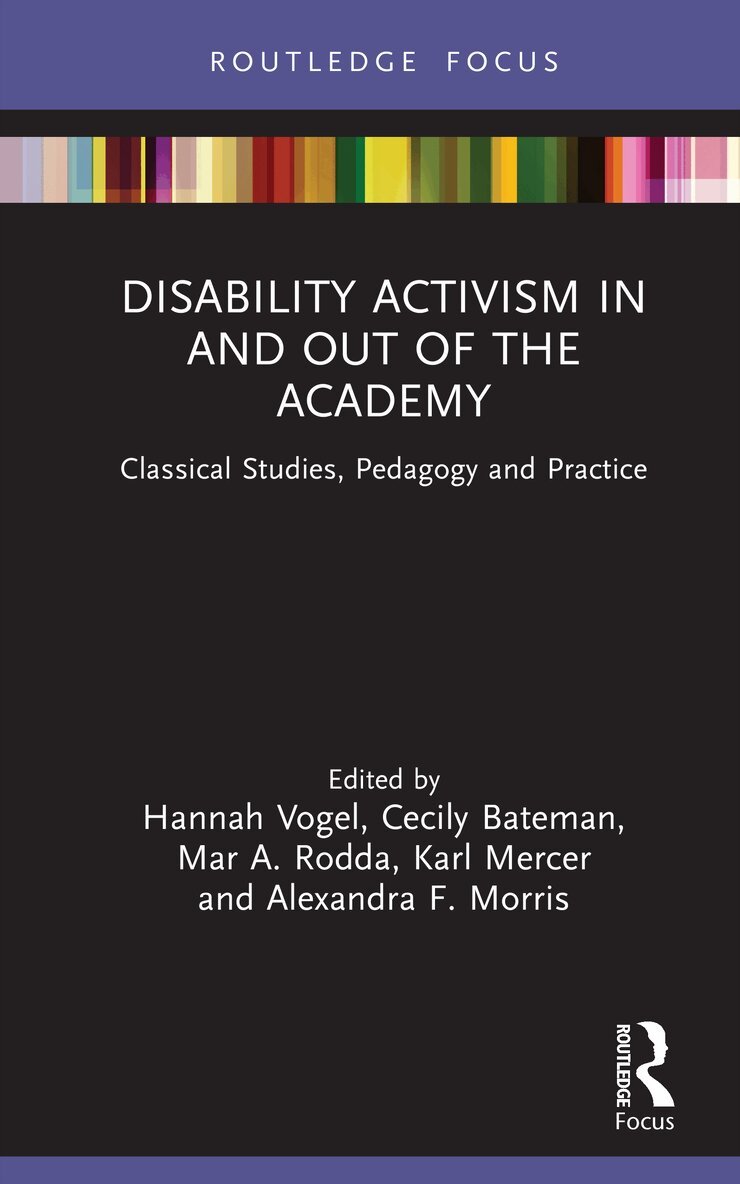
Disability Activism in and out of the Academy
Classical Studies, Pedagogy and Practice
Av Hannah Vogel, Cecily Bateman m. fl.
Inbunden, 2026
1027 kr
Lägg i varukorg
This book explores how ancient disability and its reception in Classics, Ancient Mediterranean Studies (AMS), and related disciplines are relevant to disabled people today.Written by disabled and neurodivergent scholars, this book outlines the multifaceted contributions studies of the ancient world …