Alfred S. Bradford - Böcker
Visar alla böcker från författaren Alfred S. Bradford. Handla med fri frakt och snabb leverans.
6 produkter
6 produkter
833 kr
Skickas inom 10-15 vardagar
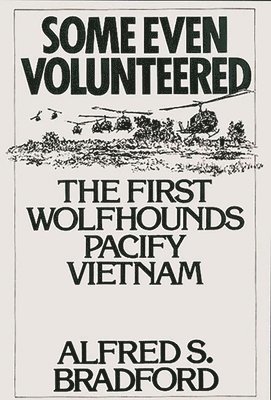
I was hooked by the unusual style and, moreso, by the unusual approach to the familiar material . . . Articulate, sensitive, and intelligent . . . an unusually readable and persuasive narrative. Robert W. Lewis North Dakota QuarterlyWhen in 1968 an American rifle battalion known as the First Wolfhounds landed near Dau Tieng, a rest area controlled by the North Vietnamese Army, they expected to interdict the NVA supply line there within three days. Instead, the soldiers found a prohibitive network of NVA troops, headquarters, hospitals, supplies, and local support for the NVA. It seemed impossible, even for the Wolfhounds, famed for their numbers and fighting strength. In the vivid prose of a mission survivor, Some Even Volunteered chronicles these brave soldiers' daily, deadly contact with the NVA, their attempts to win the villagers' trust, and how they struggled to accept and survive their circumstances. Eight months later, the Wolfhounds succeeded--destroying, in the process, an NVA unit of their own size. Alfred Bradford's sardonic voice is compelling. This narrative is witty, sometimes hilarious, and always captivating. Bradford--now a history professor--also provides one of the most insightful discussions ever written of Vietnam's assumed position in military history.Some Even Volunteered provides a marvelous description and a succinct evaluation of the life and the achievement of the American soldier in Vietnam trying to win the hearts and minds of the Vietnamese. In a style reminiscent of Michael Herr in Dispatches but still distinctly his own, Bradford relates the story of the First Battalion of the 27th Infantry Regiment (First Wolfhounds) of the 25th Infantry Division as they pacified the district of Tri Tam. The First Battalion--which had the highest body count of any rifle battalion in Vietnam--was air-lifted into an NVA rest area south of Dau Tieng (IIId Brigade basecamp) in the district of Tri Tam on 24 October 1968. They had been ordered to interdict the NVA supply line that stretched from the Ho Chi Minh trail in Cambodia through Dau Tieng to Saigon. They were expected to complete their mission in three days, but they uncovered such an extensive network of headquarters, hospitals, supply, troop concentrations and local support that the mission was extended to a week, then to a month, and finally, to eight months.Eight months later, the Wolfhounds had succeeded. Their fire support base was assaulted three times, their Brigade base twice. They established four independent forts, ran missions throughout the Third Brigade Area of Operations, and accepted the surrender of dozens of Viet Cong and NVA. In effect, they had destroyed an NVA unit of their own size. In vivid, staccato prose, Bradford delivers a first-rate narrative. In addition, the last chapter, entitled, The Will of the People, provides the reader with one of the best discussions ever written of Vietnam's assumed position in military history.
1 619 kr
Skickas inom 10-15 vardagar
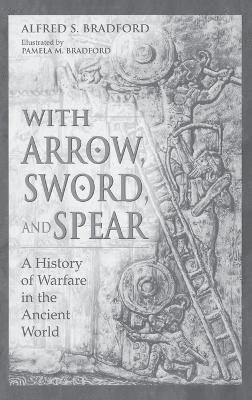
Most studies of ancient warfare focus only on the Greeks and the Romans, but this sweeping study covers the whole of the ancient world from Greece and Rome to the Near East, then eastward to Parthia, India, and China. Bradford transports the reader into the midst of ancient battles behind such great leaders as Thutmose III, Ashurbanipal, Alexander, Hannibal, Caesar, and the First Emperor of China. He details the rise and fall of empires, the role of leadership, and the development of tactics and strategy. One sees the clash of peoples: nomads against agricultural societies, infantry against cavalry, as well as the greatest technological change in history—the combination of the composite bow and the chariot.This readable account analyzes ancient armies in terms of modern military doctrine, allowing the reader to make comparisons between the combatants. Recruitment, for example, varied tremendously with Romans drawing from a limited pool of recruits for service terms of twenty to thirty years and Chinese planners preferring a large pool with short-term service. While various types of governments prepared for and waged war in significantly different ways, Bradford finds that better organization led to success on the battlefield and that, for the most part, societal innovation was more important than technological innovation. The ongoing discussion of the lessons of ancient warfare around the globe will provide valuable insights for interested general readers and military professionals alike.
695 kr
Skickas inom 10-15 vardagar
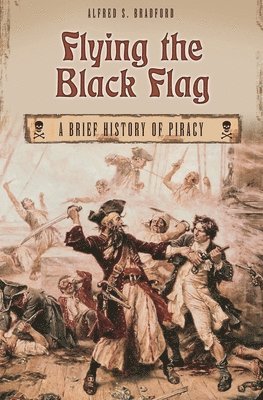
Many peoples throughout history have fought pirates, writes Alfred Bradford in Flying the Black Flag. Some have lost and some have won. We should learn from their experience. From Odysseus—the original pirate of literature and lore—through Blackbeard and the feared pirates of the Spanish Main, his book reveals the strategies and methods pirates used to cheat, lie, kill, and rob their way into the historical record, wreaking terror in their bloody wakes.The story begins with a discussion of Piracy and the Suppression of Piracy in the Ancient World. It details, for example, how the Illyrians used pirate vessels to try to wrest control of the Adriatic Coast from the mighty Romans, as well as how the intrepid Vikings went from pirate raids to the conquest of parts of Western Europe.Moving into the 17th century and to the New World, Bradford depicts the golden age of the pirates. Here are the Spanish Buccaneers and the fabled Caribbean stronghold of Tortuga. Here are Henry Morgan, Captain Kidd, and their fearsome counterparts. But piracy was hardly just a Western phenomenon. The Barbary Pirates looks East to examine the struggle between Christian and Muslim in the Mediterranean, while To the Shores of Tripoli details the American conflict with the Barbary Pirates. It reveals the lessons of a war conducted across a great distance against a nebulous enemy, a war in which victory was achieved only by going after the pirates' sponsor. On the South China Coast, we meet the first Dragon Lady, leader of Chinese pirates.As intriguing as these tales of the past are in and of themselves, the stories and their swashbuckling villains hold lessons for us even today. In Conclusions and Reflections, Bradford gathers all of the chords together, discussing the conditions under which piracy arises, the conditions under which pirates organize and become more powerful, and the methods used to suppress piracy. Finally, he examines similarities between pirates and terrorists—and whether the lessons learned from the wars against pirates of the past might also apply to modern day terrorists.
695 kr
Skickas inom 10-15 vardagar
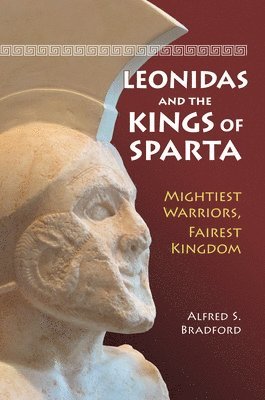
This pivotal history of the kings of Sparta not only describes their critical leadership in war, but also documents the waxing and waning of their social, political, and religious powers in the Spartan state.The Spartans have seemingly never gone out of interest, serving as mythic icons who exemplify fearlessness and an unwillingness to give in against impossible odds. Yet most are unaware of the true nature of the Spartan leaders—the fact that the kings maintained their position of power for 600 years by their willingness to compromise, even if it meant giving up some of their power, for example. Organized in a logical and chronological order, Leonidas and the Kings of Sparta: Mightiest Warriors, Fairest Kingdom describes the legendary origins of the dual kingship in Sparta, documents the many reigning eras of the kings, and then concludes with the time when the kingship was abolished six centuries later. The book examines the kings' roles in war and battle, in religion, in the social life of the city, and in formulating Spartan policy both at home and abroad. No other book on Sparta has concentrated on describing the role of the kings—and their absolutely essential contributions to Spartan society in general.
695 kr
Skickas inom 10-15 vardagar
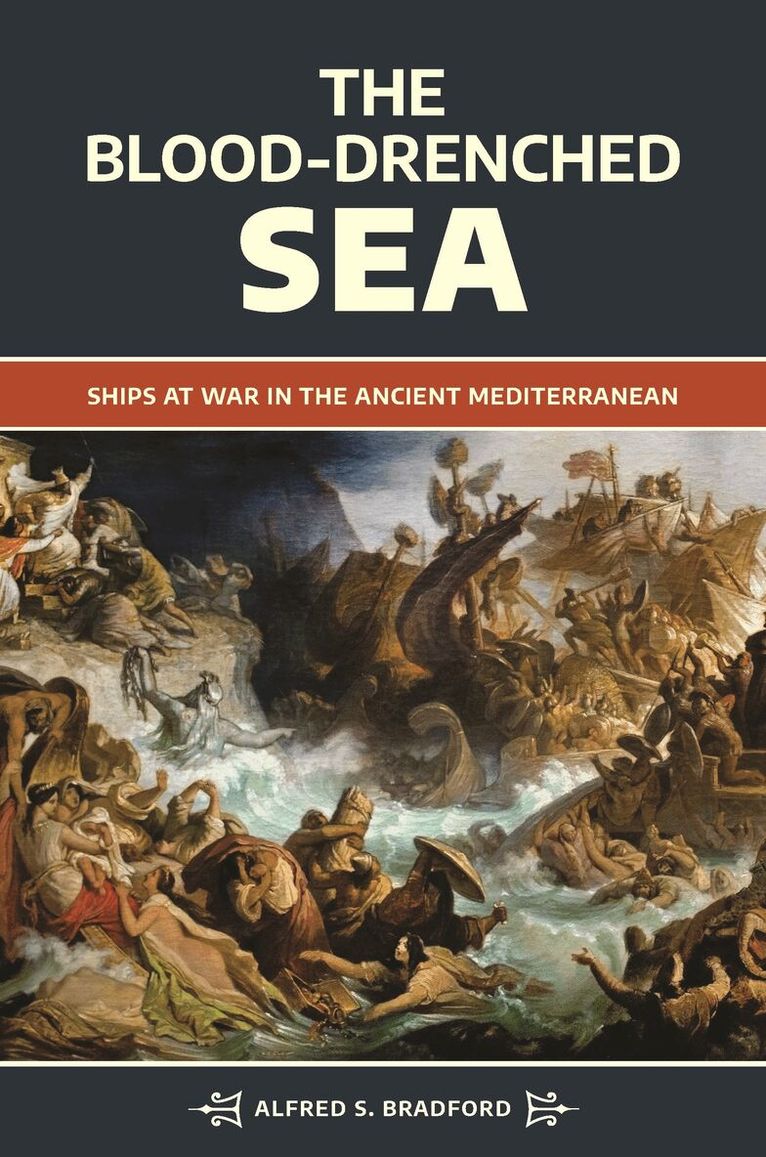
This book is an indispensable resource for readers who want to know the whole, comprehensive story of ancient naval warfare.The Blood-Drenched Sea describes all the naval battles and wars fought in the ancient Mediterranean. In one volume are the ships, crews, and leaders who determined the course of ancient history, along with the wars and battles, told through artifacts, extant literary and visual sources, and modern reconstructions—the Egyptian mortuary temple, the Minoan domain, the legendary sack of Troy, the expansion of Greeks throughout the Mediterranean, the Athenian victory over the Persians at Salamis, and the Athenian empire, ruined by one moment of superstition.Then the Romans learned how to build ships, man them, row in tiers, and command fleets, and the volume recounts their contributions to history as well. They fought three wars with Carthage that cost them hundreds of thousands of casualties and expenditures of vast wealth, and they conquered the whole of the Mediterranean. Meanwhile, Julius Caesar expanded the empire with the conquest of Gaul and the invasion of Britain, and his adoptive son, Octavian settled the question of who would rule the new empire by winning the naval battle at Actium.
282 kr
Skickas inom 10-15 vardagar
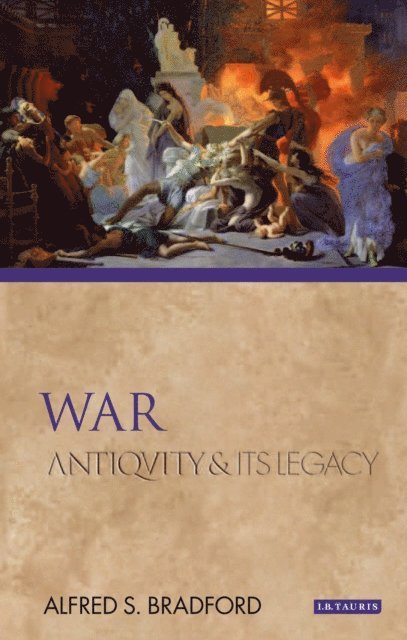
Over 2600 years ago the Parian poet Archilochus wrote "we chased seven and killed them.. the thousand of us." In all parts of the world, and in all civilizations, the history of warfare, as well as the ironic humour of those who fight and die, can be traced back to the earliest records. But the vocabulary of modern warfare - army, military, strategy, tactics - derives from Greek and Latin, while metaphors of conflict similarly evoke ancient times. Such expressions and phrases as "Live by the sword and die by the sword", "Pyrrhic victory", and "arms and the man" are commonplace, and all come from the classical age. Wilfred Owen, famous soldier of the Great War, could write the bitter line "the old lie: Dulce et decorum est/pro patria mori" while expecting his readers to understand both Latin and allusion. Combining astute analysis of the logistics of conflict with the ethics of war, and drawing on a diverse range of cultural texts (from the Iliad to Hugo Grotius and von Clausewitz), Alfred S Bradford draws fascinating parallels between warfare and battle in ancient and modern societies.He shows that despite huge differences in weaponry and firepower, the basic principles of warfare have remained unchanged over thousands of years. War in the modern age is persistently illuminated by antiquity.