Alice A. Kuzniar - Böcker
Visar alla böcker från författaren Alice A. Kuzniar. Handla med fri frakt och snabb leverans.
7 produkter
7 produkter
216 kr
Skickas inom 7-10 vardagar
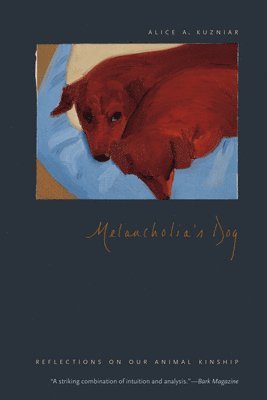
An attempt to understand human attachment to the canis familiaris in terms of reciprocity and empathy, Melancholia's Dog tackles such difficult concepts as intimacy and kinship with dogs, the shame associated with identification with their suffering, and the reasons for the profound mourning over their deaths. In addition to philosophy and psychoanalysis, Alice A. Kuzniar turns to the insights and images offered by the literary and visual arts-the short stories of Ivan Turgenev and Franz Kafka, the novels of J. M. Coetzee and Rebecca Brown, the photography of Sally Mann and William Wegman, and the artwork of David Hockney and Sue Coe. Without falling into sentimentality or anthropomorphization, Kuzniar honors and learns from our canine companions, above all attending to the silences and sadness brought on by the effort to represent the dog as perfectly and faithfully as it is said to love.
903 kr
Skickas inom 7-10 vardagar
Bred to provide human companionship, dogs eclipse all other species when it comes to reading the body language of people. Dog owners hunger for a complete rapport with their pets; in the dog the fantasy of empathetic resonance finds its ideal. But cross-species communication is never easy. Dog love can be a precious but melancholy thing.An attempt to understand human attachment to the canis familiaris in terms of reciprocity and empathy, Melancholia’sDog tackles such difficult concepts as intimacy and kinship with dogs, the shame associated with identification with their suffering, and the reasons for the profound mourning over their deaths. In addition to philosophy and psychoanalysis, Alice A. Kuzniar turns to the insights and images offered by the literary and visual arts—the short stories of Ivan Turgenev and Franz Kafka, the novels of J. M. Coetzee and Rebecca Brown, the photography of Sally Mann and William Wegman, and the artwork of David Hockney and Sue Coe. Without falling into sentimentality or anthropomorphization, Kuzniar honors and learns from our canine companions, above all attending to the silences and sadness brought on by the effort to represent the dog as perfectly and faithfully as it is said to love.
1 719 kr
Skickas inom 10-15 vardagar
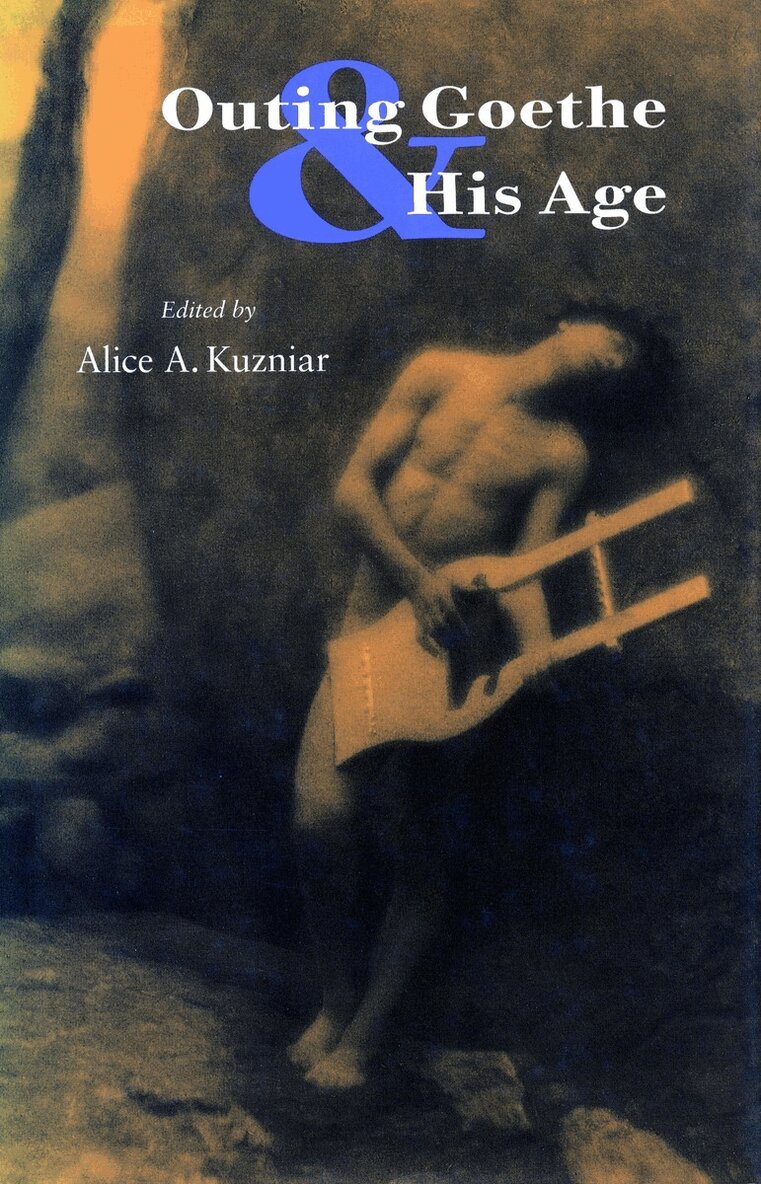
When Goethe christened the 1700's "the Century of Winckelmann" and Kant dubbed it "the Century of Frederick the Great," they invoked two notorious figures in gay history. This collection of twelve essays reclaims "the Age of Goethe"—To call upon a literary designation of roughly the same period - as a time when same-sex erotic attraction suffused artistic production from Winckelmann's art treatises and Goethe's plays to Friedrich Schlegel's self-reflexive novel Lucinde and Kleist's letters.This volume employs historical, biographical, and textual evidence to paint a cohesive picture of the incontrovertibly sexual nature of male-male and female-female relationships in late-eighteenth- and early-nineteenth-century Germany. The literature of this era bequeathed to us the cultural inventions of Romantic love, classical femininity, the marriage partnership, and the aesthetics of beauty - all, as this volume demonstrates, via and despite the ever-resurgent erotic desire for one's own sex. In the process, it offers radically new readings of canonical authors - including Wieland, Lenz, Goethe, Friedrich Schlegel, and Kleist — in light of the eroticized same-sex relations in their works.
416 kr
Skickas inom 7-10 vardagar
When Goethe christened the 1700's "the Century of Winckelmann" and Kant dubbed it "the Century of Frederick the Great," they invoked two notorious figures in gay history. This collection of twelve essays reclaims "the Age of Goethe"—To call upon a literary designation of roughly the same period - as a time when same-sex erotic attraction suffused artistic production from Winckelmann's art treatises and Goethe's plays to Friedrich Schlegel's self-reflexive novel Lucinde and Kleist's letters.This volume employs historical, biographical, and textual evidence to paint a cohesive picture of the incontrovertibly sexual nature of male-male and female-female relationships in late-eighteenth- and early-nineteenth-century Germany. The literature of this era bequeathed to us the cultural inventions of Romantic love, classical femininity, the marriage partnership, and the aesthetics of beauty - all, as this volume demonstrates, via and despite the ever-resurgent erotic desire for one's own sex. In the process, it offers radically new readings of canonical authors - including Wieland, Lenz, Goethe, Friedrich Schlegel, and Kleist — in light of the eroticized same-sex relations in their works.
1 164 kr
Skickas
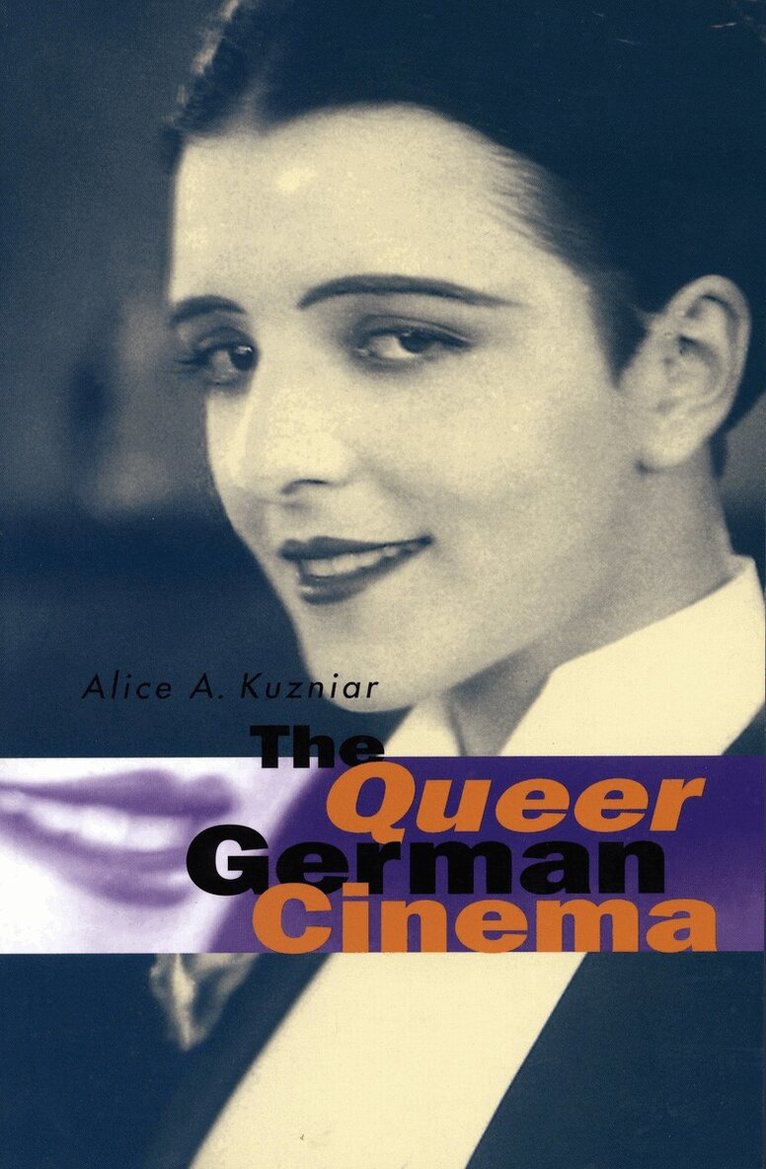
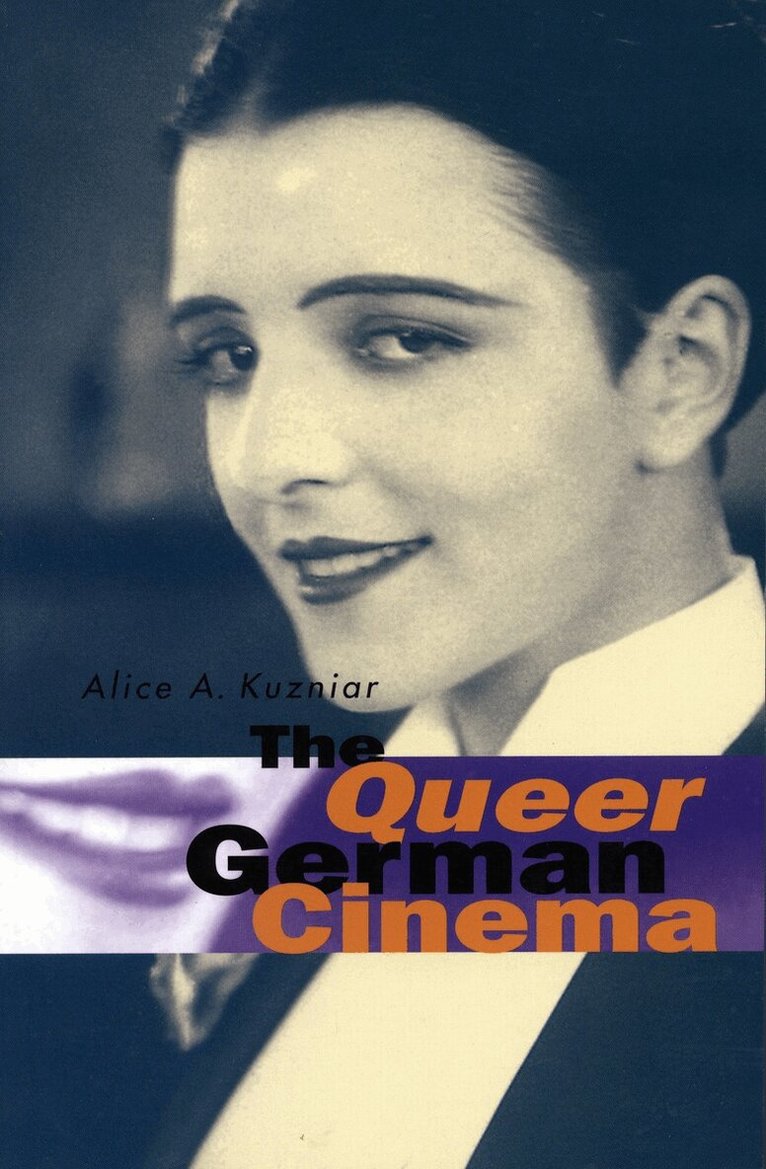
Since the Weimar era, German cinema has played a leading role in the innovation of gay and lesbian cinema, with the tantalizing sexual illegibility and gender instability of German films of the 1920s anticipating the queer sensibilities of the 1990s.From such cross-dressing Weimar comedies as Viktor und Victoria to the transgender fantasies of Ulrike Ottinger, Monika Treut, and Hans Scheirl, this filmic tradition explores the unconventional erotic, its directors inventing a visual language that goes beyond the trivialization and sensationalism of mainstream representations of gays and lesbians. This cinema crosses the boundaries between such classifications as male and female, gay and bisexual, normal and pathological, insisting that such transgressions cannot be entirely tamed, regulated, or closeted. Previous scholarship, reading this national cinema as sociopolitical commentary, has tended to ignore what falls outside a realist, hetero-normative paradigm. In this book, the author aims to rectify this neglect by rewriting German cinematic history queerly.She reexamines the Nazi movie star Zarah Leander via her gay fandom, showing how this actress haunts the drag performance of femininity in the films of Rainer Werner Fassbinder. She argues not only for the persuasiveness of the gay underground in the New German Cinema but also for cinema's pivotal role in German gay liberation. Other topics include the queering of nationality in the films of Monika Treut and Rosa von Praunheim, the fetishistic medium of experimental filmmaking in the works of Michael Brynntrup and Matthias Müller, and the androgynous appeal of "dyke noir animation." In conclusion, The Queer German Cinema juxtaposes the voices of several German filmmakers as they reflect on their art in terms of a counter-politics.
384 kr
Skickas inom 7-10 vardagar
Since the Weimar era, German cinema has played a leading role in the innovation of gay and lesbian cinema, with the tantalizing sexual illegibility and gender instability of German films of the 1920s anticipating the queer sensibilities of the 1990s.From such cross-dressing Weimar comedies as Viktor und Victoria to the transgender fantasies of Ulrike Ottinger, Monika Treut, and Hans Scheirl, this filmic tradition explores the unconventional erotic, its directors inventing a visual language that goes beyond the trivialization and sensationalism of mainstream representations of gays and lesbians. This cinema crosses the boundaries between such classifications as male and female, gay and bisexual, normal and pathological, insisting that such transgressions cannot be entirely tamed, regulated, or closeted. Previous scholarship, reading this national cinema as sociopolitical commentary, has tended to ignore what falls outside a realist, hetero-normative paradigm. In this book, the author aims to rectify this neglect by rewriting German cinematic history queerly.She reexamines the Nazi movie star Zarah Leander via her gay fandom, showing how this actress haunts the drag performance of femininity in the films of Rainer Werner Fassbinder. She argues not only for the persuasiveness of the gay underground in the New German Cinema but also for cinema's pivotal role in German gay liberation. Other topics include the queering of nationality in the films of Monika Treut and Rosa von Praunheim, the fetishistic medium of experimental filmmaking in the works of Michael Brynntrup and Matthias Müller, and the androgynous appeal of "dyke noir animation." In conclusion, The Queer German Cinema juxtaposes the voices of several German filmmakers as they reflect on their art in terms of a counter-politics.
560 kr
Skickas inom 5-8 vardagar
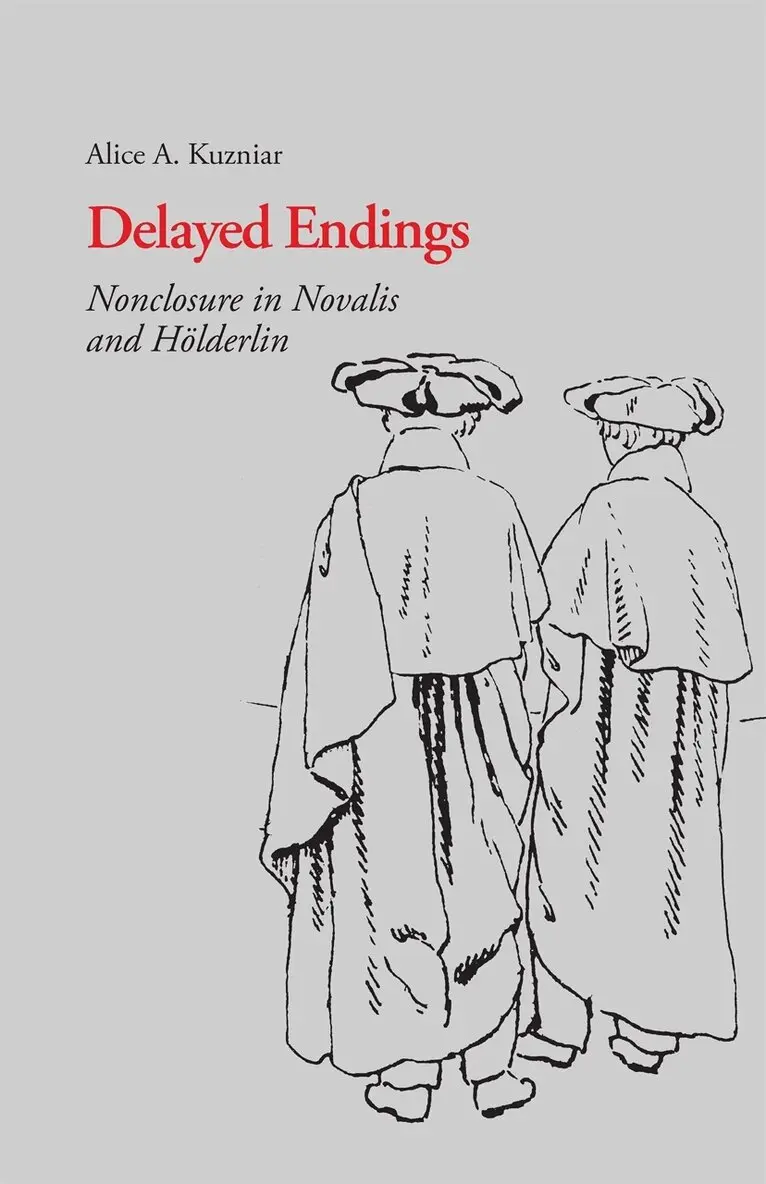
The works of the German Romantic authors Novalis (Friedrich von Hardenberg) and Friedrich Hölderlin were profoundly affected by their loss of belief in endings and ultimacies. They wrote during an age of intellectual crisis, when apocalyptic expectations had reached their pitch and the volatile ideas generated by the French Revolution seemed to challenge even the passing of time itself.In Delayed Endings, Alice A. Kuzniar demonstrates how Novalis and Hölderlin exemplified the Romantics' new way of narrating time, and how their method of nonclosure, or the deliberate avoidance of resolution and the strategies that bring it about, united the narrative, semantic, and thematic strains of their work. Novalis's Heinrich von Ofterdingen not only lacks a conclusion but even has a ruptured and disoriented beginning. Sharing Novalis's obsession with deferred endings, Hölderlin's late verse fragments and revisions reflect his questioning of ultimate human endings. Just as the persona in his hymn "Patmos" is within close proximity of friends but forever separated from them by treacherous alpine gorges, so too is God near yet incomprehensible.Novalis and Hölderlin represent a generation of writers who no longer perceived themselves as participants in a world of meaningful temporal progression. Introducing Novalis and Hölderlin as masters in the art of sustained deviation and displacement, Alice Kuzniar demonstrates how Romantic writers foreshadowed modern critical thought in their mistrust of completed artifice and their circumvention of the reader's desire for closure.