Alison Rowlands – författare
Visar alla böcker från författaren Alison Rowlands. Handla med fri frakt och snabb leverans.
3 produkter
3 produkter
E-bok
PDF, Engelska, 201853 kr
Läs direkt efter köp
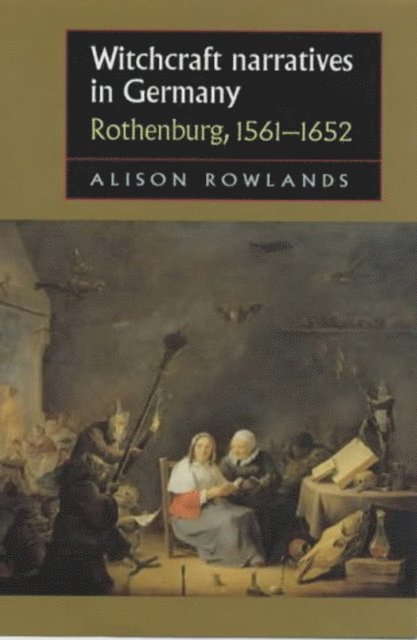
Looks at why witch-trials failed to gain momentum and escalate into 'witch-crazes' in certain parts of early modern Europe. Exames the rich legal records of the German city of Rothenburg ob der Tauber, a city which experienced a very restrained pattern of witch-trials and just one execution for witchcraft between 1561 and 1652. Explores the social and psychological conflicts that lay behind the making of accusations and confessions of witchcraft. Offers insights into other areas of early modern life, such as experiences of and beliefs about communal conflict, magic, motherhood, childhood and illness. Offers a critique of existing explanations for the gender bias of witch-trials, and a new explanation as to why most witches were women.An electronic edition of this book is freely available under a Creative Commons (CC BY-NC-ND) licence.
Häftad, Engelska, 2026
349 kr
Skickas inom 5-8 vardagar
Witchcraft narratives in Germany explains why witch-trials failed to gain momentum and escalate into 'witch-crazes' in certain parts of early modern Europe.Centred on the German city of Rothenburg ob der Tauber and its rural hinterland, the study draws on the city’s rich records to uncover the social and psychological tensions underlying witchcraft accusations and confessions. Remarkably, Rothenburg ob der Tauber saw just one execution for witchcraft between 1561 and 1652. This local pattern provides a vital counterpoint to prevailing historical narratives of widespread persecution, highlighting the ‘relative failure’ of witch-hunts in parts of Germany and questioning the assumption that mass trials were the early modern norm.
E-bok
Engelska, 201353 kr
Läs direkt efter köp
Looks at why witch-trials failed to gain momentum and escalate into 'witch-crazes' in certain parts of early modern Europe. Exames the rich legal records of the German city of Rothenburg ob der Tauber, a city which experienced a very restrained pattern of witch-trials and just one execution for witchcraft between 1561 and 1652. Explores the social and psychological conflicts that lay behind the making of accusations and confessions of witchcraft. Offers insights into other areas of early modern life, such as experiences of and beliefs about communal conflict, magic, motherhood, childhood and illness. Offers a critique of existing explanations for the gender bias of witch-trials, and a new explanation as to why most witches were women.An electronic edition of this book is freely available under a Creative Commons (CC BY-NC-ND) licence.