Allison Stedman – författare
Visar alla böcker från författaren Allison Stedman. Handla med fri frakt och snabb leverans.
4 produkter
4 produkter
300 kr
Skickas inom 10-15 vardagar
Translates an important example of late seventeenth-century French hybrid experimental fiction that shows the beginnings of the literary fairy tale.
1 467 kr
Skickas inom 10-15 vardagar
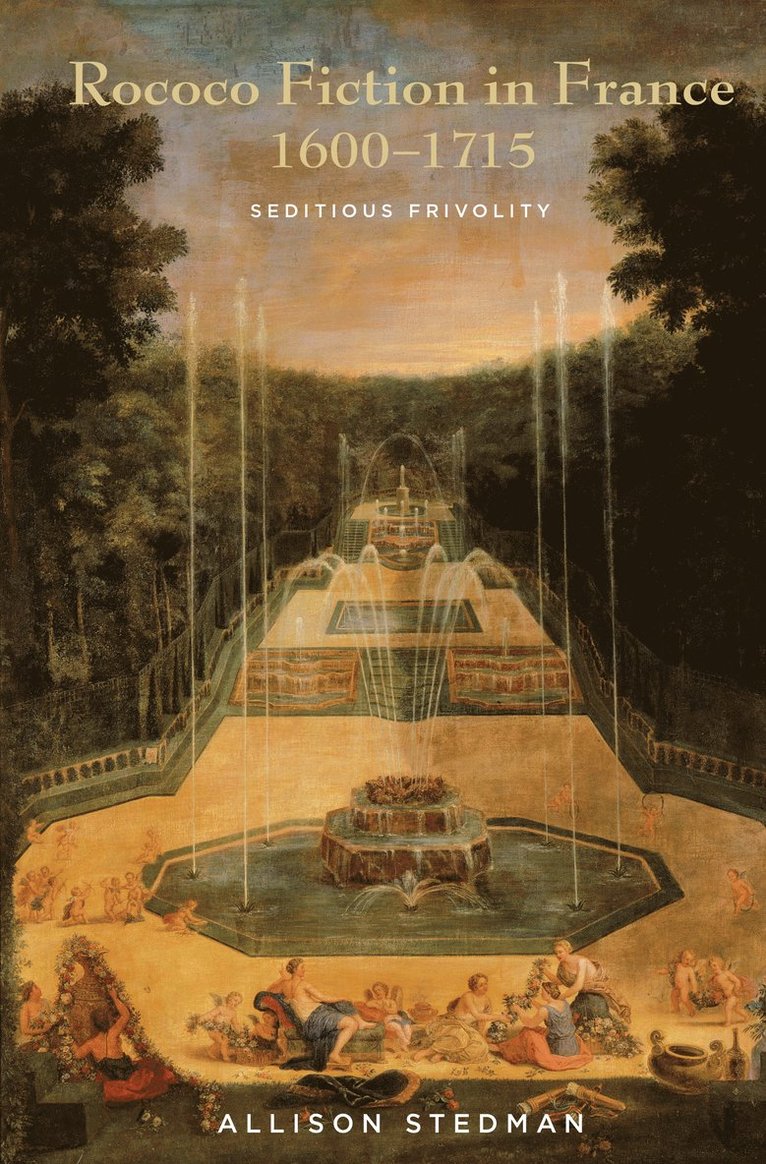
Rococo Fiction in France reconfigures the history of the “long eighteenth century” by revealing the rococo as a literary phenomenon that characterized a range of experimental texts from the end of the French Renaissance to the eve of the French Revolution. Tracing the literary rococo’s evolution from the late 1500s to the early 1700s, and exploring its radicalization during the 1670s, '80s, and '90s, Allison Stedman unearths the seventeenth century rococo’s counter-vision for the trajectory of the French monarchy and the dawn of the French Enlightenment. The first part of the study investigates the relationship between Montaigne’s philosophy of literary production and those of early seventeenth-century “table-talk” novelists, libertine writers, and playwrights involved in the quarrel over Corneille’s play Le Cid. She thus establishes the existence of a rococo philosophy of literary production whose goal was to innovate, to bring pleasure, and to create communities. The second part of the study explores the impact that the Duchess de Montpensier’s literary portrait galleries, Jean Donneau de Visé’s periodical the Mercure Galant, and other forms of rococo literary production—by such authors as Charles Sorel, Alcide de Saint-Maurice, J.N. de Parvial and Jean de Préchac—had in the creation of a textually mediated social sphere that served as the foundation of the publicly critical culture of the French Enlightenment. The study concludes with an investigation of the influx of salon sociability into the textually mediated social sphere during the 1690s. Stedman examines the role of interpolated literary fairy tales, proverb plays and other rococo publication strategies—in such late seventeenth-century women writers as d’Aulnoy, Lhéritier, Murat, and Durand—in transfiguring the salon from an exclusive social circle mediated by physical presence to an inclusive social diaspora mediated by texts. Rococo Fiction in France challenges established views of early modern French literary history and discusses a range of little known works in a generous and engaging manner.
776 kr
Skickas inom 10-15 vardagar
Rococo Fiction in France reconfigures the history of the “long eighteenth century” by revealing the rococo as a literary phenomenon that characterized a range of experimental texts from the end of the French Renaissance to the eve of the French Revolution. Tracing the literary rococo’s evolution from the late 1500s to the early 1700s, and exploring its radicalization during the 1670s, '80s, and '90s, Allison Stedman unearths the seventeenth century rococo’s counter-vision for the trajectory of the French monarchy and the dawn of the French Enlightenment. The first part of the study investigates the relationship between Montaigne’s philosophy of literary production and those of early seventeenth-century “table-talk” novelists, libertine writers, and playwrights involved in the quarrel over Corneille’s play Le Cid. She thus establishes the existence of a rococo philosophy of literary production whose goal was to innovate, to bring pleasure, and to create communities. The second part of the study explores the impact that the Duchess de Montpensier’s literary portrait galleries, Jean Donneau de Visé’s periodical the Mercure Galant, and other forms of rococo literary production—by such authors as Charles Sorel, Alcide de Saint-Maurice, J.N. de Parvial and Jean de Préchac—had in the creation of a textually mediated social sphere that served as the foundation of the publicly critical culture of the French Enlightenment. The study concludes with an investigation of the influx of salon sociability into the textually mediated social sphere during the 1690s. Stedman examines the role of interpolated literary fairy tales, proverb plays and other rococo publication strategies—in such late seventeenth-century women writers as d’Aulnoy, Lhéritier, Murat, and Durand—in transfiguring the salon from an exclusive social circle mediated by physical presence to an inclusive social diaspora mediated by texts. Rococo Fiction in France challenges established views of early modern French literary history and discusses a range of little known works in a generous and engaging manner.
462 kr
Skickas inom 7-10 vardagar
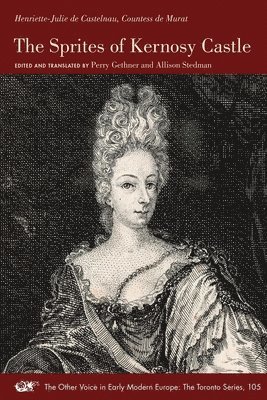
A subversive novel from 1710 that questioned political and aesthetic ideologies in eighteenth-century France.This novel reflects a shift in French values at the turn of the eighteenth century, which saw increased interest in the private lives of the aristocracy and the pre-Enlightenment questioning of political and religious orthodoxies. Novels of fiction and leisure gained popularity, and it was during this time that Henriette-Julie de Castelnau, the Countess de Murat, published her second leisure novel, The Sprites of Kernosy Castle. Combining humor, social satire, and a proto-feminist outlook, Murat crafts a well-constructed plot where the supernatural is debunked. Murat’s career was cut short when a series of “misdemeanors” related to the countess’s homosexual tendencies led to her arrest in 1702. Sprites, which was released during a partial reprieve from prison, is the final published work of this independent-minded early feminist author.