
Allwood Jens Allwood – författare
Visar alla böcker från författaren . Handla med fri frakt och snabb leverans.
2 produkter
2 produkter
E-bok
Engelska, 20201 389 kr
Läs direkt efter köp
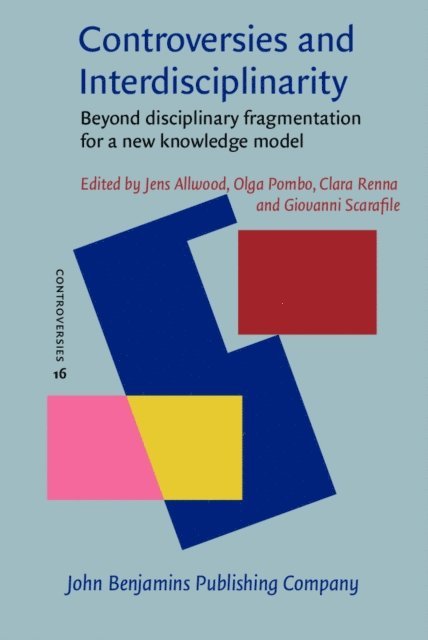
Nowadays, the forms assumed by knowledge indicate an unhinging of traditional structures conceived on the model of discipline. Consequently, what was once strictly disciplinary becomes interdisciplinary, what was homogeneous becomes heterogeneous and what was hierarchical becomes heterarchical.When we look for a matrix of interdisciplinarity, that is to say, a primary basis or an essential dimension of all the complex phenomena we are surrounded by, we see the need to break with the disciplinary self-restraint in which, often completely inadvertently, many of us lock ourselves up, remaining anchored to our own competences, ignoring what goes beyond our own sphere of reference. However, interdisciplinarity is still a vague concept and a much demanding practice. It presupposes the continuous search for convergent theoretical perspectives and methodologies, and the definition of common spaces and languages, as well as a true dialogical and open mind of several scholars.From ethics to science, from communication to medicine, from climate change to human evolution the volume Controversies and Interdisciplinarity offers a series of original insights beyond disciplinary fragmentation for a new knowledge model.
E-bok
PDF, Engelska, 19991 430 kr
Läs direkt efter köp
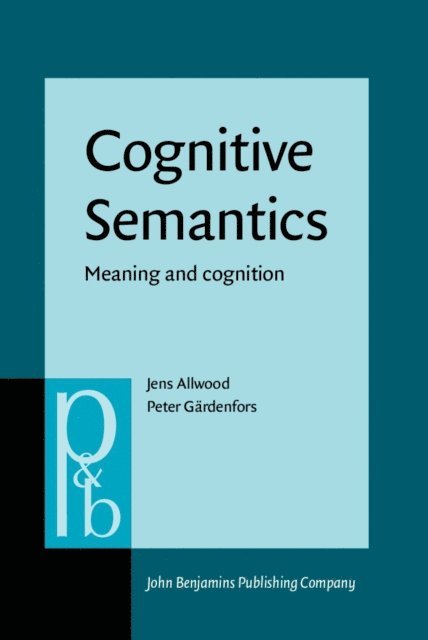
Toward the end of the 20th century, there is both a dissatisfaction with existing formal semantic theories and a wish to preserve insights from other semantic traditions. Cognitive semantics, the latest of the major trends which have dominated the century, attempts to do this by focusing on meaning as a cognitive phenomenon. This book provides different perspectives on meaning as a cognitive phenomenon. Jens Allwood presents an approach where meaning is analyzed in terms of context sensitive cognitive operations. Peter Gärdenfors examines the relationship between cognitive semantics and standard formal extensional and intensional semantics. Peter Harder discusses the relation between functionalism and cognitive semantics. Sören Sjöström and +ke Viberg extend a cognitive semantic approach to new empirical domains like vision and physical contact. Elisabeth Engberg Pedersen extends the use of cognitive semantics even further in order to analyze deaf sign language and, finally, Kenneth Holmqvist and Jordan Zlatev discuss two different possibilities of implementing a cognitive semantic approach using computer programs.The variety of perspectives on cognitive semantics make this book suitable as course material.